• Fri frakt över 249 kr
  • •
  • Snabba leveranser
  • •
  • Billiga böcker
Kundservice

Du är på sajten för privatpersoner.

Företag, bibliotek eller offentlig verksamhet?

Du handlar på classic.bokus.com, där alla dina funktioner finns intakta.
Till classic.bokus.com
Bokus logotyp. Gå till startsidan.
  • Erbjudanden
  • Nyheter
  • Student
  • Topplistor
  • Barn & ungdom
  • Bokus Play
  • E-böcker
  • Pocketböcker
  • Spel & pussel

10% rabatt på allt med kod NYSTART10 →

Sidfot

Mina sidor

    Hjälp

    • Kundservice
    • Vanliga frågor och svar
    • Frakt och leverans
    • Retur vid ångerrätt
    • Reklamera vara
    • Betalning
    • Köpvillkor
    • Allmänna villkor
    • Information om webbplatsens tillgänglighet

    Om Bokus

    • Om oss
    • Pressrum
    • För studenter
    • För företag
    • För bibliotek och offentlig verksamhet
    • För leverantörer
    • Hållbarhet

    Populärt

    • Aktuella erbjudanden
    • Presentkort
    • Studentlitteratur
    • Nya böcker
    • Topplistor
    • Signerade böcker
    • Engelska böcker

    Inspiration

    • Boktips
    • BookTok
    • Populära bokserier
    • Barnbokskaraktärer
    • Populära författare
    Logotyp för Bokus
    Följ oss på Facebook (extern länk)Följ oss på Instagram (extern länk)Följ oss på YouTube (extern länk)Följ oss på TikTok (extern länk)
    bokus @ CookiesAnpassa cookiesIntegritetspolicyKöpvillkor
    Till Citymail hemsida (extern länk)Till Budbee hemsida (extern länk)Till Postnord hemsida (extern länk)Till Schenker hemsida (extern länk)Till Early Bird hemsida (extern länk)Till Walleys hemsida (extern länk)
    1. Psykologi och pedagogik
    2. Pedagogik
    3. Undervisning i specifika ämnen

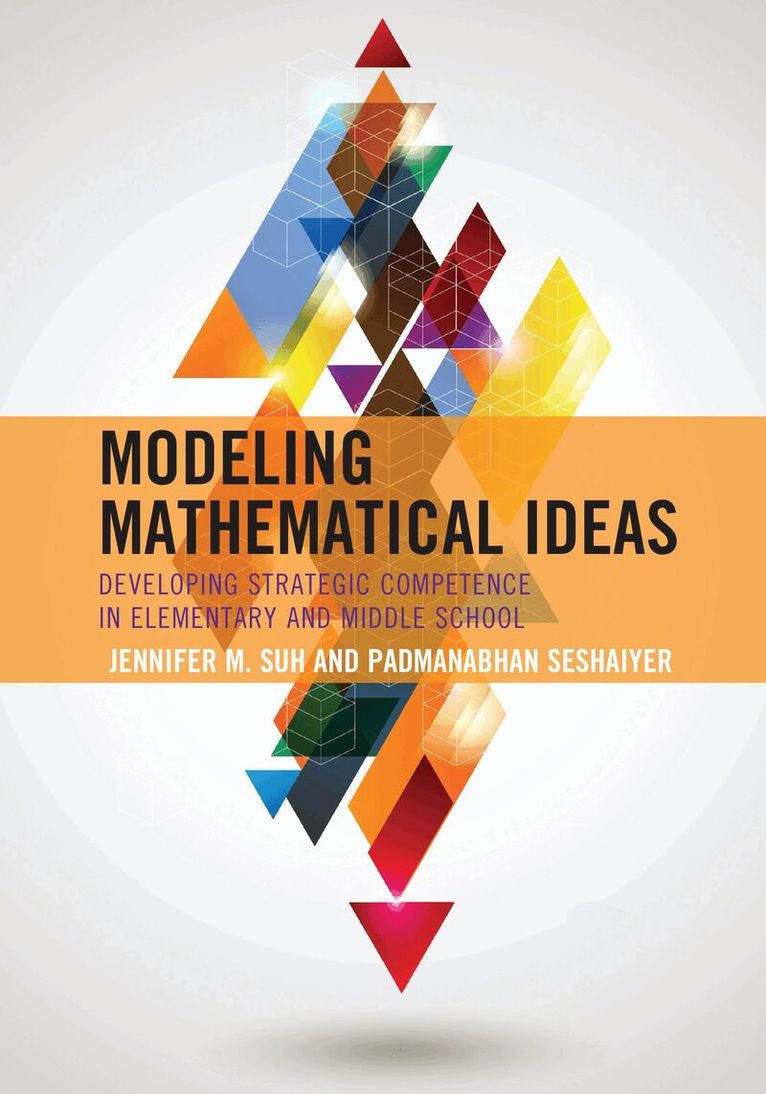
    Modeling Mathematical Ideas

    Developing Strategic Competence in Elementary and Middle School

    AvJennifer M. Suh,Padmanabhan Seshaiyer

    Häftad, Engelska, 2016

    681 kr

    Beställningsvara. Skickas inom 10-15 vardagar. Fri frakt över 249 kr.

    Fler format och utgåvor

    Inbunden

    1 221 kr

    Beskrivning

    Modeling Mathematical Ideas combining current research and practical strategies to build teachers and students strategic competence in problem solving.This must-have book supports teachers in understanding learning progressions that addresses conceptual guiding posts as well as students’ common misconceptions in investigating and discussing important mathematical ideas related to number sense, computational fluency, algebraic thinking and proportional reasoning. In each chapter, the authors opens with a rich real-world mathematical problem and presents classroom strategies (such as visible thinking strategies & technology integration) and other related problems to develop students’ strategic competence in modeling mathematical ideas.

    Produktinformation

    • Utgivningsdatum:2016-12-23
    • Mått:175 x 254 x 14 mm
    • Vikt:467 g
    • Format:Häftad
    • Språk:Engelska
    • Antal sidor:226
    • Förlag:Bloomsbury Publishing Plc
    • ISBN:9781475817591

    Utforska kategorier

    • Undervisning i specifika ämnen inom Psykologi och pedagogik

    Mer om författaren

    Jennifer Suh is an Associate Professor in the Graduate School of Education, College of Education and Human Development, George Mason University. Dr. Suh teaches mathematics methods courses in the Elementary Education Program and mathematics leadership courses for the Mathematics Specialist Masters and PH.D Programs. She directs the Center for Outreach in Mathematics Professional Learning and Educational Technology, COMPLETE, a joint center between the College of Education and the College of Science. Her research focuses on mathematics teacher development while using Lesson Study to develop pedagogical mathematics knowledge across the continuum from pre-service teachers to mathematics teacher leaders; Children's development of mathematical meaning and models by building understanding and representational fluency; Problem-based Learning Environments to promote equitable access to 21st century skills: Creativity, Critical Thinking, Communication and Collaboration for diverse student populations in STEM disciplines. Padmanabhan Seshaiyer is a professor of mathematical sciences and serves as the Director of the STEM Accelerator Program and the Center for Outreach in Mathematics Professional Learning and Educational Technology (COMPLETE) at George Mason University in Fairfax, Virginia. During the last decade, he has initiated and directed a variety of educational programs including graduate and undergraduate research, K-12 outreach, teacher professional development, and enrichment programs to foster the interest of students and teachers in mathematical modeling and STEM at all levels. He is also actively involved in multiple global initiatives and training programs that engage students, teachers and faculty to develop innovative STEM-based solutions to real-world problems.

    Recensioner i media

    Modeling mathematical ideas offers teachers a practical guide to leading third- through eighth-grade students to develop strategic competence and to use models to solve cognitively demanding tasks.... A few main strengths of the book are the insights provided to readers about the implementation of the tasks and the inclusion of a variety of models that students use when solving the tasks.... The content of this book will help educators become skillful teachers of modelers and of the mathematical content associated with each task. The book is a good choice for teachers looking to implement modeling into their classroom. This is also a great resource for a preservice math methods course.

    Innehållsförteckning

    • Chapter 1: Developing Strategic Competence through Modeling Mathematical Ideas1.1 Developing Strategic Competence through Modeling Mathematical Ideas1.2 Promoting Math Proficiency and Mathematical Practices1.3 Problem Solving and Mathematical Modeling in the Elementary and Middle Grades1.4 Multiple Representations and Strategies as Tools to Cultivate Visible Thinking in Mathematics1.5 Importance of Understanding the Vertical Learning Progression to Deepen Students’ Mathematical Understanding1.6 Technology Integration in Problem Solving1.7 More Related Rich Problems to ExploreChapter 2: Setting Math Norms to Promote Math Reasoning and Modeling2. 1 Developing Persistent Problem Solvers with a Productive Disposition towards Math2.2 Unpacking the Mathematics for Deeper Conceptual Learning2.3 Choosing Worthwhile Tasks through Cognitive Demand Analysis2.4 Promoting the Core Teaching Practices through Research Lessons2.5 Integration Technology and Connecting to the Learning Progression2.6 Assessing Students Understanding through a Problem-based TaskChapter 3: Engaging in Mathematical Modeling in the Elementary and Middle Grades3.1 Math Modeling in the Elementary and Middle Grades: What are the building blocks?3.2 Mathematical Modeling through Unstructured Real-World Problems3.3. Lesson Study Focus on the Mathematical Modeling: Traffic Jam3.4 Promoting the 21st Century Skills3.5 Technology Integration in Problem Posing and Problem Solving3.6 A Related Rich Problem to ExploreChapter 4: Modeling Math Ideas with Numbers and Operations4.1 Lesson Study Vignette: Prime and Composite Numbers4.2 Visible Thinking in Math: Using Multiple Representations 4.3 Zooming in on the Learning Progression of Numbers and Operations4.4 Teaching Strategies: Using Math Happenings4.5 Connecting Procedural Fluency and Conceptual Understanding4.6 Technology Integration in Problem Solving4.7 More Related Rich Problems to ExploreChapter 5: Modeling Math Ideas with Patterns & Algebraic Reasoning5.1 Lesson Study Vignette - Growing Staircase problem5.2 Visible Thinking in Math: Using a Modeling Math Mat5.3 Patterns and Algebra: Zooming in on the Learning Progressions5.4 Teaching Strategies: Promoting the Algebraic Habits of Mind5.5 Lesson Vignette: What Would You Choose? Analyzing Change in Number Patterns5.6 Technology Integration in Problem Solving5.7 More Related Rich Problems to ExploreChapter 6: Modeling Math Ideas with Equations and Inequalities6.1 Lesson Study Vignette: Setting a Math Learning Agenda6.2 Zooming in on the Learning Progressions for Algebra6.3 Visible Thinking in Math: Naming, Sequencing and Connecting Math Strategies6.4 Teaching Strategies: Using Misconceptions to Repair Understanding &Looking for Efficiency6.5 Technology Integration in Problem Solving6.6 More Related Rich Problems to ExploreChapter 7: Modeling Math Ideas with Fractions7.1 Lesson Study Vignette: The Unusual Baker7.2 Visible Thinking in Math: Assessing Student Learning through Classroom Artifacts7.3 Zooming in on the Learning Progressions: Fractions7.4 Implementing mathematical tasks that promote reasoning and problem solving7.5 Teaching Strategies, Using Representations and Overcoming Common Misconception7.6 Technology Integration in Problem Solving7.7 More Related Rich Problems to ExploreChapter 8: Modeling Math Ideas with Fraction Computation8.1 Lesson Study Vignette: Stuffed with Pizza- Adding fractions8.2 Visible Learning in Math- Using Tools to Prove their Thinking8.3 Learning Progression in Fraction Operations8.4 Lesson Study Vignette: Share My Candy8.5 Teaching Strategies: Strategy mapping on the board plan8.6 Use of students’ diversity of strategies as pedagogical content tools8.7 Technology Integration in Problem Solving8.8 More Related Rich Problems to ExploreChapter 9: Modeling Math Ideas with Ratio and Proportional Reasoning9.1 Lesson Study Vignette: The Leaky Bathtub9.2 Zooming in on the Learning Progressions on Proportional Reasoning9.3 Visible Thinking in Math: Using Representational models for proportional reasoning9.4 Lesson study vignette: The Cathedral Problem9.5 Deepening Teacher Knowledge and their Strategic Competence9.6 Promoting Reasoning to Rich tasks9.7 Technology Integration in Problem Solving9.8 More Related Rich Problems to ExploreChapter 10: Pulling it all Together: Strengthening Strategic Competence through Modeling Mathematics Ideas10.1 Practice-based Activities to Focus on Models and Modeling within our Standards10.2 Modeling Math with Tools and Representations10.3 Understanding Conceptual and Interpretative Models of Math Ideas10.4 Modeling Math through Problem Solving and Problem Posing Tasks10.5 Mathematical Modeling through Unstructured Real-World Problems10.6 Strengthening Strategic Competence for Modeling Mathematical IdeasAppendixReferences