• Fri frakt över 249 kr
  • •
  • Snabba leveranser
  • •
  • Billiga böcker
Kundservice

Du är på sajten för privatpersoner.

Företag, bibliotek eller offentlig verksamhet?

Du handlar på classic.bokus.com, där alla dina funktioner finns intakta.
Till classic.bokus.com
Bokus logotyp. Gå till startsidan.
  • Erbjudanden
  • Nyheter
  • Student
  • Topplistor
  • Barn & ungdom
  • Bokus Play
  • E-böcker
  • Pocketböcker
  • Spel & pussel

10% rabatt på allt med kod: NYSTART10 →

Sidfot

Mina sidor

    Hjälp

    • Kundservice
    • Vanliga frågor och svar
    • Frakt och leverans
    • Retur vid ångerrätt
    • Reklamera vara
    • Betalning
    • Köpvillkor
    • Allmänna villkor
    • Information om webbplatsens tillgänglighet

    Om Bokus

    • Om oss
    • Pressrum
    • För studenter
    • För företag
    • För bibliotek och offentlig verksamhet
    • För leverantörer
    • Hållbarhet

    Populärt

    • Aktuella erbjudanden
    • Presentkort
    • Studentlitteratur
    • Nya böcker
    • Topplistor
    • Signerade böcker
    • Engelska böcker

    Inspiration

    • Boktips
    • BookTok
    • Populära bokserier
    • Barnbokskaraktärer
    • Populära författare
    Logotyp för Bokus
    Följ oss på Facebook (extern länk)Följ oss på Instagram (extern länk)Följ oss på YouTube (extern länk)Följ oss på TikTok (extern länk)
    bokus @ CookiesAnpassa cookiesIntegritetspolicyKöpvillkor
    Till Citymail hemsida (extern länk)Till Budbee hemsida (extern länk)Till Postnord hemsida (extern länk)Till Schenker hemsida (extern länk)Till Early Bird hemsida (extern länk)Till Walleys hemsida (extern länk)
    1. Kultur
    2. Arkitektur

    Design of Protest

    Choreographing Political Demonstrations in Public Space

    AvTali Hatuka

    Inbunden, Engelska, 2018

    627 kr

    Beställningsvara. Skickas inom 5-8 vardagar. Fri frakt över 249 kr.

    Beskrivning

    Public protests are a vital tool for asserting grievances and creating temporary, yet tangible, communities as the world becomes more democratic and urban in the twenty-first century. While the political and social aspects of protest have been extensively studied, little attention has been paid to the physical spaces in which protests happen. Yet place is a crucial aspect of protests, influencing the dynamics and engagement patterns among participants. In The Design of Protest, Tali Hatuka offers the first extensive discussion of the act of protest as a design: that is, a planned event in a space whose physical geometry and symbolic meaning are used and appropriated by its organizers, who aim to challenge socio-spatial distance between political institutions and the people they should serve.Presenting case studies from around the world, including Tiananmen Square in Beijing; the National Mall in Washington, DC; Rabin Square in Tel Aviv; and the Plaza de Mayo in Buenos Aires, Hatuka identifies three major dimensions of public protests: the process of planning the protest in a particular place; the choice of spatial choreography of the event, including the value and meaning of specific tactics; and the challenges of performing contemporary protests in public space in a fragmented, complex, and conflicted world. Numerous photographs, detailed diagrams, and plans complement the case studies, which draw upon interviews with city officials, urban planners, and protesters themselves.
    Produktinformation

    • Utgivningsdatum:2018-08-01
    • Mått:178 x 254 x 33 mm
    • Vikt:880 g
    • Format:Inbunden
    • Språk:Engelska
    • Antal sidor:352
    • Förlag:University of Texas Press
    • ISBN:9781477315767

    Utforska kategorier

    • Arkitektur inom Kultur

    Mer om författaren

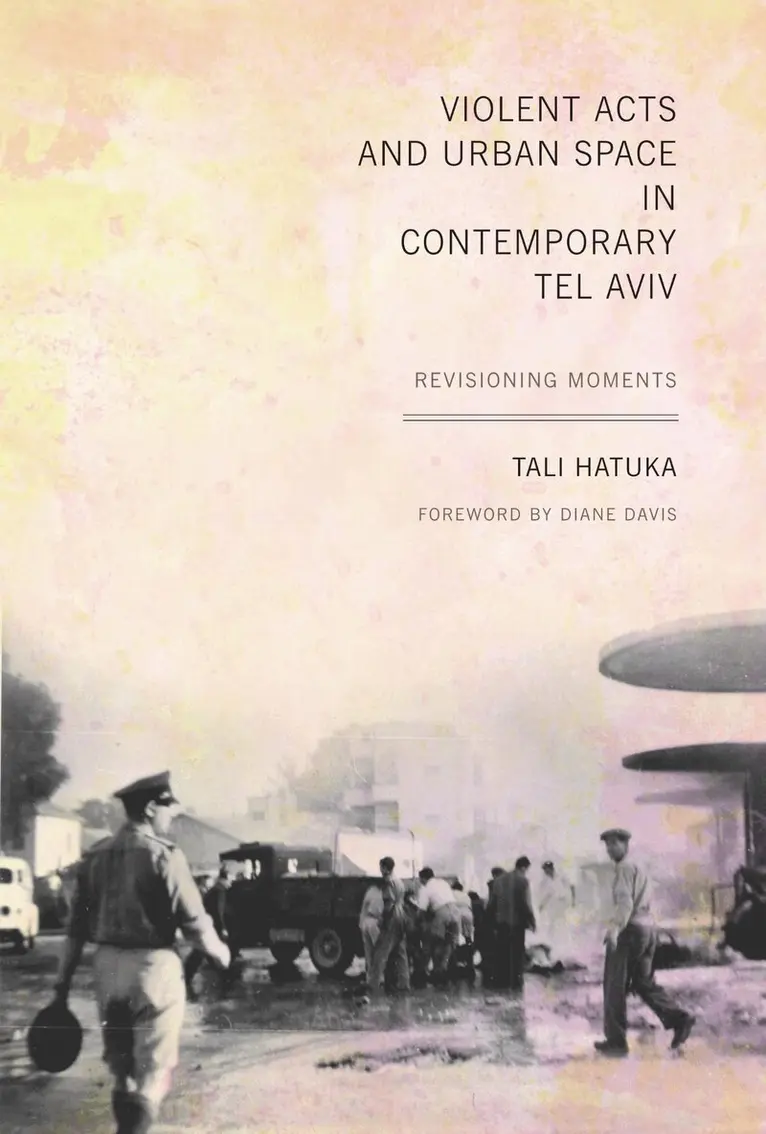
    An architect and urban planner, Tali Hatuka founded and directs the Laboratory of Contemporary Urban Design (LCUD) in the Department of Geography and Human Environment at Tel Aviv University. She is the author of Violent Acts and Urban Space in Contemporary Tel Aviv: Revisioning Moments.

    Recensioner i media

    An impressive and serious-minded effort to build an analytical framework that would allow us to evaluate protest actions as design interventions on their own terms…a book like this is, indeed, long overdue. (Journal of Planning Education and Research) [The Design of Protest] opens up exciting lines of analysis by examining protests as spatial choreography, using concepts such as theater, ritual, and icons as new frames of understanding. It also broadens the terrain through careful consideration of a diverse set of protests. - Planning Theory & Practice

    Innehållsförteckning

    • PrefaceOrganization of the BookAcknowledgmentsPART I. PLANNING PROTESTS Chapter 1. Challenging Distance Keeping Distance in Public SpaceChallenging Distance during ProtestsThe Design of ProtestsChapter 2. Choosing a Place Defining Distance through Forms and SymbolsPublic Space Prototypes and Protest CulturesChanging the Narration of SpaceChoosing a Place, Appropriating the Right LocusChapter 3. Enhancing the Impact Protest as the Juxtaposition of SpheresContext and the Search for Alternative Forms of ProtestThe Manifold Spatialities of ProtestsThe Underlying Principles of the Groups’ ProtestsReimagining Sociospatial DistanceChapter 4. Bargaining Power Controlling the EventsNegotiating PowerBetween Predictability and UncertaintyPART II. SPATIAL CHOREOGRAPHIES Chapter 5. Staging the Action Crafting a Spatial Choreography in the Quest for ChangeSpatial Prototypes of Actions: Spectacle, Procession, and Place-MakingDoes a Winning Spatial Choreography Exist?Chapter 6. Spectacles Theater Tel Aviv, Rabin Square, November 4, 1995Ritual Buenos Aires, Plaza de Mayo, August 31, 2006Bareness Tel Aviv, King George, January 26, 2008Chapter 7. Processions Target Istanbul, Taksim Square, May 1, 1977Conjoining Leipzig, Augustusplatz, October 9, 1989Synchronicity Worldwide, February 15, 2003Elasticity Caracas, Autopista Francisco Fajardo, April 11, 2002Chapter 8. Place-Making Reiconization Beijing, Tiananmen Square, June 4, 1989City Design Washington, DC, National Mall, May 13–June 24, 1968Narrative New York, Zuccotti Park, September 17–November 15, 2011PART III. CONTINUUM Chapter 9. Performing Protestability Challenging Distance in Future ProtestsPerforming Protestability as an Ethical TaskNotesBibliographyIndex