• Fri frakt över 249 kr
  • •
  • Snabba leveranser
  • •
  • Billiga böcker
Kundservice

Du är på sajten för privatpersoner.

Företag, bibliotek eller offentlig verksamhet?

Du handlar på classic.bokus.com, där alla dina funktioner finns intakta.
Till classic.bokus.com
Bokus logotyp. Gå till startsidan.
  • Erbjudanden
  • Nyheter
  • Student
  • Topplistor
  • Barn & ungdom
  • Bokus Play
  • E-böcker
  • Pocketböcker
  • Spel & pussel

Må bättre, för mindre! Upp till 50% rabatt på hälsoböcker

Sidfot

Mina sidor

    Hjälp

    • Kundservice
    • Vanliga frågor och svar
    • Frakt och leverans
    • Retur vid ångerrätt
    • Reklamera vara
    • Betalning
    • Köpvillkor
    • Allmänna villkor
    • Information om webbplatsens tillgänglighet

    Om Bokus

    • Om oss
    • Pressrum
    • För studenter
    • För företag
    • För bibliotek och offentlig verksamhet
    • För leverantörer
    • Hållbarhet

    Populärt

    • Aktuella erbjudanden
    • Presentkort
    • Studentlitteratur
    • Nya böcker
    • Topplistor
    • Signerade böcker
    • Engelska böcker

    Inspiration

    • Boktips
    • BookTok
    • Populära bokserier
    • Barnbokskaraktärer
    • Populära författare
    Logotyp för Bokus
    Följ oss på Facebook (extern länk)Följ oss på Instagram (extern länk)Följ oss på YouTube (extern länk)Följ oss på TikTok (extern länk)
    bokus @ CookiesAnpassa cookiesIntegritetspolicyKöpvillkor
    Till Citymail hemsida (extern länk)Till Budbee hemsida (extern länk)Till Postnord hemsida (extern länk)Till Schenker hemsida (extern länk)Till Early Bird hemsida (extern länk)Till Walleys hemsida (extern länk)
    1. Samhälle och politik
    2. Samhälle och kultur
    3. Sociala och etiska frågor
    4. Diskriminering och rättvisa

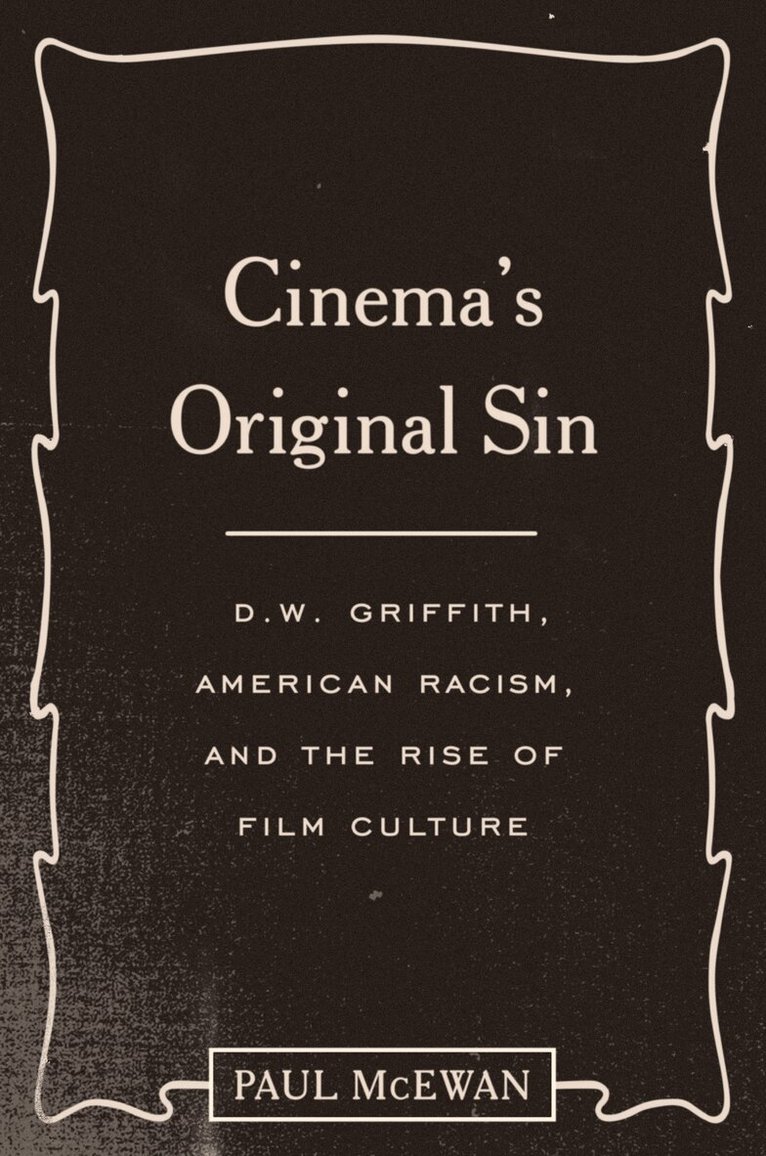
    Cinema's Original Sin

    D.W. Griffith, American Racism, and the Rise of Film Culture

    AvPaul McEwan

    Inbunden, Engelska, 2022

    627 kr

    Beställningsvara. Skickas inom 5-8 vardagar. Fri frakt över 249 kr.

    Fler format och utgåvor

    Häftad

    389 kr

    Beskrivning

    For over a century, cinephiles and film scholars have had to grapple with an ugly artifact that sits at the beginnings of film history. D. W. Griffith’s profoundly racist epic, The Birth of a Nation, inspired controversy and protest at its 1915 release and was defended as both a true history of Reconstruction (although it was based on fiction) and a new achievement in cinematic art. Paul McEwan examines the long and shifting history of its reception, revealing how the film became not just a cinematic landmark but also an influential force in American aesthetics and intellectual life.In every decade since 1915, filmmakers, museums, academics, programmers, and film fans have had to figure out how to deal with this troublesome object, and their choices have profoundly influenced both film culture and the notion that films can be works of art. Some critics tried to set aside the film’s racism and concentrate on the form, while others tried to relegate that racism safely to the past. McEwan argues that from the earliest film retrospectives in the 1920s to the rise of remix culture in the present day, controversies about this film and its meaning have profoundly shaped our understandings of film, race, and art.

    Produktinformation

    • Utgivningsdatum:2022-12-13
    • Mått:152 x 229 x 30 mm
    • Vikt:513 g
    • Format:Inbunden
    • Språk:Engelska
    • Antal sidor:272
    • Förlag:University of Texas Press
    • ISBN:9781477325483

    Utforska kategorier

    • Diskriminering och rättvisa inom Samhälle och politik
    • Amerikas historia inom Historia och arkeologi
    • Film inom Kultur

    Mer om författaren

    Paul McEwan is a professor in the Media and Communication and Film Studies Departments at Muhlenberg College. He is the author of Bruce McDonald's Hard Core Logo and The Birth of a Nation (BFI Classics).

    Recensioner i media

    Cinema’s Original Sin is a fascinating, authoritative, and essential text for anyone interested in film history, the history of racism and its on-going echoes, or examining the history of ongoing social conversations from the public, press, and academia...The Birth of a Nation is not a masterpiece. It’s well-executed propaganda. It’s time to call that out and acknowledge it, which Professor McEwan definitively does with flawless scholarship and inarguable logic. It’s an essential read and an essential contribution to numerous on-going cultural conversations. (Mastering Modernity) Few films in the history of the medium have been as widely discussed as D. W. Griffith’s The Birth of a Nation...Yet it is this very excess of existing commentary that makes Paul McEwan’s contribution in the form of Cinema’s Original Sin so worthwhile and, ultimately, compelling...Tracing a long and contentious reception history that begins before cinema’s widespread acceptance as an art in its own right, McEwan delineates with rare authority how changing ideas about racism, artistic expression and film culture have been intertwined since the very earliest years of feature filmmaking in the United States. (Early Popular Visual Culture) Alongside the history McEwan keeps track of how film criticism might contribute to and ameliorate the contours of white supremacy-film criticism that includes his book and now this little review. (CHOICE) McEwan presents an enchanting and well-researched historical past . . . and argues that this controversy inside movie historical past has formed understandings of movie, race, and artwork. (Hetflix) Cinema’s Original Sin is expansive, particularly for students who think of racism and the cinema solely in terms of representational strategies. Once it becomes clear that the issue is structural, adjusting representational strategies appears an insufficient solution to the issues that led-and in some instances continue to lead-to Griffith’s defense. (Film Quarterly)

    Innehållsförteckning

    • AcknowledgmentsIntroduction1. A New Art, 1895–19152. Film Art, Intolerance, and Oscar Micheaux, 1915–19253. Little Theatres, MOMA, and the Birth of Art Cinema, 1925–19454. From American History to Film History, 1945–19605. In Search of Legitimacy and Masterpieces: Film Studies in the Academy, 1960–20006. Race, Reception, and Remix in the New MillenniumEpilogueNotesIndex