• Fri frakt över 249 kr
  • •
  • Snabba leveranser
  • •
  • Billiga böcker
Kundservice

Du är på sajten för privatpersoner.

Företag, bibliotek eller offentlig verksamhet?

Du handlar på classic.bokus.com, där alla dina funktioner finns intakta.
Till classic.bokus.com
Bokus logotyp. Gå till startsidan.
  • Erbjudanden
  • Nyheter
  • Student
  • Topplistor
  • Barn & ungdom
  • Bokus Play
  • E-böcker
  • Pocketböcker
  • Spel & pussel

10% rabatt på allt med kod: NYSTART10 →

Sidfot

Mina sidor

    Hjälp

    • Kundservice
    • Vanliga frågor och svar
    • Frakt och leverans
    • Retur vid ångerrätt
    • Reklamera vara
    • Betalning
    • Köpvillkor
    • Allmänna villkor
    • Information om webbplatsens tillgänglighet

    Om Bokus

    • Om oss
    • Pressrum
    • För studenter
    • För företag
    • För bibliotek och offentlig verksamhet
    • För leverantörer
    • Hållbarhet

    Populärt

    • Aktuella erbjudanden
    • Presentkort
    • Studentlitteratur
    • Nya böcker
    • Topplistor
    • Signerade böcker
    • Engelska böcker

    Inspiration

    • Boktips
    • BookTok
    • Populära bokserier
    • Barnbokskaraktärer
    • Populära författare
    Logotyp för Bokus
    Följ oss på Facebook (extern länk)Följ oss på Instagram (extern länk)Följ oss på YouTube (extern länk)Följ oss på TikTok (extern länk)
    bokus @ CookiesAnpassa cookiesIntegritetspolicyKöpvillkor
    Till Citymail hemsida (extern länk)Till Budbee hemsida (extern länk)Till Postnord hemsida (extern länk)Till Schenker hemsida (extern länk)Till Early Bird hemsida (extern länk)Till Walleys hemsida (extern länk)
    1. Naturvetenskap och teknik
    2. Geovetenskap
    3. Miljövetenskap och miljöpolitik

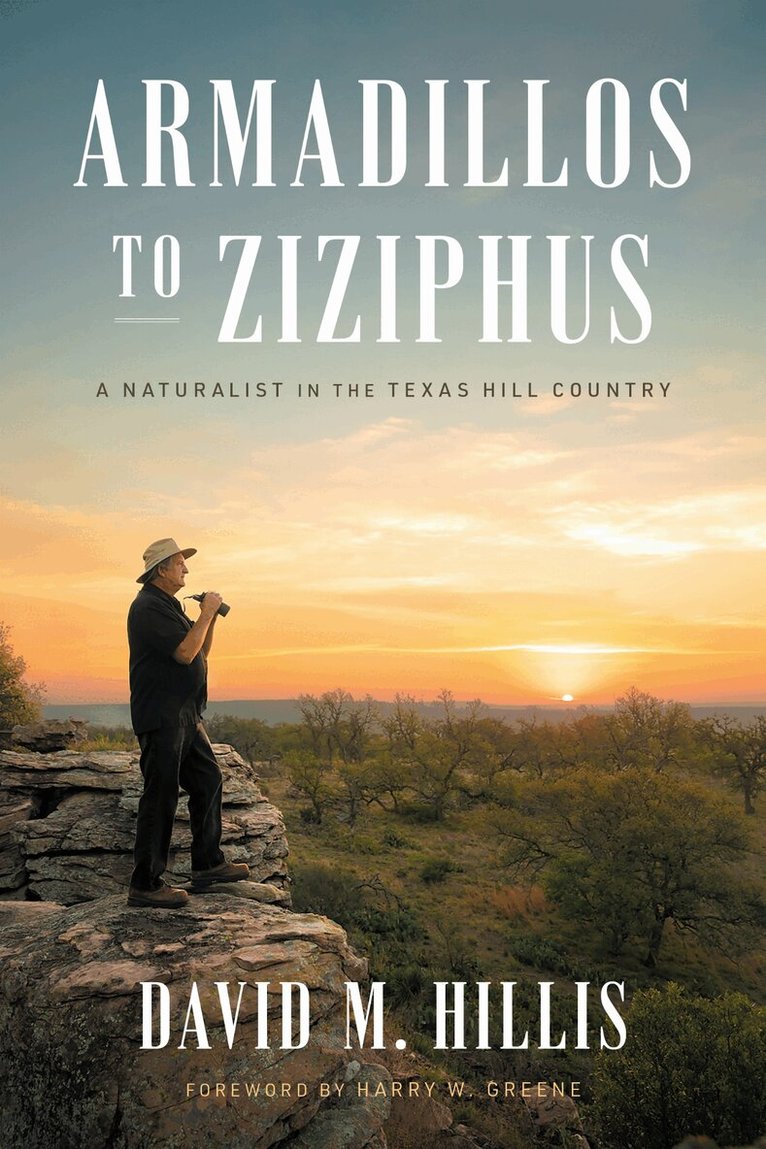
    Armadillos to Ziziphus

    A Naturalist in the Texas Hill Country

    AvDavid M. Hillis

    Inbunden, Engelska, 2023

    336 kr

    Beställningsvara. Skickas inom 5-8 vardagar. Fri frakt över 249 kr.

    Beskrivning

    A collection of essays on the ecology, biodiversity, and restoration of the Texas Hill Country.For most of five decades, evolutionary biologist David Hillis has studied the biodiversity of the Texas Hill Country. Since the 1990s, he has worked to restore the natural beauty and diversity of his Mason County ranch, the Double Helix. In his excursions around his ranch and across the Edwards Plateau, Hillis came to realize how little most people know about the plants and animals around them or their importance to our everyday lives. He began thinking about how natural history is connected to our enjoyment of life, especially in a place as beautiful and beloved as the Hill Country, which, not coincidentally, happens to be one of the most biodiverse parts of Texas. Featuring short nontechnical essays accompanied by vivid color photos, Armadillos to Ziziphus is a charming and casual introduction to the environment of the region. Whether walking the pasture with his Longhorn cattle, explaining the ecological significance of microscopic organisms in springtime mud puddles, or marveling at the local Ziziphus (aka Lotebush, a spiny shrub), Hillis guides first-time visitors and long-term residents alike in an appreciation for the Hill Country’s natural beauty and diversity.

    Produktinformation

    • Utgivningsdatum:2023-04-11
    • Mått:152 x 229 x 28 mm
    • Vikt:934 g
    • Format:Inbunden
    • Språk:Engelska
    • Antal sidor:280
    • Förlag:University of Texas Press
    • Medarbetare:HarryW. Greene
    • ISBN:9781477326732

    Utforska kategorier

    • Miljövetenskap och miljöpolitik inom Naturvetenskap och teknik
    • Naturhistoriska böcker inom Djur och Natur

    Mer om författaren

    David M. Hillis is the director of the Biodiversity Center at the University of Texas at Austin’s College of Natural Sciences. He was awarded a MacArthur Fellowship in 1999 and was elected to the US National Academy of Sciences in 2008. He is also known for his discovery of numerous new species, including Austin’s iconic Barton Springs Salamander. Harry W. Greene is a professor of ecology and evolutionary biology at Cornell University and the author of Tracks and Shadows: Field Biology as Art, among other books.

    Recensioner i media

    Hillis brings encyclopedic scientific knowledge to the task of explaining the Hill Country’s 'natural wealth.' He doesn’t allow scientific jargon or Latin taxonomy to muddy his prose, however. Using plain, understandable language, he paints accessible portraits of the land he’s spent a lifetime walking and exploring...He dissects the region with both practiced ease and great authority, tapping his wisdom as a scientist, as a scholar and as a lover of nature. Reading the book feels much like perusing a personal journal that captures a lifetime of experiences...Armadillos to Ziziphus is one of those books that can be read in one sitting or used as a go-to compendium, whereby the reader looks up something sparked by a curious moment. (San Antonio Report) [A] charming new primer on the region's environment. (Austin Monthly) This book is intensely delightful...Hillis writes short, entertaining essays on nature...Hillis writes in a fluid, open, sometimes awed manner, primed for enjoyment by the reasonably curious reader. (Austin American-Statesman) One of the most practical and pleasing new Texas books of 2023. . . I will read these incandescent essays . . . again and again. (Austin American-Statesman) [Hillis]'s decades of personal and professional experience in the region are evident in the text . . . [Armadillos to Ziziphus] will be of great interest to naturalists and scholars as well as general readers interested in developing their ecological knowledge of this region, and could serve as an informative prerequisite for environmental tours or individual outdoor enthusiasts planning a visit to the area. (Choice) [Armadillos to Ziziphus] lovingly catalogs the region’s environmental components, making seemingly familiar features new. More important, Hillis offers practicable pathways toward not only safeguarding the region’s endangered environments but also repairing and rejuvenating them...The succinct essays are packed with information, and Hillis’s writing style balances scientific precision with conversational ease. It is a wonderful addition not only to the environmental writing on Texas but also to environmentalist activism in Texas. (H-Net Reviews) I go back to these elegant, accessible essays again and again. There's just something so appealing about an accomplished scientist such as David M. Hillis, who can speak and write in way that's open to just about everybody, including the neighbors of his ranch in Mason County. Chief of the Biodiversity Center at the University of Texas, he explains the interplay of the elements in transparent prose in Armadillos to Ziziphus: A Naturalist in the Texas Hill Country (University of Texas Press). If I owned a Hill Country cabin, this book would be waiting to delight and inform every guest. - Michael Barnes (Austin-American Statesman) Armadillos to Ziziphus serves as both an education and celebration of the Hill Country’s natural beauty and diversity… Hillis infuses his encyclopedic knowledge of the Hill Country into charming and casual explanations of everything from the ecological significance of microscopic organisms in springtime mud puddles to a spiny shrub called Ziziphus. (UT News)

    Innehållsförteckning

    • Foreword by Harry W. GreenePrefaceI. The Texas Hill Country: A Naturalist’s Paradise 1. Geological Setting of the Edwards Plateau2. From Acid Sands to Alkaline Clays3. Hill Country Weather: Droughts, Floods, and Severe Storms4. Some Texas Icons Haven’t Been Here All That Long5. Hill Country Endemics6. What Is the Value of Biodiversity?II. The Seasonal Life of a Vernal Pool 7. Tilting at Tiny Windmills8. Crustacean Wonders9. The Fascinating Flora of Vernal Pools10. Those Who Live in Glass Houses11. A Season of Symphonies12. What Happened to All Our Frogs?III. Flowing Waters: Aquifers, Caves, Springs, and Rivers 13. Life without Light14. Lanterns of Summer15. Musings about Mussels16. The Last Wild RiverIV. Life of a Grassland 17. Why Do Some Grasses Grow in the Winter, but Others in the Summer?18. Butterflies, Hummingbirds, and Other Pollinators19. The Noble Life of a Dung-Roller20. Where Have All the Quail Gone?21. Grasshoppers, Locusts, and Plagues22. The History of Texas Cattle Written in Their DNAV. In the Woodlands and Brushlands 23. Containing and Preventing Oak Wilt24. The Challenges of Being an Oak Tree in the Hill Country25. How Do Trees Sense When It Is Time to Leaf Out and Bloom?26. The Dr. Jekyll and Mr. Hyde of Trees27. Spring Is Here, and So Are the Snakes28. Songs of the Summer Dog Days29. Going Batty30. Deer Densities on the Edwards Plateau31. Bucks in Velvet32. The Future of Hill Country Deer Populations33. The Carbon Cycle and How It Affects Our Daily LivesVI. Backyard Biology 34. The Remarkable Life of Hummingbirds35. Ways to Attract and Increase Bird Populations36. The Unexpected Beauty and Diversity of Lichens37. There Is More to Mistletoe than Kissing38. The Ups and Downs of Ants39. A Pattern in the Web40. Caterpillar Plagues and Their Connection to the Weather41. Predators and Second ChancesVII. Climatic Adaptations 42. Toadally Cool43. The Surprising Life Cycle of a Monarch Butterfly44. How Do Animals Survive the Winter? Part 1: Migrating45. How Do Animals Survive the Winter? Part 2: Keeping Warm and Active46. How Do Animals (and Plants) Survive the Winter? Part 3: Waiting Out the ColdVIII. Restoration and the Future of the Hill Country’s Natural Resources 47. The Restoration and Benefits of Native Grasses48. The Pros and Cons of Brush Control49. Recovery of a Texas Icon: The Texas Horned Lizard50. Avoiding the Dangers of Lead Poisoning in Game Meat51. Our Climate Future in Central Texas52. If the Earth Is Warming, Why Did We Just Have a Record Cold Snap?53. Practical, Painless, and Significant Solutions to Climate Change54. Six Resolutions for Supporting Native Plants and AnimalsIndex