• Fri frakt över 249 kr
  • •
  • Snabba leveranser
  • •
  • Billiga böcker
Kundservice

Du är på sajten för privatpersoner.

Företag, bibliotek eller offentlig verksamhet?

Du handlar på classic.bokus.com, där alla dina funktioner finns intakta.
Till classic.bokus.com
Bokus logotyp. Gå till startsidan.
  • Erbjudanden
  • Nyheter
  • Student
  • Topplistor
  • Barn & ungdom
  • Bokus Play
  • E-böcker
  • Pocketböcker
  • Spel & pussel

Må bättre, för mindre! Upp till 50% rabatt på hälsoböcker

Sidfot

Mina sidor

    Hjälp

    • Kundservice
    • Vanliga frågor och svar
    • Frakt och leverans
    • Retur vid ångerrätt
    • Reklamera vara
    • Betalning
    • Köpvillkor
    • Allmänna villkor
    • Information om webbplatsens tillgänglighet

    Om Bokus

    • Om oss
    • Pressrum
    • För studenter
    • För företag
    • För bibliotek och offentlig verksamhet
    • För leverantörer
    • Hållbarhet

    Populärt

    • Aktuella erbjudanden
    • Presentkort
    • Studentlitteratur
    • Nya böcker
    • Topplistor
    • Signerade böcker
    • Engelska böcker

    Inspiration

    • Boktips
    • BookTok
    • Populära bokserier
    • Barnbokskaraktärer
    • Populära författare
    Logotyp för Bokus
    Följ oss på Facebook (extern länk)Följ oss på Instagram (extern länk)Följ oss på YouTube (extern länk)Följ oss på TikTok (extern länk)
    bokus @ CookiesAnpassa cookiesIntegritetspolicyKöpvillkor
    Till Citymail hemsida (extern länk)Till Budbee hemsida (extern länk)Till Postnord hemsida (extern länk)Till Schenker hemsida (extern länk)Till Early Bird hemsida (extern länk)Till Walleys hemsida (extern länk)
    1. Samhälle och politik
    2. Samhälle och kultur
    3. Sociala grupper och identitet
    4. Genusvetenskap

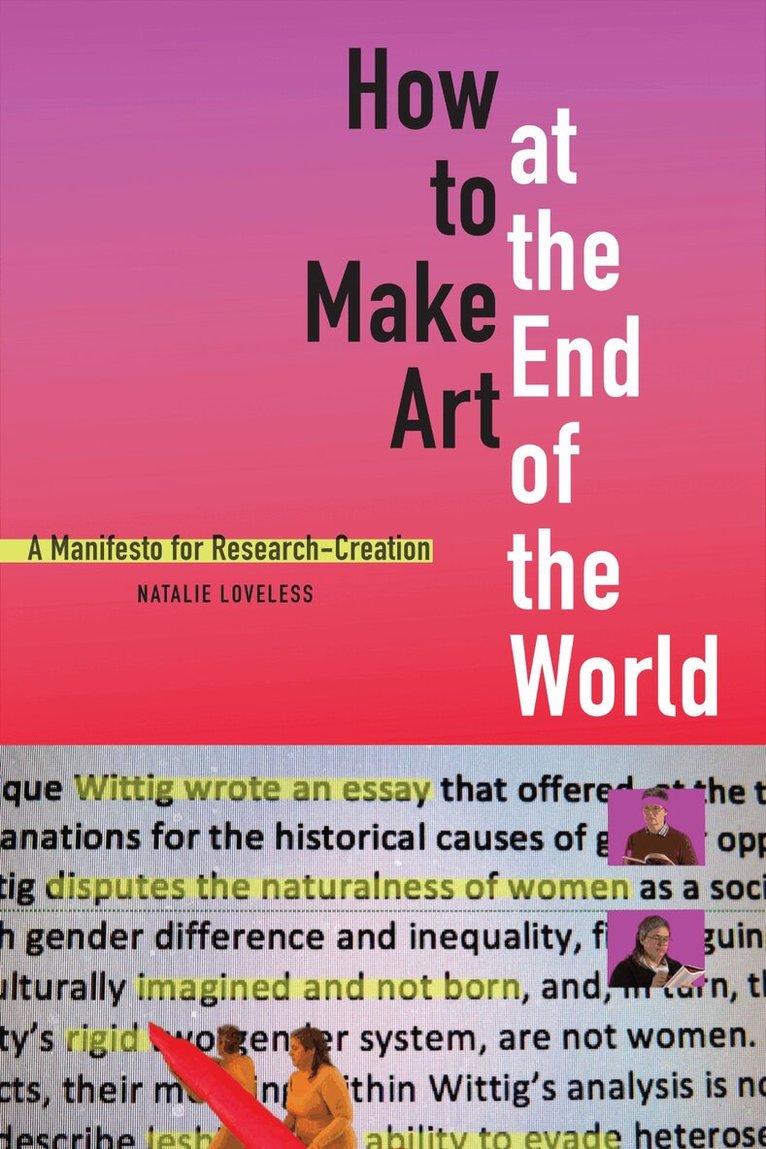
    How to Make Art at the End of the World

    A Manifesto for Research-Creation

    AvNatalie Loveless

    Inbunden, Engelska, 2019

    1 078 kr

    Beställningsvara. Skickas inom 5-8 vardagar. Fri frakt över 249 kr.

    Fler format och utgåvor

    Häftad

    275 kr

    E-bok

    406 kr

    Beskrivning

    In recent years, the rise of research-creation-a scholarly activity that considers art practices as research methods in their own right-has emerged from the organic convergences of the arts and interdisciplinary humanities, and it has been fostered by universities wishing to enhance their public profiles. In How to Make Art at the End of the World Natalie Loveless draws on diverse perspectives-from feminist science studies to psychoanalytic theory, as well as her own experience advising undergraduate and graduate students-to argue for research-creation as both a means to produce innovative scholarship and a way to transform pedagogy and research within the contemporary neoliberal university. Championing experimental, artistically driven methods of teaching, researching, and publication, research-creation works to render daily life in the academy more pedagogically, politically, and affectively sustainable, as well as more responsive to issues of social and ecological justice.

    Produktinformation

    • Utgivningsdatum:2019-08-09
    • Mått:152 x 229 x 18 mm
    • Vikt:408 g
    • Format:Inbunden
    • Språk:Engelska
    • Antal sidor:176
    • Förlag:Duke University Press
    • ISBN:9781478003724

    Utforska kategorier

    • Genusvetenskap inom Samhälle och politik
    • Konstteori inom Kultur

    Mer om författaren

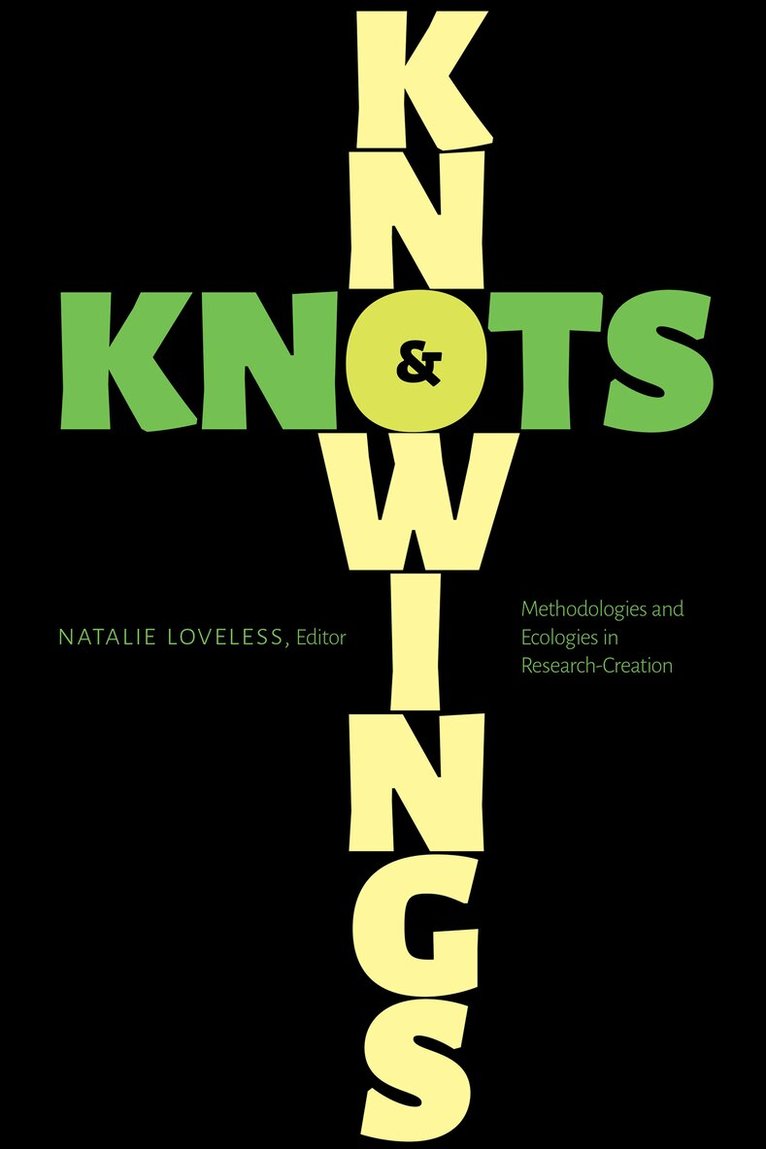
    Natalie Loveless is Associate Professor of Contemporary Art and Theory at the University of Alberta and editor of New Maternalisms Redux and Knowings and Knots: Methodologies and Ecologies in Research-Creation.

    Recensioner i media

    “In this beautifully argued, eminently readable book, stories are the center of attention. Morphing art and knowledge in the neoliberal university situates thinking and pedagogy. Curiosity-driven transdisciplinary practice is both motor and object of analysis. Natalie Loveless asks how stories craft worlds in politically and sensually attuned modes. I treasure the extensive knowledge of modernist performance art and art activism broadly, as well as rich semiotic and psychoanalytic readings of stories and performance. This book is itself a loving act of research-creation.” - Donna J. Haraway, author of (Staying with the Trouble: Making Kin in the Chthulucene) “In her evocative book How to Make Art at the End of the World, Natalie Loveless has captured the most urgent and far-reaching question concerning our cultural environment, that is, how to inhabit it in an era of geopolitical uncertainty. This is a daunting task; her ambitious answer, grounded in examples of alternative critical pedagogies, aims to reduce the toxic colonial footprint in arts education by developing a sustainable research-creation model based on differential multiplicities. And that gives us hope.” - Mary Kelly, Judge Widney Professor, USC Roski School of Art and Design “In this succinct book, Natalie Loveless explores the claim that art-making practices are well situated to challenge and change existing knowledge-making practices in the contemporary research university…. Her primary audience, researchers in art and fine art, will find the manifesto gives a sophisticated form to an emerging desire-an eros and 'attunement'-to not just study the world, but to have an impact on it.” - David Theodore (RACAR)  “A necessary read for artists and scholars who are drawn to, or already working with, artistically driven methods of teaching and researching.... Through the text, readers will gain a deeper understanding of how research-creation, beyond doing artistic research, is about creatively intervening in feminist and anti-racist research practices.”- Jo Billows and Stephanie Springgay (Journal for Artistic Research)

    Innehållsförteckning

    • Acknowledgments  ixIntroduction: Art in the Expanded Field  11. Haraway's Dog  192. Discipline(s)  383. Polydisciplinamory  594. Drive(s)  77Conclusion. Art at the End of the World  97Notes  109References  131Index  149