• Fri frakt över 249 kr
  • •
  • Snabba leveranser
  • •
  • Billiga böcker
Kundservice

Du är på sajten för privatpersoner.

Företag, bibliotek eller offentlig verksamhet?

Du handlar på classic.bokus.com, där alla dina funktioner finns intakta.
Till classic.bokus.com
Bokus logotyp. Gå till startsidan.
  • Erbjudanden
  • Nyheter
  • Student
  • Topplistor
  • Barn & ungdom
  • Bokus Play
  • E-böcker
  • Pocketböcker
  • Spel & pussel

10% rabatt på allt med kod NYSTART10 →

Sidfot

Mina sidor

    Hjälp

    • Kundservice
    • Vanliga frågor och svar
    • Frakt och leverans
    • Retur vid ångerrätt
    • Reklamera vara
    • Betalning
    • Köpvillkor
    • Allmänna villkor
    • Information om webbplatsens tillgänglighet

    Om Bokus

    • Om oss
    • Pressrum
    • För studenter
    • För företag
    • För bibliotek och offentlig verksamhet
    • För leverantörer
    • Hållbarhet

    Populärt

    • Aktuella erbjudanden
    • Presentkort
    • Studentlitteratur
    • Nya böcker
    • Topplistor
    • Signerade böcker
    • Engelska böcker

    Inspiration

    • Boktips
    • BookTok
    • Populära bokserier
    • Barnbokskaraktärer
    • Populära författare
    Logotyp för Bokus
    Följ oss på Facebook (extern länk)Följ oss på Instagram (extern länk)Följ oss på YouTube (extern länk)Följ oss på TikTok (extern länk)
    bokus @ CookiesAnpassa cookiesIntegritetspolicyKöpvillkor
    Till Citymail hemsida (extern länk)Till Budbee hemsida (extern länk)Till Postnord hemsida (extern länk)Till Schenker hemsida (extern länk)Till Early Bird hemsida (extern länk)Till Walleys hemsida (extern länk)
    1. Samhälle och politik
    2. Samhälle och kultur
    3. Kultur och medier
    4. Medievetenskap

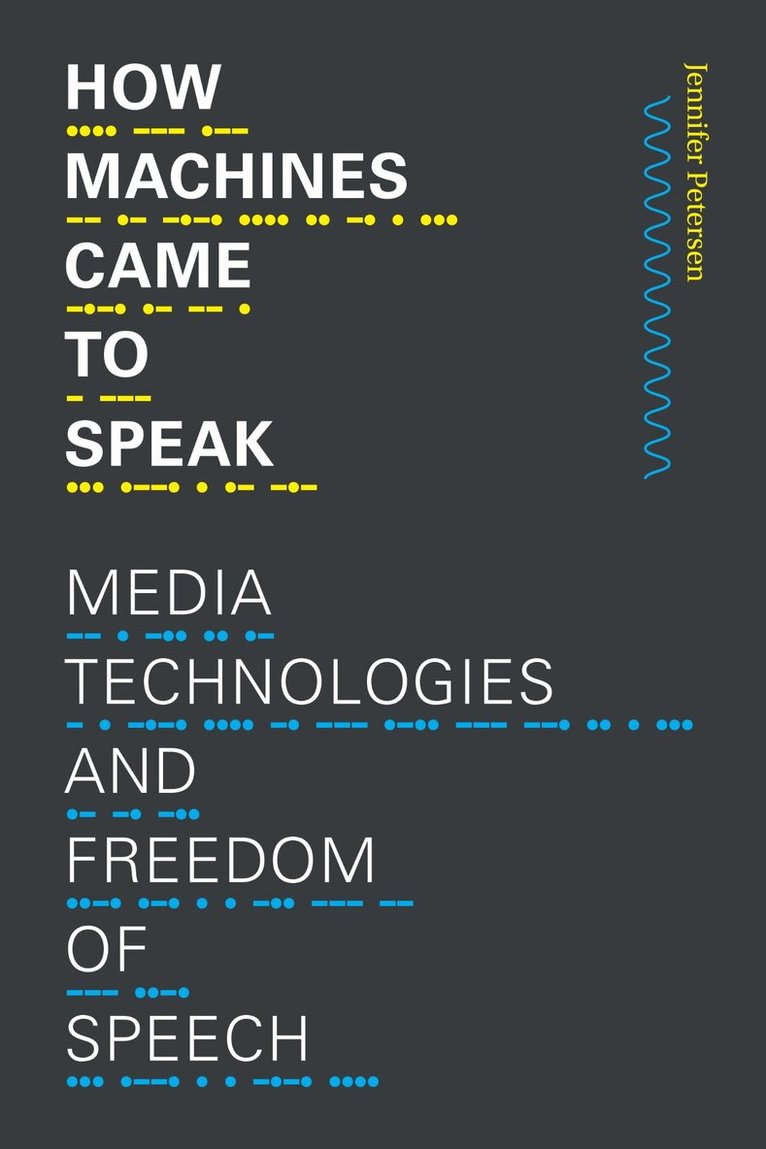
    How Machines Came to Speak

    Media Technologies and Freedom of Speech

    AvJennifer Petersen

    Inbunden, Engelska, 2022

    Del i serien Sign, Storage, Transmission

    1 090 kr

    Beställningsvara. Skickas inom 5-8 vardagar. Fri frakt över 249 kr.

    Fler format och utgåvor

    Häftad

    271 kr

    E-bok

    421 kr

    Beskrivning

    In How Machines Came to Speak Jennifer Petersen constructs a genealogy of how legal conceptions of “speech” have transformed over the last century in response to new media technologies. Drawing on media and legal history, Petersen shows that the legal category of speech has varied considerably, evolving from a narrow category of oratory and print publication to a broad, abstract conception encompassing expressive nonverbal actions, algorithms, and data. She examines a series of pivotal US court cases in which new media technologies-such as phonographs, radio, film, and computer code-were integral to this shift. In judicial decisions ranging from the determination that silent films were not a form of speech to the expansion of speech rights to include algorithmic outputs, courts understood speech as mediated through technology. Speech thus became disarticulated from individual speakers. By outlining how legal definitions of speech are indelibly dependent on technology, Petersen demonstrates that future innovations such as artificial intelligence will continue to restructure speech law in ways that threaten to protect corporate and institutional forms of speech over the rights and interests of citizens.

    Produktinformation

    • Utgivningsdatum:2022-04-08
    • Mått:152 x 229 x 21 mm
    • Vikt:544 g
    • Format:Inbunden
    • Språk:Engelska
    • Serie:Sign, Storage, Transmission
    • Antal sidor:304
    • Förlag:Duke University Press
    • ISBN:9781478013600

    Utforska kategorier

    • Medievetenskap inom Samhälle och politik
    • Underhållning och media: Juridik inom Juridik

    Mer om författaren

    Jennifer Petersen is Associate Professor of Communication in the Annenberg School for Communication and Journalism at the University of Southern California and author of Murder, the Media, and the Politics of Public Feelings: Remembering Matthew Shepard and James Byrd Jr.

    Recensioner i media

    “What does it mean for speech to be free? This rigorous, counterintuitive history reveals how changes in media technologies have transformed our answers to that question in the law and well beyond. As it shows, media technologies don’t just deliver speech; they model it. And when they do, they change the categories of thought and action through which we live our lives.” - Fred Turner, author of (The Democratic Surround: Multimedia and American Liberalism from World War II to the Psychedelic Sixties) “At the intersection of legal studies, cultural history, and media history, Jennifer Petersen’s book is a brilliant and groundbreaking study of the ways that modern First Amendment law has been shaped by judicial and cultural responses to the advent of new media technologies.” - Samantha Barbas, Professor of Law, University at Buffalo School of Law “[How Machines Came to Speak] provides many discussion opportunities-and questions-for anyone interested in the intricacies of free speech theory. Petersen does not claim to resolve the debate but invites readers to ‘rethink some of our fundamental assumptions about speech.’ All readers will benefit from heeding her invitation. Recommended.” - D. Caristi (Choice) "The book not only deftly weaves together an analysis of legal texts but also considers the drafts of judgements as discursive repositories to help substantiate the technocultural context and historical debates that informed them. One of the most interesting . . .  throughlines in the book is in the meta-research on communication theory and research and its in fluence over legal decisions at distinct points of her historiography." - Vipulya Chari (H-Sci-Med-Tech, H-Net Reviews) "How Machines Came to Speak remains one of the most exciting and intellectually powerful books I have read in years, particularly in the fields of legal history and technology studies." - Alex Sayl Cummings (Society for U.S. Intellectual History) “Jennifer Petersen’s book is well researched and all but predicts the flood of technologies that are upending the way we write and use information.” - Samantha Duckworth (Law Library Journal)

    Innehållsförteckning

    • Acknowledgments  viiIntroduction. The “Speech” in Freedom of Speech  11. Moving Images and Early Twentieth-Century Public Opinion  242. “A Primitive but Effective Means of Conveying Ideas”: Gesture and Image as Speech  573. Transmitters, Relays, and Messages: Decentering the Speaker in Midcentury Speech Law  874. Speech without Speakers: How Speech Became Information  1195. Speaking Machines: The Uncertain Subjects of Computer Communication  157Conclusion. The Past and Future of Speech  190Appendix on Methods  205Notes  207Bibliography  257Index  271