• Fri frakt över 249 kr
  • •
  • Snabba leveranser
  • •
  • Billiga böcker
Kundservice

Du är på sajten för privatpersoner.

Företag, bibliotek eller offentlig verksamhet?

Du handlar på classic.bokus.com, där alla dina funktioner finns intakta.
Till classic.bokus.com
Bokus logotyp. Gå till startsidan.
  • Erbjudanden
  • Nyheter
  • Student
  • Topplistor
  • Barn & ungdom
  • Bokus Play
  • E-böcker
  • Pocketböcker
  • Spel & pussel

10% rabatt på allt med kod: NYSTART10 →

Sidfot

Mina sidor

    Hjälp

    • Kundservice
    • Vanliga frågor och svar
    • Frakt och leverans
    • Retur vid ångerrätt
    • Reklamera vara
    • Betalning
    • Köpvillkor
    • Allmänna villkor
    • Information om webbplatsens tillgänglighet

    Om Bokus

    • Om oss
    • Pressrum
    • För studenter
    • För företag
    • För bibliotek och offentlig verksamhet
    • För leverantörer
    • Hållbarhet

    Populärt

    • Aktuella erbjudanden
    • Presentkort
    • Studentlitteratur
    • Nya böcker
    • Topplistor
    • Signerade böcker
    • Engelska böcker

    Inspiration

    • Boktips
    • BookTok
    • Populära bokserier
    • Barnbokskaraktärer
    • Populära författare
    Logotyp för Bokus
    Följ oss på Facebook (extern länk)Följ oss på Instagram (extern länk)Följ oss på YouTube (extern länk)Följ oss på TikTok (extern länk)
    bokus @ CookiesAnpassa cookiesIntegritetspolicyKöpvillkor
    Till Citymail hemsida (extern länk)Till Budbee hemsida (extern länk)Till Postnord hemsida (extern länk)Till Schenker hemsida (extern länk)Till Early Bird hemsida (extern länk)Till Walleys hemsida (extern länk)
    1. Kultur
    2. Scenkonst och film

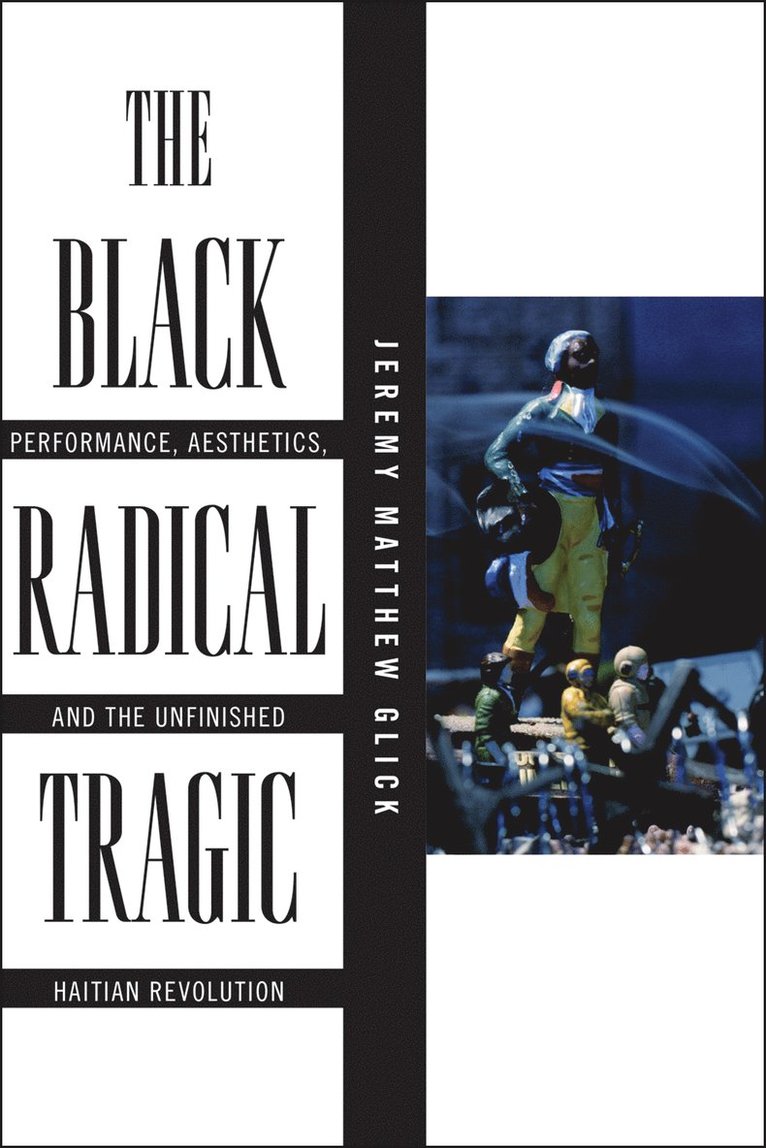
    Black Radical Tragic

    Performance, Aesthetics, and the Unfinished Haitian Revolution

    AvJeremy Matthew Glick

    Häftad, Engelska, 2016

    Del i serien America and the Long 19th Century

    433 kr

    Beställningsvara. Skickas inom 5-8 vardagar. Fri frakt över 249 kr.

    Fler format och utgåvor

    Inbunden

    1 269 kr

    Beskrivning

    2017 Nicolás Guillén Outstanding Book Award presented by the Caribbean Philosophical AssociationAs the first successful revolution emanating from a slave rebellion, the Haitian Revolution remains an inspired site of investigation for a remarkable range of artists and activist-intellectuals in the African Diaspora.In The Black Radical Tragic, Jeremy Matthew Glick examines twentieth-century performances engaging the revolution as laboratories for political thinking. Asking readers to consider the revolution less a fixed event than an ongoing and open-ended history resonating across the work of Atlantic world intellectuals, Glick argues that these writers use the Haitian Revolution as a watershed to chart their own radical political paths, animating, enriching, and framing their artistic and scholarly projects. Spanning the disciplines of literature, philosophy, and political thought, The Black Radical Tragic explores work from Lorraine Hansberry, Sergei Eisenstein, Edouard Glissant, Malcolm X, and others, ultimately enacting a speculative encounter between Bertolt Brecht and C.L.R. James to reconsider the relationship between tragedy and revolution. In its grand refusal to forget, The Black Radical Tragic demonstrates how the Haitian Revolution has influenced the ideas of freedom and self-determination that have propelled Black radical struggles throughout the modern era.

    Produktinformation

    • Utgivningsdatum:2016-01-15
    • Mått:152 x 229 x 19 mm
    • Vikt:45 g
    • Format:Häftad
    • Språk:Engelska
    • Serie:America and the Long 19th Century
    • Antal sidor:296
    • Förlag:New York University Press
    • ISBN:9781479813193

    Utforska kategorier

    • Scenkonst och film inom Kultur
    • Litteraturteori inom Skönlitteratur

    Mer om författaren

    Jeremy Matthew Glick is an Associate Professor of African Diaspora literature and modern drama in the English Department of Hunter College, CUNY.

    Recensioner i media

    "Jeremy Matthew GlicksThe Black Radical Tragicis a book we were all waiting for without knowing it. Only now, after finding it, do we know what we were waiting for." (Los Angeles Review of Books) "Jeremy Matthew Glick'sThe Black Radical Tragic is a book we were all waiting for without knowing it....[Glick] combines here a sober and ruthless insight into the necessary tragic twists of the revolutionary process with the unconditional fidelity to this process. He stands as far as possible from the standard 'anti-totalitarian' claim that, since every revolutionary process is destined to degenerate, its better to abstain from it. This readiness to take the risk and engage in the battle, although we know that we will probably be sacrificed in the course of the struggle, is the most precious insight for us who live in new dark times." - Slavoj Žižek (Los Angeles Review of Books) "The Black Radical Tragicis infused with questions of memory, revolution, and how these concepts interact with one another across history. With rigorous attunement to the various registers in which revolt is recalled and recited, Jeremy Matthew Glick charts the Haitian revolution as an extended, ongoing historical moment of fugitive insurgency, the open culmination of the terrible and beautiful interplay of enlightenment and darkness. A brilliant and necessary book." - Fred Moten,author of In the Break: The Aesthetics of the Black Radical Tradition "Grappling with the continuing reverberations of the Haitian Revolution in our present, Jeremy Matthew GlicksTheBlack Radical Tragicdefines the notion of the tragic within the black radical tradition with remarkable insights and impressive breadth. An engagingly written text that will shape not only how we think about the centrality of the Haitian Revolution but also questions of the modern in political thought." - Anthony Bogues,Brown University "Glicks book...stands as an indispensable contribution to the field. Staging an essentialand all too rareconversation between dramatic literature and black radicalism, Glicks work itself stands as part of what Errol Hill called 'the revolutionary tradition in black drama.'" (TDR: The Drama Review)