• Fri frakt över 249 kr
  • •
  • Snabba leveranser
  • •
  • Billiga böcker
Kundservice

Du är på sajten för privatpersoner.

Företag, bibliotek eller offentlig verksamhet?

Du handlar på classic.bokus.com, där alla dina funktioner finns intakta.
Till classic.bokus.com
Bokus logotyp. Gå till startsidan.
  • Erbjudanden
  • Student
  • Topplistor
  • Barn & ungdom
  • Bokus Play
  • E-böcker
  • Ljudböcker
  • Pocketböcker
  • Spel & pussel

10% rabatt på allt med kod NYSTART10 →

Sidfot

Mina sidor

    Hjälp

    • Kundservice
    • Vanliga frågor och svar
    • Frakt och leverans
    • Retur vid ångerrätt
    • Reklamera vara
    • Betalning
    • Köpvillkor
    • Allmänna villkor
    • Information om webbplatsens tillgänglighet

    Om Bokus

    • Om oss
    • Pressrum
    • För studenter
    • För företag
    • För bibliotek och offentlig verksamhet
    • För leverantörer
    • Hållbarhet

    Populärt

    • Aktuella erbjudanden
    • Presentkort
    • Studentlitteratur
    • Nya böcker
    • Topplistor
    • Signerade böcker
    • Engelska böcker

    Inspiration

    • Boktips
    • BookTok
    • Populära bokserier
    • Barnbokskaraktärer
    • Populära författare
    Logotyp för Bokus
    Följ oss på Facebook (extern länk)Följ oss på Instagram (extern länk)Följ oss på YouTube (extern länk)Följ oss på TikTok (extern länk)
    bokus @ CookiesAnpassa cookiesIntegritetspolicyKöpvillkor
    Till Citymail hemsida (extern länk)Till Budbee hemsida (extern länk)Till Postnord hemsida (extern länk)Till Schenker hemsida (extern länk)Till Early Bird hemsida (extern länk)Till Walleys hemsida (extern länk)
    1. Samhälle och politik
    2. Sociologi och antropologi
    3. Sociologi

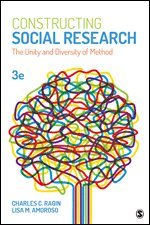
    Constructing Social Research

    The Unity and Diversity of Method

    AvCharles C. Ragin,Lisa M. Amoroso

    Häftad, Engelska, 2018

    866 kr

    Beställningsvara. Skickas inom 5-8 vardagar. Fri frakt över 249 kr.

    Beskrivning

    The updated Third Edition of this innovative text shows the unity within the diversity of activities called social research to help students understand how all social researchers construct representations of social life using theories, systematic data collection, and careful examination of that data. The book tackles questions like "What is social research?", "How does it differ from journalism, documentary film-making, or laboratory research in the natural sciences?", and "What is the researcher's obligation to those he or she is studying?"

    Updated throughout with new references and examples, this edition is designed to evoke challenging questions regarding the nature of representation and the ethical challenges facing social scientific researchers. The text moves beyond standard research challenges to push readers to see the complex relationships among ethics, ideas, evidence, and outcomes.

    Produktinformation

    • Utgivningsdatum:2018-06-26
    • Mått:152 x 228 x 13 mm
    • Vikt:320 g
    • Format:Häftad
    • Språk:Engelska
    • Antal sidor:232
    • Upplaga:3
    • Förlag:SAGE Publications
    • ISBN:9781483379302

    Utforska kategorier

    • Sociologi inom Samhälle och politik

    Mer om författaren

    Charles C. Ragin spent most of his youth in Texas and the southeastern United States. He attended the University of Texas at Austin as an undergraduate and received his BA degree in 1972 at the age of 19. That same year he began graduate work in sociology at the University of North Carolina at Chapel Hill and received his PhD in 1975. From 1975 until 2001, he lived in the Midwest, teaching first at Indiana University and then at Northwestern University. He headed west in 2001, where he spent just over a decade at University of Arizona-Tucson. In 2012, he joined the faculty at the University of California-Irvine, where he is currently the Chancellor′s Professor of Sociology. He is best known for developing a methodological alternative to conventional research methods, using formal set-theoretic techniques for comparative research. His many publications address broad issues in politics and society, with topics ranging from the causes of ethnic political mobilization to the shaping of the welfare state in advanced capitalist countries. He has written several books including Intersectional Inequality: Race, Class, Test Scores and Poverty (with Peer Fiss, 2017). Redesigning Social Inquiry: Fuzzy Sets and Beyond (2008) Fuzzy-Set Social Science (2000). His book The Comparative Method: Moving Beyond Qualitative and Quantitative Strategies (1987) won the 1989 Stein Rokkan Prize of the International Social Science Council of UNESCO. In 2014 he received the Paul F. Lazarsfeld Award of the American Sociological Association. He is married to Mary Driscoll, and they have two sons, Andrew and Daniel.Lisa M. Amoroso spent her childhood in Pittsburgh and the suburbs of Chicago. She attended Northwestern University for her BA in economics and mathematical methods in the social sciences. After working in software development and management systems, she returned to Northwestern and the Kellogg School of Management, where she completed her PhD in a joint program in sociology and organization behavior in 2003. Since leading her first seminar at Northwestern in 1997, she has been teaching in the Midwest—at Northwestern, Beloit College, Roosevelt University, and currently Dominican University in River Forest, Illinois. Research methods and quantitative analysis are among her favorite courses to teach. In 2010, she joined Dominican’s Brennan School of Business where she is a Professor of Management. She received Excellence in Teaching awards at Roosevelt in 2007 and at the Brennan School of Business in 2016. Although her primary focus is teaching, she publishes research on diversity education, social identity, status hierarchies, and student learning. She has published in variety of journals including Psychological Inquiry and Journal of Management Education. She is married to Phil Tracy, and they have two children, Nate and Carmen.

    Recensioner i media

    Treats research appropriately as an epistemological action of queries and interplay between induction and deduction. Other research textbooks tend to exclusively focus on the mechanics of the research process. The authors′ approach is helpful for students new to research and analysis. It allows me, within 4 months, to take students with no knowledge of sociological studies other than a cursory description of findings in an introductory class to a mastery level where they are able to conduct and write up an an original study. Best book ever!

    Innehållsförteckning

    • PrefaceAcknowledgmentsPART I: ELEMENTS OF SOCIAL RESEARCHCHAPTER 1: What Is (and Is Not) Social Research?IntroductionSome Conventional Views of Social ResearchSocial Research and Other Ways of Representing Social LifeHow Social Research DiffersConclusionCHAPTER 2: The Goals of Social ResearchIntroductionSeven Main GoalsThe Link Between Goals and StrategiesThe Social Nature of Social ResearchCHAPTER 3: The Process of Social Research: Ideas and EvidenceIntroductionThe Interpretive Model of Social ResearchProcesses and Strategies of Social ResearchThe Challenge of Social ResearchCHAPTER 4: The Ethics of Social ResearchIntroductionEthical Dilemmas and FailuresThe Troubled History of Ethical ResearchThe Current Ethical Standards and Institutional OversightEthical and Professional Dilemmas Facing Social ResearchersThe Problem of RepresentationConclusionPART II: STRATEGIES OF SOCIAL RESEARCHCHAPTER 5: Using Qualitative Methods to Study CommonalitiesIntroductionThe Goals of Qualitative ResearchThe Process of Qualitative ResearchUsing Qualitative MethodsThe Study of a Single CaseConclusionCHAPTER 6: Using Comparative Methods to Study DiversityIntroductionContrasts With Other Research StrategiesThe Goals of Comparative ResearchThe Process of Comparative ResearchUsing Comparative MethodsConclusionCHAPTER 7: Using Quantitative Methods to Study CovariationIntroductionThe Goals of Quantitative ResearchContrasts With Other Research StrategiesThe Process of Quantitative ResearchUsing Quantitative MethodsConclusionAfterword: The Promise of Social Research With Mary DriscollAppendix: Computing Correlation CoefficientsReferencesGlossary/IndexAbout the Authors