• Fri frakt över 249 kr
  • •
  • Snabba leveranser
  • •
  • Billiga böcker
Kundservice

Du är på sajten för privatpersoner.

Företag, bibliotek eller offentlig verksamhet?

Du handlar på classic.bokus.com, där alla dina funktioner finns intakta.
Till classic.bokus.com
Bokus logotyp. Gå till startsidan.
  • Erbjudanden
  • Nyheter
  • Student
  • Topplistor
  • Barn & ungdom
  • Bokus Play
  • E-böcker
  • Pocketböcker
  • Spel & pussel

10% rabatt på allt med kod: NYSTART10 →

Sidfot

Mina sidor

    Hjälp

    • Kundservice
    • Vanliga frågor och svar
    • Frakt och leverans
    • Retur vid ångerrätt
    • Reklamera vara
    • Betalning
    • Köpvillkor
    • Allmänna villkor
    • Information om webbplatsens tillgänglighet

    Om Bokus

    • Om oss
    • Pressrum
    • För studenter
    • För företag
    • För bibliotek och offentlig verksamhet
    • För leverantörer
    • Hållbarhet

    Populärt

    • Aktuella erbjudanden
    • Presentkort
    • Studentlitteratur
    • Nya böcker
    • Topplistor
    • Signerade böcker
    • Engelska böcker

    Inspiration

    • Boktips
    • BookTok
    • Populära bokserier
    • Barnbokskaraktärer
    • Populära författare
    Logotyp för Bokus
    Följ oss på Facebook (extern länk)Följ oss på Instagram (extern länk)Följ oss på YouTube (extern länk)Följ oss på TikTok (extern länk)
    bokus @ CookiesAnpassa cookiesIntegritetspolicyKöpvillkor
    Till Citymail hemsida (extern länk)Till Budbee hemsida (extern länk)Till Postnord hemsida (extern länk)Till Schenker hemsida (extern länk)Till Early Bird hemsida (extern länk)Till Walleys hemsida (extern länk)
    1. Djur och Natur
    2. Naturböcker
    3. Växtböcker

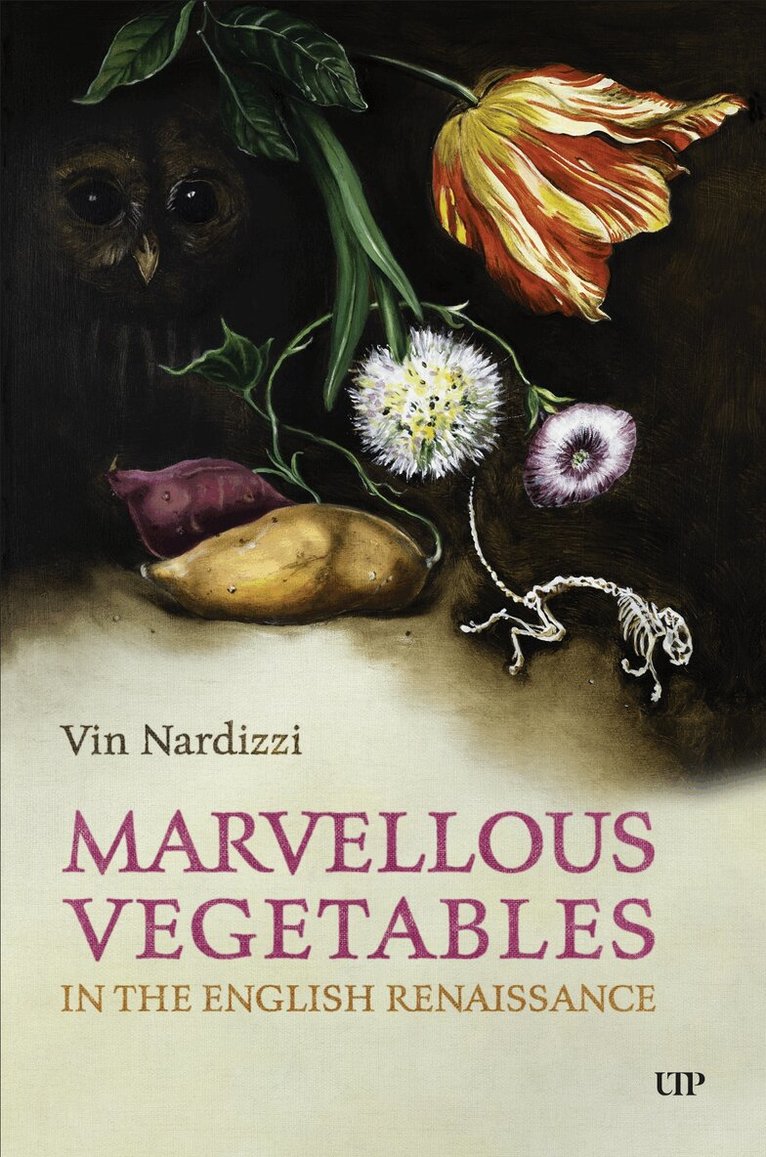
    Marvellous Vegetables in the English Renaissance

    AvVin Nardizzi

    Inbunden, Engelska, 2025

    1 188 kr

    Beställningsvara. Skickas inom 5-8 vardagar. Fri frakt över 249 kr.

    Beskrivning

    John Gerard’s natural history of plants, The Herball (1597), is considered a failure in the history of science. Despite this reputation, it has endured as an aesthetic resource. Its illustrations were used as needlework patterns, and strewn across its pages are extracts of classical poetry, including Ovid’s Metamorphoses, that delight and instruct. It is little wonder that early modern poets, like Shakespeare and Milton, gathered inspiration from this storehouse of plants.In Marvellous Vegetables in the English Renaissance, Vin Nardizzi offers a reparative reading of Gerard’s “failed” text, particularly its chapters on leeks, laurels, tulips, and potatoes. Through a series of experiments in speculative natural history, which require an analysis of both word and image, Nardizzi distills The Herball’s logic and poetics, its distinctions and infelicities, and demonstrates the entanglements of humans and plants at the core of Shakespeare’s plays. Exploring these “cross-kingdom” encounters, Nardizzi contributes to the burgeoning field of queer ecologies by treating plant natural history as a serious intellectual resource for writing a counter-history of embodiment at the turn of the seventeenth century. All we need do, Nardizzi proposes, is smell the flowers.

    Produktinformation

    • Utgivningsdatum:2025-08-12
    • Mått:159 x 235 x 33 mm
    • Vikt:880 g
    • Format:Inbunden
    • Språk:Engelska
    • Antal sidor:504
    • Förlag:University of Toronto Press
    • ISBN:9781487500702

    Utforska kategorier

    • Växtböcker inom Djur och Natur
    • Botanik inom Naturvetenskap och teknik
    • Litteraturvetenskap inom Skönlitteratur

    Mer om författaren

    Vin Nardizzi is a professor in the Department of English Language and Literatures at the University of British Columbia.

    Recensioner i media

    "Marvellous Vegetables in the English Renaissance is a lively piece of speculative literary criticism that not only offers innovative readings of Gerard’s text (a task that has challenged readers for centuries), but also how to read such a text. This book will delight the senses of scholars and students alike and is an important contribution equally to the field of ecostudies and to early modern studies more broadly. Not only does it answer important questions about how and why we might read Gerard or offer new ways to think about some of the plants that appear in literature, but it also reminds us that reading itself should be a joyful act of discovery. As a result, the book feels like play (in the best senses) more than stiff scholarship." - Jennifer Munroe, Professor Emerita, Department of English, University of North Carolina, Charlotte "The chapters of this book may begin with Gerard but thereafter they spin a wide web, touching multiple representations of the plants discussed in literature, natural history, and art. The result is an original and suggestive picture of the imbrication of vegetal life in the early modern imagination. Reading Marvellous Vegetables in the English Renaissance feels like an Elizabethan experience of play mixed with deep learning." - Rebecca Bushnell, Professor Emerita, Department of English, University of Pennsylvania "Marvelous Vegetables in the English Renaissance is a work of stunning erudition that uses John Gerard as the origin point for a wide-ranging yet ever-thoughtful analysis of human-plant entanglements across Renaissance cultures. Engagingly written, in a lively prose that does not shy away from playfulness when the topic or moment requires, this book is clearly the work of a subtle critical mind with an incredible command of botanical history. Marvelous Vegetables is a remarkable example of scholarly focus and generosity, written with joy, rigour, and a kind of galvanizing good humour that remains all too rare." - Natania Meeker, Associate Professor of French and Comparative Literature, University of Southern California

    Innehållsförteckning

    • List of IllustrationsAcknowledgmentsIntroductionPart One: Leeks1. Like a Leek: Transplant Figures in Natural History, the Leek Family, and the Porrophagus of Henry V2. As Green as Leeks: Vegetable Blazons, Leaky Eyes, and the Transplant Poetics of Arcimboldo and ShakespearePart Two: Laurels3. In Pursuit of Laurels: Description, Ovid’s Plant-Blazons, and Les Mains of Daphne4. In Praise of Daphnes: Philodendrism, Two Elizabethan Laurels, and “that well timber’d body”Part Three: Tulips5. Tulips (I): Counting Infinite Kinds, Nature’s Face-Paintings, and Two Tulip Miniatures 6. Tulips (II): Tracking Two Turban Errors, Bellicose Flowers, and Three Talkative TulipsPart Four: Potatoes7. The Real Potatoes of Peru: Gerard’s Signature Plant, Mixed Roots, and the Golden Potatoes of The Merry Wives of WindsorEpilogue: Gerard’s “Fatal Crime”: Barnacle Geese, the Most Marvellous of All VegetablesNotesBibliographyIndex