• Fri frakt över 249 kr
  • •
  • Snabba leveranser
  • •
  • Billiga böcker
Kundservice

Du är på sajten för privatpersoner.

Företag, bibliotek eller offentlig verksamhet?

Du handlar på classic.bokus.com, där alla dina funktioner finns intakta.
Till classic.bokus.com
Bokus logotyp. Gå till startsidan.
  • Erbjudanden
  • Nyheter
  • Student
  • Topplistor
  • Barn & ungdom
  • Bokus Play
  • E-böcker
  • Pocketböcker
  • Spel & pussel

Må bättre, för mindre! Upp till 50% rabatt på hälsoböcker

Sidfot

Mina sidor

    Hjälp

    • Kundservice
    • Vanliga frågor och svar
    • Frakt och leverans
    • Retur vid ångerrätt
    • Reklamera vara
    • Betalning
    • Köpvillkor
    • Allmänna villkor
    • Information om webbplatsens tillgänglighet

    Om Bokus

    • Om oss
    • Pressrum
    • För studenter
    • För företag
    • För bibliotek och offentlig verksamhet
    • För leverantörer
    • Hållbarhet

    Populärt

    • Aktuella erbjudanden
    • Presentkort
    • Studentlitteratur
    • Nya böcker
    • Topplistor
    • Signerade böcker
    • Engelska böcker

    Inspiration

    • Boktips
    • BookTok
    • Populära bokserier
    • Barnbokskaraktärer
    • Populära författare
    Logotyp för Bokus
    Följ oss på Facebook (extern länk)Följ oss på Instagram (extern länk)Följ oss på YouTube (extern länk)Följ oss på TikTok (extern länk)
    bokus @ CookiesAnpassa cookiesIntegritetspolicyKöpvillkor
    Till Citymail hemsida (extern länk)Till Budbee hemsida (extern länk)Till Postnord hemsida (extern länk)Till Schenker hemsida (extern länk)Till Early Bird hemsida (extern länk)Till Walleys hemsida (extern länk)
    1. Samhälle och politik
    2. Samhälle och kultur
    3. Kultur och medier
    4. Referensverk och tvärvetenskap

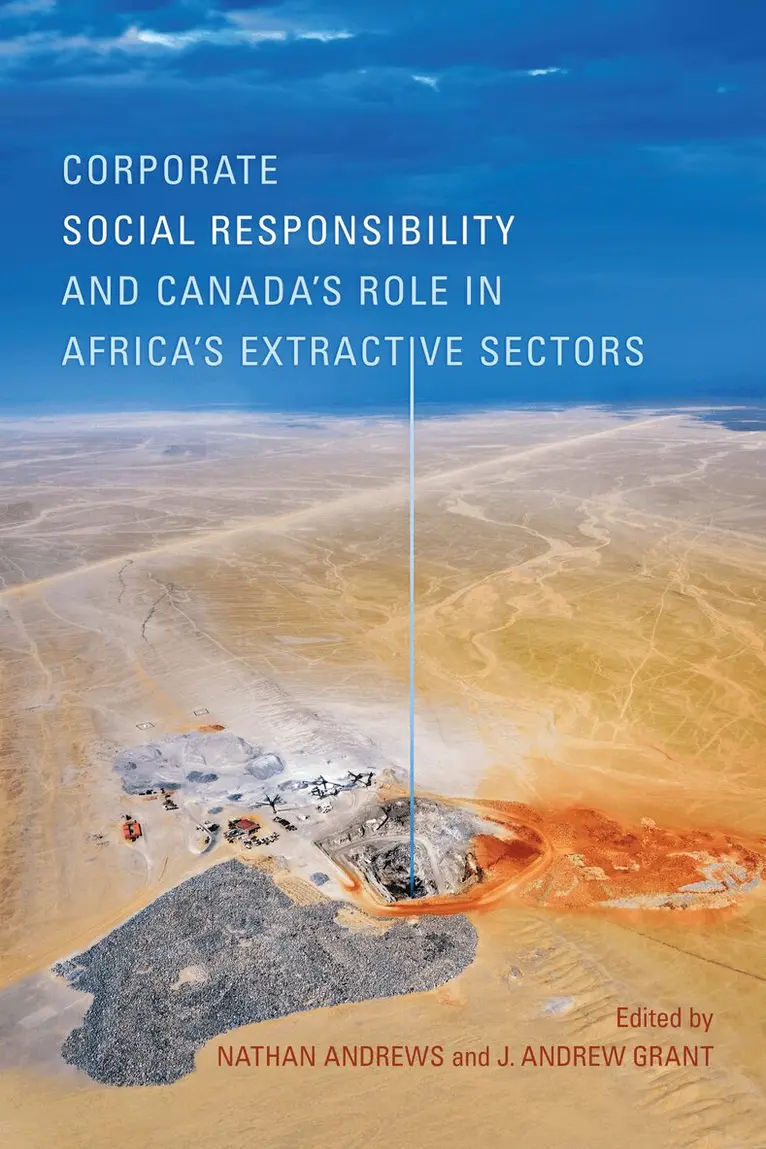
    Corporate Social Responsibility and Canada's Role in Africa's Extractive Sectors

    AvNathan Andrews,j. Andrew Grant

    Inbunden, Engelska, 2020

    800 kr

    Beställningsvara. Skickas inom 5-8 vardagar. Fri frakt över 249 kr.

    Beskrivning

    Africa’s natural resource sectors are experiencing unprecedented levels of foreign investment and production. Hailed as a means of reducing poverty and reliance on foreign aid, the role of foreign corporations in Africa’s extractive sector is not well understood and important questions remain about the impact of such activities on people and on the environment.With reference to global governance initiatives aimed at promoting ethical business practices, this volume offers a timely examination of Canada-Africa relations and natural resource governance. Few Canadians realize how significant a role their country plays in investing in Africa’s natural resource sector. The editors and contributors consider the interplay between public opinion, corporate social responsibility, and debates about the extraction and trade of Africa’s natural resources.

    Produktinformation

    • Utgivningsdatum:2020-01-28
    • Mått:157 x 231 x 25 mm
    • Vikt:600 g
    • Format:Inbunden
    • Språk:Engelska
    • Antal sidor:320
    • Förlag:University of Toronto Press
    • ISBN:9781487503086

    Utforska kategorier

    • Referensverk och tvärvetenskap inom Samhälle och politik
    • Internationella relationer inom Samhälle och politik

    Mer om författaren

    Nathan Andrews is an associate professor of international relations at McMaster University.J. Andrew Grant is an associate professor of political studies at Queen’s University.

    Innehållsförteckning

    • Section I – Introduction: Conceptual Approaches and Policy Implications 1. Africa-Canada Relations in Natural Resource Sectors: Approaches to (and Prospects for) Corporate Social Responsibility, Good Governance, and Human Security – Nathan Andrews, University of Northern British Columbia and J. Andrew Grant, Queen’s UniversitySection II – Canada in Africa: From the Global to the Local (and Back) 2. Canadian Government and Corporate Social Responsibility: Implications for Sustainable Development in Africa – Uwafiokun Idemudia, York University; W. R. Nadège Compaoré, York University & Canadian Institute for Advanced Research (CIFAR); and Cynthia Kwakyewah, Tony Elumelu Foundation3. Corporate Social Responsibility and Canada’s Role in Africa’s Extractive Industries: A Critical Analysis – Nketti Johnston-Taylor, United Way Calgary 4. Canadian Perspectives on the Voluntary Principles on Security and Human Rights in Africa: Assessing the Legitimacy of Multi-Stakeholder Initiatives in Extractive Sectors – Charis Enns, University of Sheffield & Aga Khan University, Kenya 5. The Impact of the Voluntary Principles on Security and Human Rights on Corporate Social Responsibility Policies: An Assessment of Canadian Mining Firms – Jason J. McSparren, University of Massachusetts, Boston 6. Natural Resource Governance and Human Security: What has Canada got to do with Artisanal and Small-Scale Mining in Africa? – Timothy Adivilah Balag’kutu, University of Massachusetts, BostonSection III – Corporate Social Responsibility, Norms, and Development 7. Global Governance via Local Procurement? Interrogating the Promotion of Local Procurement as a Corporate Social Responsibility Strategy – Paula Butler, Wilfrid Laurier University8. Examining the Dynamics of Global Corporate Social Responsibility Frameworks and Canadian Mining Firms: Insights from Ghana and South Africa – Raynold Wonder Alorse, Queen’s University 9. ‘Golden’ Expectations: Corporate Social Responsibility and Governance in South Africa’s Mining Sector – David Orr, University of Cambridge 10. A Natural Resource Boon or Impending Doom in East Africa? Political Settlements and Governance Dynamics in Uganda’s Oil Sector – Shingirai Taodzera, University of Ottawa Section IV – Concluding Remarks: Reflections on Corporate Social Responsibility, Legitimacy, and Africa-Canada Relations in Natural Resource Sectors 11. Corporate Social Responsibility and Issues of Legitimacy and Development: Reflections on the Mining Sector in Africa – Bonnie Campbell, Université du Québec à Montréal 12. Reflections on Africa-Canada Relations in Natural Resource Sectors in the 2020s – J. Andrew Grant, Queen’s University and Nathan Andrews, University of Northern British Columbia