• Fri frakt över 249 kr
  • •
  • Snabba leveranser
  • •
  • Billiga böcker
Kundservice

Du är på sajten för privatpersoner.

Företag, bibliotek eller offentlig verksamhet?

Du handlar på classic.bokus.com, där alla dina funktioner finns intakta.
Till classic.bokus.com
Bokus logotyp. Gå till startsidan.
  • Erbjudanden
  • Nyheter
  • Student
  • Topplistor
  • Barn & ungdom
  • Bokus Play
  • E-böcker
  • Pocketböcker
  • Spel & pussel

10% rabatt på allt med kod: NYSTART10 →

Sidfot

Mina sidor

    Hjälp

    • Kundservice
    • Vanliga frågor och svar
    • Frakt och leverans
    • Retur vid ångerrätt
    • Reklamera vara
    • Betalning
    • Köpvillkor
    • Allmänna villkor
    • Information om webbplatsens tillgänglighet

    Om Bokus

    • Om oss
    • Pressrum
    • För studenter
    • För företag
    • För bibliotek och offentlig verksamhet
    • För leverantörer
    • Hållbarhet

    Populärt

    • Aktuella erbjudanden
    • Presentkort
    • Studentlitteratur
    • Nya böcker
    • Topplistor
    • Signerade böcker
    • Engelska böcker

    Inspiration

    • Boktips
    • BookTok
    • Populära bokserier
    • Barnbokskaraktärer
    • Populära författare
    Logotyp för Bokus
    Följ oss på Facebook (extern länk)Följ oss på Instagram (extern länk)Följ oss på YouTube (extern länk)Följ oss på TikTok (extern länk)
    bokus @ CookiesAnpassa cookiesIntegritetspolicyKöpvillkor
    Till Citymail hemsida (extern länk)Till Budbee hemsida (extern länk)Till Postnord hemsida (extern länk)Till Schenker hemsida (extern länk)Till Early Bird hemsida (extern länk)Till Walleys hemsida (extern länk)
    1. Skönlitteratur
    2. Litteraturvetenskap
    3. Litteraturvetenskap

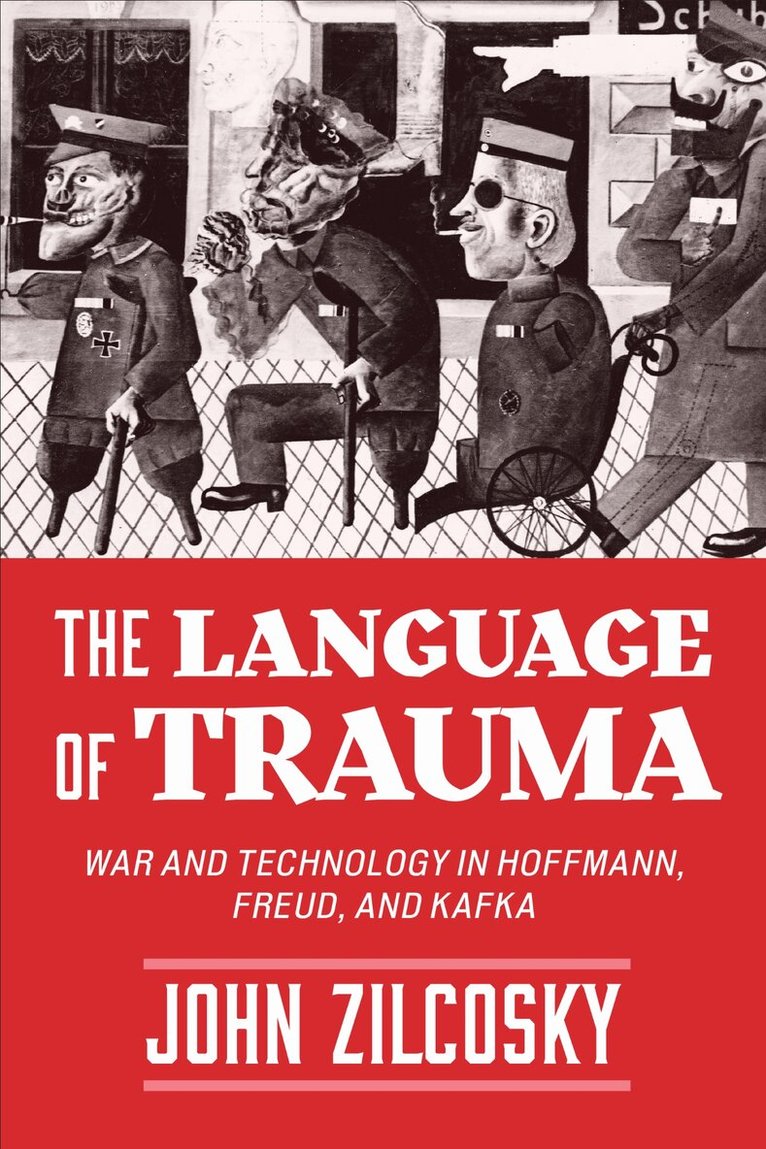
    Language of Trauma

    War and Technology in Hoffmann, Freud, and Kafka

    AvJohn Zilcosky

    E-bok
    PDF, Engelska, 2021

    399 kr

    Läs direkt i Bokus Reader – eller ladda ned till din enhet (PDF kräver ofta zoom och scroll på små skärmar).

    Fler format och utgåvor

    E-bok

    399 kr

    Häftad

    323 kr

    Beskrivning

    From the Napoleonic Wars to the invention of the railway to the shell shock of World War I, writers tried to give voice to the suffering that war and industrial technology had wrought all around them. Yet they, like the doctors who treated these victims, repeatedly ran up against the incapacity of language to describe such anguish; those who suffered trauma, those who tried to heal it, and those who represented it were all unable to find the appropriate words. In The Language of Trauma, John Zilcosky uncovers the reactions of three major central European writers – E.T.A. Hoffmann, Sigmund Freud, and Franz Kafka – to the birth of modern trauma in the nineteenth and early twentieth centuries.

    Zilcosky makes the case that Hoffmann, Freud, and Kafka managed to find the language of trauma precisely by not attempting to name the trauma conclusively and instead allowing their writing to mimic the experience itself. Just as the victims’ symptoms seemed not to correspond to a physical cause, the writers’ words did not connect directly to the objects of the world. While doctors attempted to overcome this indeterminacy, these writers embraced and investigated it; they sought a language that described language’s tragic limits and that, in so doing, exemplified the wider literary and philosophical crisis of their time. Zilcosky boldly argues that this linguistic scepticism emerged together with the medical inability to name the experience of trauma. He thereby places trauma where it belongs: at the heart of both medicine’s diagnostic predicament and modern literature’s most daring experiments.

    Produktinformation

    • Utgivningsdatum:2021-06-01
    • Språk:Engelska
    • Antal sidor:192
    • Filformat:PDF
    • Kopieringsskydd:LCP
    • ISBN:9781487509408
    • Förlag:University of Toronto Press

    Utforska kategorier

    • Litteraturvetenskap inom Skönlitteratur
    • Medicinhistoria inom Medicin

    Mer om författaren

    John Zilcosky is a professor of German and Comparative Literature at the University of Toronto.

    Recensioner i media

    "Zilcosky’s book is field-transforming and makes clear for the first time how Hoffman, Freud, and Kafka were hinting at traumatic symptoms in their stories, how they foregrounded the indeterminacy of language, and how they struggled to reveal the unintelligible symptoms of the traumas experienced in their time period." - Susan E. Gustafson, University of Rochester-NY (Monatshefte)

    Innehållsförteckning

    • AcknowledgmentsList of IllustrationsIntroduction: Literature, Trauma, and the Sign of Illness1. Hoffmann at the Battle of Dresden: "The Sandman" and the Napoleonic Wars2. Freud and World War I: The Uncanny Trauma of Contagion3. Inexplicable Tears: Trains, Wars, and Kafka’s Aesthetic of IndeterminacyConclusion: The Poetics of Trauma: Simulation, Causality, and the Crisis of InsuranceNotesIndex