• Fri frakt över 249 kr
  • •
  • Snabba leveranser
  • •
  • Billiga böcker
Kundservice

Du är på sajten för privatpersoner.

Företag, bibliotek eller offentlig verksamhet?

Du handlar på classic.bokus.com, där alla dina funktioner finns intakta.
Till classic.bokus.com
Bokus logotyp. Gå till startsidan.
  • Erbjudanden
  • Student
  • Topplistor
  • Barn & ungdom
  • Bokus Play
  • E-böcker
  • Ljudböcker
  • Pocketböcker
  • Spel och pussel

Pocketfynda! Hundratals böcker för 49 kr/st →

Sidfot

Mina sidor

    Hjälp

    • Kundservice
    • Vanliga frågor och svar
    • Frakt och leverans
    • Retur vid ångerrätt
    • Reklamera vara
    • Betalning
    • Köpvillkor
    • Allmänna villkor
    • Information om webbplatsens tillgänglighet

    Om Bokus

    • Om oss
    • Pressrum
    • För studenter
    • För företag
    • För bibliotek och offentlig verksamhet
    • För leverantörer
    • Hållbarhet

    Populärt

    • Aktuella erbjudanden
    • Presentkort
    • Studentlitteratur
    • Nya böcker
    • Topplistor
    • Signerade böcker
    • Engelska böcker

    Inspiration

    • Boktips
    • BookTok
    • Barnbokskaraktärer
    • Populära författare
    Logotyp för Bokus
    Följ oss på Facebook (extern länk)Följ oss på Instagram (extern länk)Följ oss på YouTube (extern länk)Följ oss på TikTok (extern länk)
    bokus @ CookiesAnpassa cookiesIntegritetspolicyKöpvillkor
    Till Citymail hemsida (extern länk)Till Budbee hemsida (extern länk)Till Postnord hemsida (extern länk)Till Schenker hemsida (extern länk)Till Early Bird hemsida (extern länk)Till Walleys hemsida (extern länk)
    1. Samhälle och politik
    2. Politik och statsskick

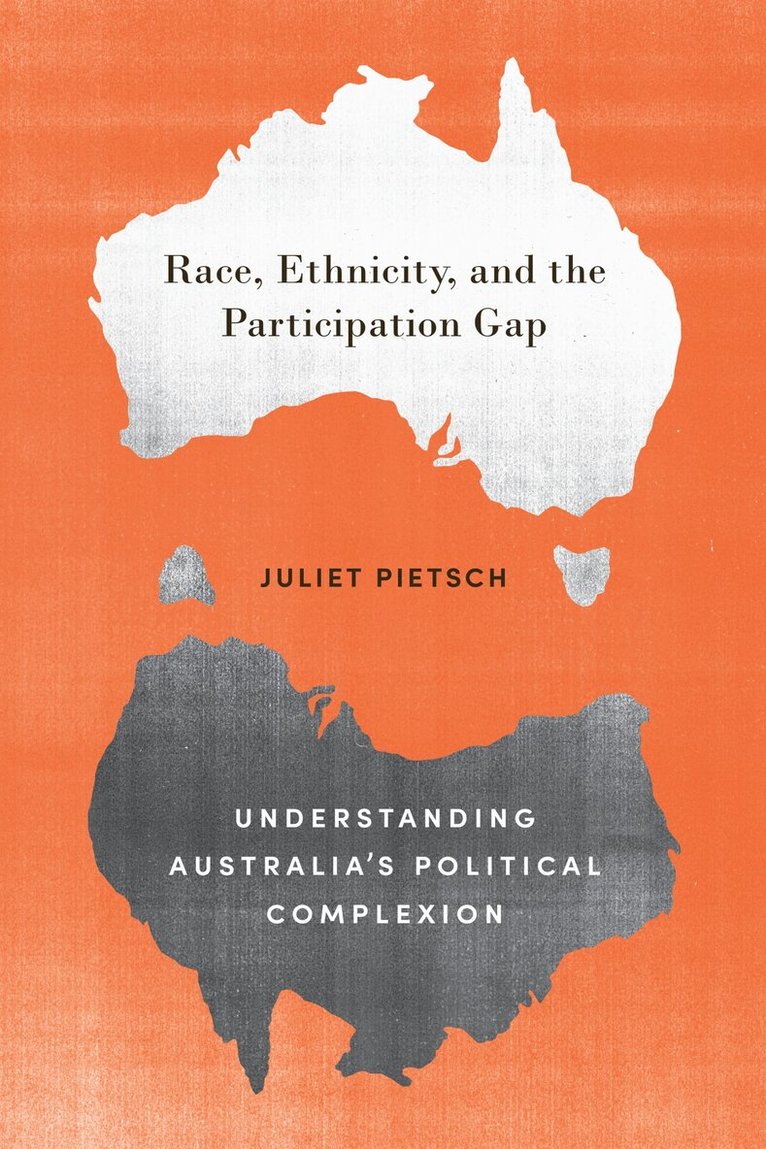
    Race, Ethnicity, and the Participation Gap

    Understanding Australia's Political Complexion

    AvJuliet Pietsch

    E-bok
    PDF, Engelska, 2018

    900 kr

    Läs direkt i Bokus Reader – eller ladda ned till din enhet (PDF kräver ofta zoom och scroll på små skärmar).

    Fler format och utgåvor

    Inbunden

    702 kr

    E-bok

    900 kr

    Beskrivning

    Race, Ethnicity, and the Participation Gap begins with the argument that political institutions in settler and culturally diverse societies such as Australia, the United States, and Canada should mirror their culturally diverse populations. Compared to the United States and Canada, however, Australia has very low rates of immigrant and ethnic minority political representation in the Commonwealth Parliament, particularly in the House of Representatives. The overall existence of racial hierarchies within formal political institutions represents an inconsistency with the democratic ideals of representation and accountability in pluralist societies.

    Drawing on findings from the United States, Canada, and Australia, Juliet Pietsch reveals that the lack of political representation in Australia is significant when compared to the United States and Canada, revealing a serious democratic deficit. Her book is devoted to exploring this central puzzle: why is it that, despite having a similar history to other settler countries, Australia shows such comparatively low rates of political participation among its immigrant and ethnic minority populations from non-British and European backgrounds? In addressing this crucial question, Race, Ethnicity, and the Participation Gap examines the impact of Australia’s alternative path on the political representation of immigrants and ethnic minorities.

    Produktinformation

    • Utgivningsdatum:2018-11-21
    • Språk:Engelska
    • Antal sidor:224
    • Filformat:PDF
    • Kopieringsskydd:LCP
    • ISBN:9781487519544
    • Förlag:University of Toronto Press

    Utforska kategorier

    • Politik och statsskick inom Samhälle och politik
    • Företagsekonomi inom Ekonomi och Ledarskap

    Mer om författaren

    Juliet Pietsch is an associate professor of Political Science at the Australian National University.

    Innehållsförteckning

    • 1.  Political Representation in Comparative Perspective2.  Representation: Comparisons with Canada and the United States3.  Historical and Legal-Institutional Context4.  Elites and Political Representation5.  Pan-Ethnic Identity and Political Behaviors6.  Home Country Politics and Political Attitudes7.  Discrimination and Unequal Outcomes9.  Conclusion