• Fri frakt över 249 kr
  • •
  • Snabba leveranser
  • •
  • Billiga böcker
Kundservice

Du är på sajten för privatpersoner.

Företag, bibliotek eller offentlig verksamhet?

Du handlar på classic.bokus.com, där alla dina funktioner finns intakta.
Till classic.bokus.com
Bokus logotyp. Gå till startsidan.
  • Erbjudanden
  • Student
  • Topplistor
  • Barn & ungdom
  • Bokus Play
  • E-böcker
  • Ljudböcker
  • Pocketböcker
  • Spel & pussel

10% rabatt på allt med kod NYSTART10 →

Sidfot

Mina sidor

    Hjälp

    • Kundservice
    • Vanliga frågor och svar
    • Frakt och leverans
    • Retur vid ångerrätt
    • Reklamera vara
    • Betalning
    • Köpvillkor
    • Allmänna villkor
    • Information om webbplatsens tillgänglighet

    Om Bokus

    • Om oss
    • Pressrum
    • För studenter
    • För företag
    • För bibliotek och offentlig verksamhet
    • För leverantörer
    • Hållbarhet

    Populärt

    • Aktuella erbjudanden
    • Presentkort
    • Studentlitteratur
    • Nya böcker
    • Topplistor
    • Signerade böcker
    • Engelska böcker

    Inspiration

    • Boktips
    • BookTok
    • Populära bokserier
    • Barnbokskaraktärer
    • Populära författare
    Logotyp för Bokus
    Följ oss på Facebook (extern länk)Följ oss på Instagram (extern länk)Följ oss på YouTube (extern länk)Följ oss på TikTok (extern länk)
    bokus @ CookiesAnpassa cookiesIntegritetspolicyKöpvillkor
    Till Citymail hemsida (extern länk)Till Budbee hemsida (extern länk)Till Postnord hemsida (extern länk)Till Schenker hemsida (extern länk)Till Early Bird hemsida (extern länk)Till Walleys hemsida (extern länk)
    1. Sport, fritid och hobby
    2. Sportböcker
    3. Friluftsaktiviteter

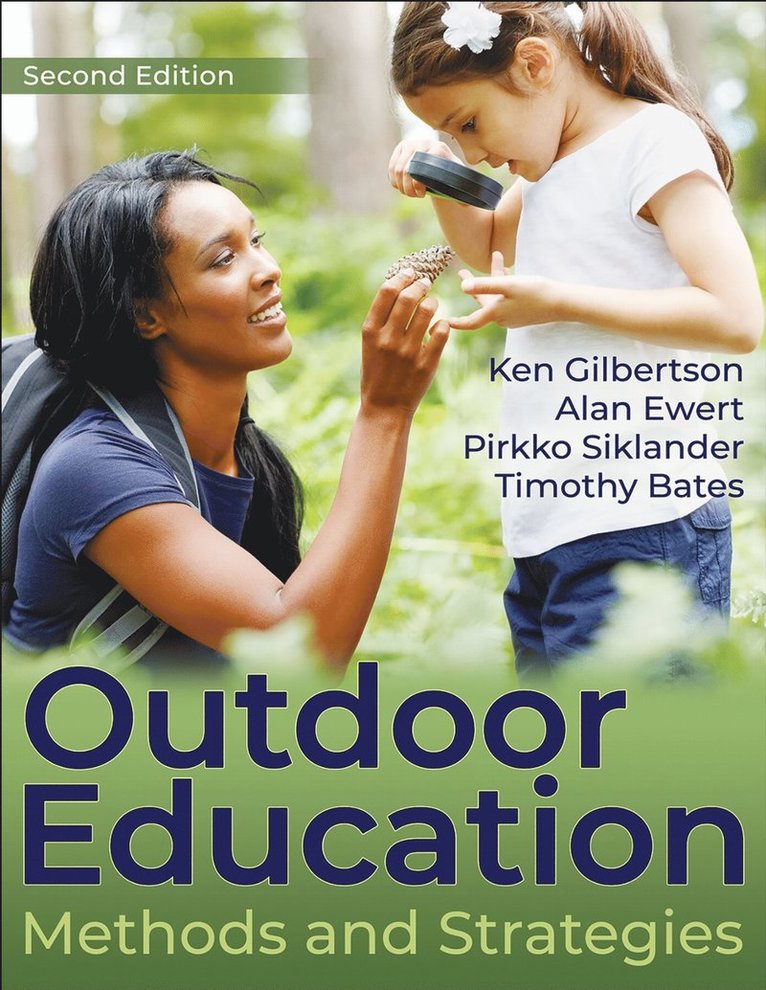
    Outdoor Education

    Methods and Strategies

    AvKen Gilbertson,Alan Ewert

    Häftad, Engelska, 2022

    1 215 kr

    Beställningsvara. Skickas inom 5-8 vardagar. Fri frakt över 249 kr.

    Beskrivning

    Outdoor Education: Methods and Strategies, Second Edition, provides all the necessary information and tools for teaching outdoor education. Future educators will learn how to create optimal learning opportunities in outdoor environments, how to design effective lessons, and how to identify and use the methods that are best for the place and the participants. These teaching methods apply to a variety of organizations, including schools, nature centers, adventure centers, camps, environmental learning centers, government agencies, and universities.Outdoor Education: Methods and Strategies, Second Edition, is divided into three parts. Part I defines what outdoor education is and details the professional expectations for an outdoor educator. It also explores theories that support outdoor education, including developmental stages, learning stages, and constructivism. Part II guides the reader to understand the backgrounds and abilities of participants, create a successful learning environment, teach effectively in a variety of settings, and design lesson plans. Part III examines the uses of physical, cognitive, and affective methods for teaching, and it includes sample lesson plans that illustrate the methods presented. These chapters help students reflect on, evaluate, and improve their lesson plans through experimentation.Presented by authors with a combined 150 years of experience in the field, the methods and strategies in this book have been tested and proven to work in a variety of outdoor settings. This second edition covers theories such as scaffolding, brain-based learning, Erik Erikson’s eight stages of development as applied to outdoor education, playful learning, and nature play as well as the use of technology in outdoor education. This text supplements theory with tools to support practical application:Easy-to-use forms for designing, implementing, and evaluating outdoor lesson plansNine sample lesson plans offering detailed instructions and representing a variety of settings for different age groups and abilitiesUpdated Stories From Real Life case studies that illustrate how methods are applied in the real worldExplore Your World sidebars prompting students to reflect on their own experiences and goalsTips and Techniques sidebars offering brief and actionable advice for educatorsNew Professional’s Perspective sidebars featuring insights from real practitioners about core content and topics in the bookStudents will also find a number of learning aids-including chapter objectives, review questions, and a glossary-to enhance knowledge retention.Outdoor Education: Methods and Strategies, Second Edition, will help aspiring educators enhance their audience’s awareness, appreciation, and knowledge of the outdoors. Ultimately, it will advance their ability to increase people’s enjoyment and understanding of the environment.

    Produktinformation

    • Utgivningsdatum:2022-04-13
    • Mått:216 x 279 x 19 mm
    • Vikt:794 g
    • Format:Häftad
    • Språk:Engelska
    • Antal sidor:280
    • Upplaga:2
    • Förlag:Human Kinetics Publishers
    • ISBN:9781492591221

    Utforska kategorier

    • Friluftsaktiviteter inom Sport, fritid och hobby

    Mer om författaren

    Ken Gilbertson, PhD, is a professor of outdoor education in the department of applied human services at the University of Minnesota–Duluth (UMD), where he is also director of the Center for Environmental Education. He has more than 50 years of experience teaching outdoor and environmental education at the college level and has conducted wilderness education, taught at nature centers and Outward Bound wilderness schools, and educated a wide range of audiences through the UMD outdoor program.Gilbertson’s specialty is in understanding how people learn and applying the methods that will best help them learn about the outdoors. He has designed and constructed a wilderness education curriculum, including a state-of-the-art kit that employs several learning theories. Gilbertson has received two outstanding faculty awards, has been honored with a UMD leadership scholarship in his name, and is a board member of numerous outdoor education and environmental committees. He also serves as reviewer for the Journal of Experiential Education and of abstracts for the Symposium on Experiential Education Research.Alan Ewert, PhD, is a professor emeritus at Indiana University, where he became the Patricia and Joel Meier Endowed Chair in Outdoor Leadership in 1998. A prolific scholar, Ewert has published articles in a variety of journals and books related to outdoor leadership and recreation. He continues his professional service through numerous venues, including his status as a fellow and past president of the Academy of Leisure Sciences and one of the founding editors of the International Journal of Wilderness. He serves on the editorial board of the Journal of Experiential Education. In 2021, he received the Theodore and Franklin Roosevelt Award for Excellence in Recreation and Park Research through the National Recreation and Park Association. He was the 1996 recipient of the Reynold E. Carlson Award for Distinction in Outdoor Environmental Education; the 2002 recipient of the J.B. Nash Scholar Award through the American Association for Leisure and Recreation; and the 2005 recipient of the Julian W. Smith Award through the American Alliance for Health, Physical Education, Recreation and Dance.Pirkko Siklander, PhD, is an adjunct professor and university researcher at the University of Oulu in Finland. Her main research interest deals with learning and teaching processes in technology-enhanced and collaborative learning, particularly on creative collaboration, triggers for raising interest, and playfulness. During the past 20 years, Siklander has researched and published several scientific articles and book chapters about playful learning and playful teaching, covering early childhood through advanced adulthood. She is an experienced teacher educator and a leader of the University of Oulu’s learning, education, and technology (LET) master’s degree program, which educates experts in the field of learning sciences and the use of technologies.Tim Bates, MEd, is the associate director and an environmental education coordinator in the recreational sports outdoor program at the University of Minnesota–Duluth, where he also serves as the assistant director of the Center for Environmental Education and as an adjunct faculty member in environmental and outdoor education. Bates has more than 35 years of experience teaching outdoor, environmental, and science education to people of all ages. In addition to developing curricula for schools and other organizations, he has been involved with the creation of an elementary school focused on environmental education and serves on numerous boards and committees related to the outdoors. His specialty is working with preservice students to help them understand and teach about the natural environment.

    Innehållsförteckning

    • Part I. Foundations of Outdoor EducationChapter 1. Defining Outdoor EducationWhy the Outdoors?Model of Outdoor EducationEnvironmental EducationInterpretationAdventure EducationExperiential EducationEducation StructureDevelopment of Outdoor EducationRationale for Teaching OutdoorsSummaryChapter 2. Describing the Outdoor EducatorProfessionalismProfessional ResponsibilitiesSummaryChapter 3. Learning Theories in Outdoor EducationTheories in Outdoor EducationLearning Theory Guiding Outdoor EducationExperiential EducationConstructivismScaffoldingBrain-Based LearningEnvironmental LearningMultiple IntelligencesPlayful Learning TheorySummaryPart II. Preparation for Teaching OutdoorsChapter 4. Understanding ParticipantsAudience AssessmentStereotypingGenderAge and Cognitive DevelopmentMedical ConditionsExperienceGroup FamiliarityAbilitiesCulture and EthnicityStrategies for Teaching Diverse AudiencesSummaryChapter 5. Creating the Learning EnvironmentFoundations of the Learning EnvironmentComponents of Successful Learning EnvironmentsSummaryChapter 6. Outdoor Education SettingsSite SelectionLearning BarriersEquipmentLogisticsRecord KeepingSpecial Settings: Lessons in the NightSummaryChapter 7. Designing LessonsAdvantages of Lesson PlansFormatStructureAssessmentSummaryPart III. Methods and Delivery of Outdoor EducationChapter 8. Physical MethodsPhysical Skills DevelopmentPhysical ManipulationActivities, Games, and CompetitionsTheatricsInitiatives and Ropes CoursesSummaryChapter 9. Cognitive MethodsLecture and DiscussionInquiryVideographyService LearningSupporting MaterialsPeer TeachingSummaryChapter 10. Affective MethodsGuided DiscoveryVisual ImageryStorytellingScenarios and Case StudiesSummaryChapter 11. Sample LessonsNight HikeNavigationMaple Sugar BushWeatherFishing EthicsBasic Techniques for Sea KayakingPersonal GrowthLighting a Camp StoveNature AwarenessSummaryChapter 12. Your Future in Outdoor EducationIssues and Trends Affecting Outdoor EducationWorking With Mainstream EducationState Standards and High-Stakes TestingProfessional CertificationEducation or Advocacy?Emotional Needs of ParticipantsStrategic Planning for Professional GrowthSummaryAppendix A. Professional Organizations in the United States and InternationallyAppendix B. Sample Forms