• Fri frakt över 249 kr
  • •
  • Snabba leveranser
  • •
  • Billiga böcker
Kundservice

Du är på sajten för privatpersoner.

Företag, bibliotek eller offentlig verksamhet?

Du handlar på classic.bokus.com, där alla dina funktioner finns intakta.
Till classic.bokus.com
Bokus logotyp. Gå till startsidan.
  • Erbjudanden
  • Nyheter
  • Student
  • Topplistor
  • Barn & ungdom
  • Bokus Play
  • E-böcker
  • Pocketböcker
  • Spel & pussel

10% rabatt på allt med kod NYSTART10 →

Sidfot

Mina sidor

    Hjälp

    • Kundservice
    • Vanliga frågor och svar
    • Frakt och leverans
    • Retur vid ångerrätt
    • Reklamera vara
    • Betalning
    • Köpvillkor
    • Allmänna villkor
    • Information om webbplatsens tillgänglighet

    Om Bokus

    • Om oss
    • Pressrum
    • För studenter
    • För företag
    • För bibliotek och offentlig verksamhet
    • För leverantörer
    • Hållbarhet

    Populärt

    • Aktuella erbjudanden
    • Presentkort
    • Studentlitteratur
    • Nya böcker
    • Topplistor
    • Signerade böcker
    • Engelska böcker

    Inspiration

    • Boktips
    • BookTok
    • Populära bokserier
    • Barnbokskaraktärer
    • Populära författare
    Logotyp för Bokus
    Följ oss på Facebook (extern länk)Följ oss på Instagram (extern länk)Följ oss på YouTube (extern länk)Följ oss på TikTok (extern länk)
    bokus @ CookiesAnpassa cookiesIntegritetspolicyKöpvillkor
    Till Citymail hemsida (extern länk)Till Budbee hemsida (extern länk)Till Postnord hemsida (extern länk)Till Schenker hemsida (extern länk)Till Early Bird hemsida (extern länk)Till Walleys hemsida (extern länk)
    1. Medicin
    2. Medicinska studiehandledningar och referensmaterial

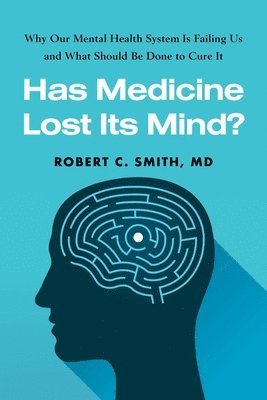
    Has Medicine Lost Its Mind?

    Why Our Mental Health System Is Failing Us and What Should Be Done to Cure It

    AvRobert C. Smith

    Inbunden, Engelska, 2025

    337 kr

    Beställningsvara. Skickas inom 3-6 vardagar. Fri frakt över 249 kr.

    Beskrivning

    Modern health care wreaks havoc on patients with mental disorders. Sadly, only 25 percent of patients with a mental disorder, such as depression or drug abuse, receive any care at all. Worse yet, medical physicians conduct over three-fourths of this care, but it’s almost universally characterized as low quality because they have not been trained in mental illnesses. Contrast this to 60 to 80 percent of patients who receive high quality care for their physical diseases, such as diabetes and heart disease, from the same doctors.One fact illustrates the societal impact of compromised mental health care: mental illnesses are the most common health condition in the US. Most don’t realize this, but the number of people with mental disorders exceed those of heart disease and cancer combined. And one in four Americans will have a major mental illness in any 12-month period, totaling some 90,000,000 individuals; twice that number, one in two, will suffer over their lifetime. Why Society Should Take Note: Poor mental care reverberates throughout America. The familiar problems of unnecessary prescription overdose deaths and deaths by suicide pale before the more widespread but less-recognized effect on patients with undiagnosed and untreated mental illnesses—depression, anxiety, and substance abuse the most common. The disability from these illnesses harms not only individual patients but also their families, communities, and society; astronomical, unnecessary healthcare costs result, in the range of hundreds of billions, even trillions of dollars, and society picks up the tab.Because medicine fails to recognize the problem, the author recommends that the public and its decision-makers take charge. Politicians and policy makers must exert strong pressure and insist that, via policy and funding leverage, medicine include mental disorders on an equal footing with physical diseases. To operationalize this change, a Presidential Commission, a Congressional Commission, or the National Academies of Science, Engineering, and Medicine would analyze present medical education practices to determine how well they adhere to modern scientific understanding. The modern systems view of science is presented in Chapter 6. It integrates patients’ mental and social dimensions with their physical illnesses, thus correcting modern medicine’s isolated focus on physical disorders. Based on this evaluation, they would make recommendations to policy makers about the necessary changes needed to ensure a new direction in medicine that included training medical students and residents to be competent in mental health care and other psychological and social features of patients. That is, to return humanity to medicine. This high-level review mechanism to induce change was successful in changing medicine over 100 years ago in what was called the Flexner Report of 1910. Hence, the author calls for a “New Flexner Report.”

    Produktinformation

    • Utgivningsdatum:2025-05-04
    • Mått:152 x 229 x 16 mm
    • Vikt:413 g
    • Format:Inbunden
    • Språk:Engelska
    • Antal sidor:200
    • Förlag:Globe Pequot Press
    • ISBN:9781493087655

    Utforska kategorier

    • Medicinska studiehandledningar och referensmaterial inom Medicin
    • Psykologi inom Psykologi och pedagogik
    • Samhällsmedicin och preventiv medicin inom Medicin

    Mer om författaren

    Nationally and internationally recognized for his evidence-based teaching innovations in mental health care and the doctor-patient relationship, Robert C. Smith, MD has received the prestigious appointment of University Distinguished Professor of Medicine and Psychiatry at Michigan State University. Originally in private medical practice, Dr. Smith undertook additional training in mental health and patient-centered medicine, as well as research in mental health care, and has been in academics since 1978. Dr. Smith developed the first evidence-based patient-centered method to guide teachers and their medical and nursing students and residents to master a physician’s single most important skill: the ability to communicate and form a strong partnership with the patient.Among many awards, Dr. Smith has received the Master recognition from the American College of Physicians, the George Engel Award for Outstanding Research from the Academy on Communication in Healthcare, and the Career Teaching Achievement Award from the Society of General Internal Medicine. To date Dr. Smith has about 150 publications and receives from 350 to 400 Google Scholar citations per year to his published works. He has obtained major grant support from, for example, the private Fetzer Institute and federal institutions such as Health Resources and Services Administration (HRSA) and the National Institute of Mental Health (NIMH).