• Fri frakt över 249 kr
  • •
  • Snabba leveranser
  • •
  • Billiga böcker
Kundservice

Du är på sajten för privatpersoner.

Företag, bibliotek eller offentlig verksamhet?

Du handlar på classic.bokus.com, där alla dina funktioner finns intakta.
Till classic.bokus.com
Bokus logotyp. Gå till startsidan.
  • Erbjudanden
  • Nyheter
  • Student
  • Topplistor
  • Barn & ungdom
  • Bokus Play
  • E-böcker
  • Pocketböcker
  • Spel & pussel

10% rabatt på allt med kod: NYSTART10 →

Sidfot

Mina sidor

    Hjälp

    • Kundservice
    • Vanliga frågor och svar
    • Frakt och leverans
    • Retur vid ångerrätt
    • Reklamera vara
    • Betalning
    • Köpvillkor
    • Allmänna villkor
    • Information om webbplatsens tillgänglighet

    Om Bokus

    • Om oss
    • Pressrum
    • För studenter
    • För företag
    • För bibliotek och offentlig verksamhet
    • För leverantörer
    • Hållbarhet

    Populärt

    • Aktuella erbjudanden
    • Presentkort
    • Studentlitteratur
    • Nya böcker
    • Topplistor
    • Signerade böcker
    • Engelska böcker

    Inspiration

    • Boktips
    • BookTok
    • Populära bokserier
    • Barnbokskaraktärer
    • Populära författare
    Logotyp för Bokus
    Följ oss på Facebook (extern länk)Följ oss på Instagram (extern länk)Följ oss på YouTube (extern länk)Följ oss på TikTok (extern länk)
    bokus @ CookiesAnpassa cookiesIntegritetspolicyKöpvillkor
    Till Citymail hemsida (extern länk)Till Budbee hemsida (extern länk)Till Postnord hemsida (extern länk)Till Schenker hemsida (extern länk)Till Early Bird hemsida (extern länk)Till Walleys hemsida (extern länk)
    1. Naturvetenskap och teknik
    2. Geovetenskap
    3. Miljövetenskap och miljöpolitik

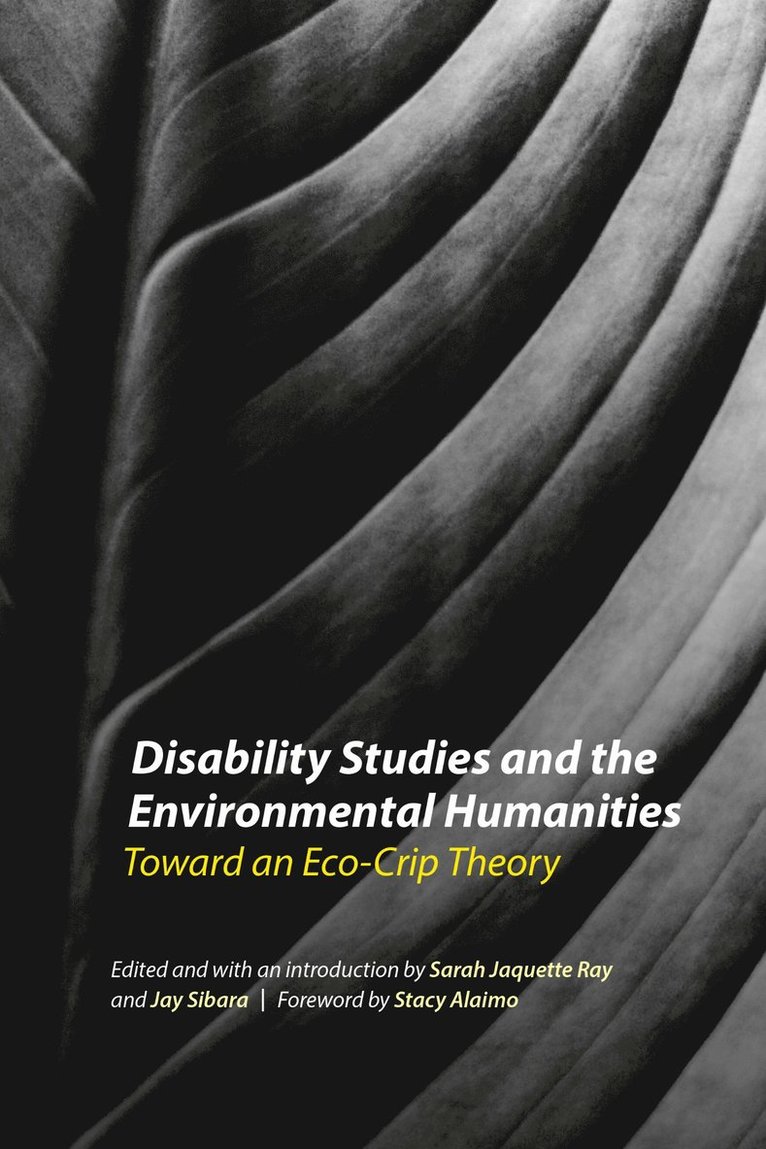
    Disability Studies and the Environmental Humanities

    Toward an Eco-Crip Theory

    AvSarah Jaquette Ray,Jay Sibara

    Häftad, Engelska, 2018

    437 kr

    Beställningsvara. Skickas inom 10-15 vardagar. Fri frakt över 249 kr.

    Beskrivning

    Although scholars in the environmental humanities have been exploring the dichotomy between “wild” and “built” environments for several years, few have focused on the field of disability studies, a discipline that enlists the contingency between environments and bodies as a foundation of its scholarship. On the other hand, scholars in disability studies have demonstrated the ways in which the built environment privileges some bodies and minds over others, yet they have rarely examined the ways in which toxic environments engender chronic illness and disability or how environmental illnesses disrupt dominant paradigms for scrutinizing “disability.”Designed as a reader for undergraduate and graduate courses, Disability Studies and the Environmental Humanities employs interdisciplinary perspectives to examine such issues as slow violence, imperialism, race, toxicity, eco-sickness, the body in environmental justice, ableism, and other topics. With a historical scope spanning the seventeenth century to the present, this collection not only presents the foundational documents informing this intersection of fields but also showcases the most current work, making it an indispensable reference.

    Produktinformation

    • Utgivningsdatum:2018-06-01
    • Mått:152 x 229 x 38 mm
    • Vikt:990 g
    • Format:Häftad
    • Språk:Engelska
    • Antal sidor:684
    • Förlag:University of Nebraska Press
    • Medarbetare:Stacy Alaimo
    • ISBN:9781496204950

    Utforska kategorier

    • Miljövetenskap och miljöpolitik inom Naturvetenskap och teknik
    • Sociala och etiska frågor inom Samhälle och politik

    Mer om författaren

    Sarah Jaquette Ray is an associate professor of environmental studies and program leader of the Environmental Studies Program at Humboldt State University. She is the author of The Ecological Other: Environmental Exclusion in American Culture. Jay Sibara is an assistant professor of English at Colby College and a member of the Access Initiative of the Association for the Study of Literature and Environment. Stacy Alaimo is a distinguished teaching professor of English at the University of Texas at Arlington and the author of Bodily Natures: Science, Environment, and the Material Self and Exposed: Environmental Politics and Pleasures in Posthuman Times.

    Recensioner i media

    "Disability Studies and the Environmental Humanities: Toward an Eco-crip Theory examines the intersections of disability studies and environmentalism, and represents one of the first substantial collections of essays that explore this emerging area of inquiry in a pointed, interdisciplinary, and intersectional manner."-Christine Junker, ISLE "Disability Studies and the Environmental Humanities charts an exciting and urgent new direction in scholarship for environmental literary critics and the environmental humanities more broadly."-Mary Foltz, The Year’s Work in English Studies “The most significant disability studies anthology to emerge in years. It is extremely important that these particular branches of academic and political work rub against each other.”-Susan M. Schweik, professor of English at the University of California–Berkeley and author of The Ugly Laws: Disability in Public“Contributes to multiple fields, responding to growing curricular and scholarly interest in environmental humanities and disability studies. . . . This will be a foundational text in its own right.”-Susan Burch, associate professor of American studies at Middlebury College and coeditor of At the Intersections: Deaf Meets Disability Studies

    Innehållsförteckning

    • Foreword by Stacy AlaimoIntroduction by Sarah Jaquette Ray and Jay SibaraPart 1. Foundations1. Risking Bodies in the Wild: The “Corporeal Unconscious” of American Adventure CultureSarah Jaquette Ray2. Bringing Together Feminist Disability Studies and Environmental JusticeValerie Ann Johnson3. Lead’s Racial MattersMel Y. Chen4. Defining Eco-ability: Social Justice and the Intersectionality of Disability, Nonhuman Animals, and EcologyAnthony J. Nocella II5. The Ecosomatic Paradigm in Literature: Merging Disability Studies and EcocriticismMatthew J. C. Cella6. Bodies of Nature: The Environmental Politics of DisabilityAlison Kafer7. Notes on Natural Worlds, Disabled Bodies, and a Politics of CureEli ClarePart 2. New EssaysSection 1: Corporeal Legacies of U.S. Nation-Building8. Blind Indians: KÁteri TekakwÍ:tha and Joseph Amos’s Visions of Indigenous Resurgence    000Siobhan Senier9. Prosthetic Ecologies: (Re)Membering Disability and Rehabilitating Laos’s “Secret War”Cathy J. Schlund-Vials10. Reification, Biomedicine, and Bombs: Women’s Politicization in Vieques’s Social MovementVÍctor M. Torres-VÉlez11. War Contaminants and Environmental Justice: The Case of Congenital Heart Defects in IraqJulie SadlerSection 2: (Re)Producing Toxicity12. Toxic Pregnancies: Speculative Futures, Disabling Environments, and Neoliberal BiocapitalKelly Fritsch13. “That Night”: Seeing Bhopal through the Lens of Disability and Environmental Justice StudiesAnita MannurSection 3: Food Justice14. Disabling Justice? The Exclusion of People with Disabilities from the Food Justice MovementNatasha Simpson15. Cripping Sustainability, Realizing Food JusticeKim Q. HallSection 4: Curing Crips? Narratives of Health and Space16. The Invalid Sea: Disability Studies and Environmental Justice HistoryTraci Brynne Voyles17. La Tierra Pica/The Soil Bites: Hazardous Environments and the Degeneration of Bracero Health, 1942–1964Mary E. Mendoza18. Cripping East Los Angeles: Enabling Environmental Justice in Helena MarÍa Viramontes’s Their Dogs Came with ThemJina B. Kim19. Neurological Diversity and Environmental (In)Justice: The Ecological Other in Popular and Journalist Representations of AutismSarah GibbonsSection 5: Interspecies and Interage Identifications20. Precarity and Cross-Species Identification: Autism, the Critique of Normative Cognition, and NonspeciesismDavid T. Mitchell and Sharon L. Snyder21. Autism and Environmental Identity: Environmental Justice and the Chains of EmpathyRobert Melchior Figueroa22. Moving Together Side by Side: Human-Animal Comparisons in Picture BooksElizabeth A. WheelerSource AcknowledgmentsContributorsIndex