• Fri frakt över 249 kr
  • •
  • Snabba leveranser
  • •
  • Billiga böcker
Kundservice

Du är på sajten för privatpersoner.

Företag, bibliotek eller offentlig verksamhet?

Du handlar på classic.bokus.com, där alla dina funktioner finns intakta.
Till classic.bokus.com
Bokus logotyp. Gå till startsidan.
  • Erbjudanden
  • Nyheter
  • Student
  • Topplistor
  • Barn & ungdom
  • Bokus Play
  • E-böcker
  • Pocketböcker
  • Spel & pussel

10% rabatt på allt med kod: NYSTART10 →

Sidfot

Mina sidor

    Hjälp

    • Kundservice
    • Vanliga frågor och svar
    • Frakt och leverans
    • Retur vid ångerrätt
    • Reklamera vara
    • Betalning
    • Köpvillkor
    • Allmänna villkor
    • Information om webbplatsens tillgänglighet

    Om Bokus

    • Om oss
    • Pressrum
    • För studenter
    • För företag
    • För bibliotek och offentlig verksamhet
    • För leverantörer
    • Hållbarhet

    Populärt

    • Aktuella erbjudanden
    • Presentkort
    • Studentlitteratur
    • Nya böcker
    • Topplistor
    • Signerade böcker
    • Engelska böcker

    Inspiration

    • Boktips
    • BookTok
    • Populära bokserier
    • Barnbokskaraktärer
    • Populära författare
    Logotyp för Bokus
    Följ oss på Facebook (extern länk)Följ oss på Instagram (extern länk)Följ oss på YouTube (extern länk)Följ oss på TikTok (extern länk)
    bokus @ CookiesAnpassa cookiesIntegritetspolicyKöpvillkor
    Till Citymail hemsida (extern länk)Till Budbee hemsida (extern länk)Till Postnord hemsida (extern länk)Till Schenker hemsida (extern länk)Till Early Bird hemsida (extern länk)Till Walleys hemsida (extern länk)
    1. Skönlitteratur
    2. Litteraturvetenskap
    3. Litteraturvetenskap

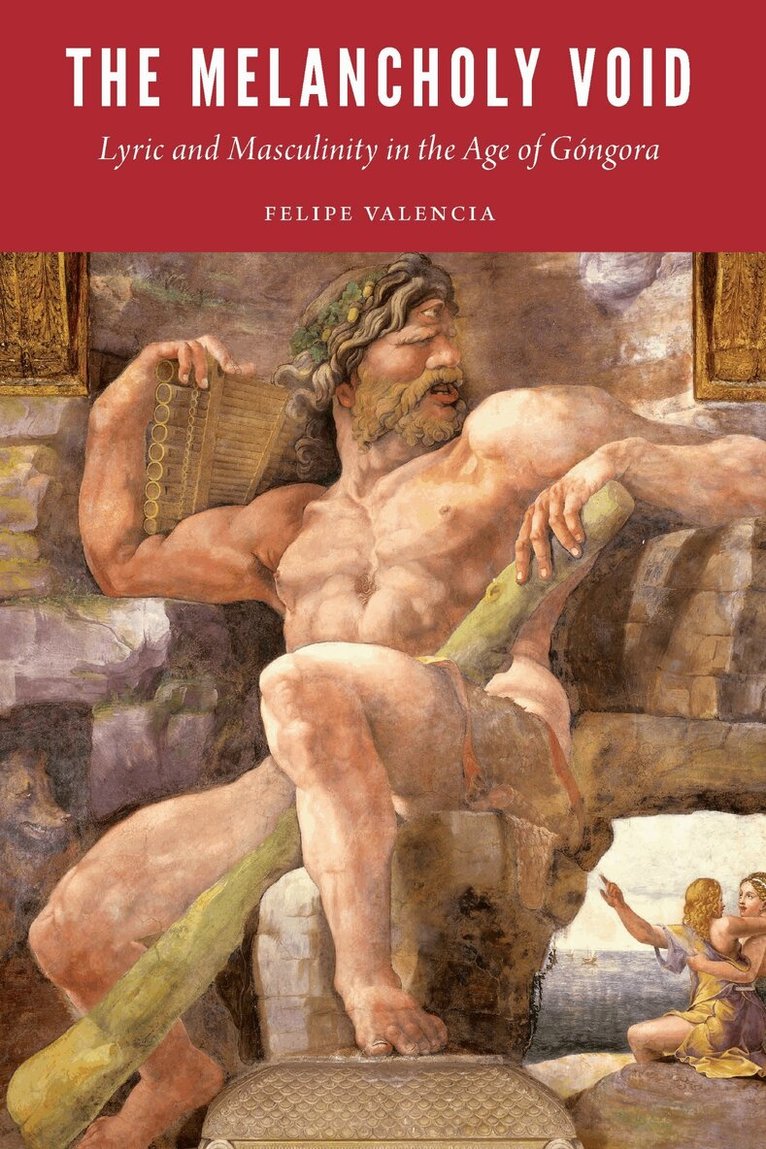
    Melancholy Void

    Lyric and Masculinity in the Age of Góngora

    AvFelipe Valencia

    Inbunden, Engelska, 2021

    Del i serien New Hispanisms

    839 kr

    Beställningsvara. Skickas inom 10-15 vardagar. Fri frakt över 249 kr.

    Beskrivning

    At the turn of the seventeenth century, Spanish lyric underwent a notable development. Several Spanish poets reinvented lyric as a melancholy and masculinist discourse that sang of and perpetrated symbolic violence against the female beloved. This shift emerged in response to the rising prestige and commercial success of the epic and was enabled by the rich discourse on the link between melancholy and creativity in men.In The Melancholy Void Felipe Valencia examines this reconstruction of the lyric in key texts of Spanish poetry from 1580 to 1620. Through a study of canonical and influential texts, such as the major poems by Luis de GÓngora and the epic of Alonso de Ercilla, but also lesser-known texts, such as the lyrics by Miguel de Cervantes, The Melancholy Void addresses four understudied problems in the scholarship of early modern Spanish poetry: the use of gender violence in love poetry as a way to construct the masculinity of the poetic speaker; the exploration in Spanish poetry of the link between melancholy and male creativity; the impact of epic on Spanish lyric; and the Spanish contribution to the fledgling theory of the lyric.The Melancholy Void brings poetry and lyric theory to the conversation in full force and develops a distinct argument about the integral role of gender violence in a prominent strand of early modern Spanish lyric that ran from Garcilaso to GÓngora and beyond.

    Produktinformation

    • Utgivningsdatum:2021-07-01
    • Mått:152 x 229 x undefined mm
    • Format:Inbunden
    • Språk:Engelska
    • Serie:New Hispanisms
    • Antal sidor:352
    • Förlag:University of Nebraska Press
    • ISBN:9781496221148

    Utforska kategorier

    • Litteraturvetenskap inom Skönlitteratur

    Mer om författaren

    Felipe Valencia is an assistant professor of Spanish at Utah State University.

    Recensioner i media

    "Felipe Valencia has written a remarkable book, a wide-ranging study of early modern poetry, in the manner of Leah Middlebrook (Imperial Lyric, Pennsylvania State UP, 2009) and Isabel Torres (Love Poetry in the Spanish Golden Age, Tamesis 2013), but with a focus on the turn of the seventeenth century."-Ignacio Navarrete, Bulletin of the Comediantes "The Melancholy Void offers a valuable contribution to studies of early modern literary theory and our understanding of the evolution of Spanish lyric poetry in relation to extratextual phenomena. . . . The author deftly balances breadth and depth to deliver a fascinating history of Spanish lyric and of the gendered nature of poetic genres in the sixteenth and seventeenth centuries."-Katherine L. Brown, Revista de Estudios HispÁnicos "Just for the wealth of lyric literary history discussed, Valencia's monograph is a valuable reference for students of early-modern Spain. The book convincingly demonstrates the links between lyric expression, melancholic subjectivity, and gender violence in early-modern lyric poetry. Its denunciation of gender violence in early-modern poetry helps open the door to necessary but difficult discussions about the harmful legacies of arch-canonical poets and the lyric poetic tradition more generally. The study of early-modern poetry in Spain will no doubt be better off for having the reckoning with gender violence proposed by The Melancholy Void."-Luis RodrÍguez-RincÓn, CalÍope: Journal of the Society for Renaissance and Baroque Hispanic Poetry "One of the most daring intellectual contributions of the book: the denunciation not only of a masculinist imaginary, but of an authentic rape culture in early modern Spain and, what would be even more shocking, in the scholarly interpretation and commentary of the poetic texts of this period by the greater part of modern and contemporary academia on both sides of the Atlantic."-SimÓn A. Villegas, Creneida: Journal of Hispanic Literatures "The Melancholy Void presents a trove of interpretive and scholarly riches . . . this book represents an important addition to the study of sixteenth-and seventeenth-century poetry. It will, no doubt, provides much food for thought and debate."-MarÍa Cristina Quintero, Hispanic Review "The Melancholy Void: Lyric and Masculinity in the Age of GÓngora provides valuable critical insights into literary theory, the concept of melancholy, and masculine versus feminine violence as focal points of Ealy Modern Spanish literature."-Salvatore Poeta, Hispania "[The Melancholy Void is] a powerful and excellent study that suggests a viable route to see beyond longstanding critical approaches to the history and theory of la nueva poesÍa in early modern Spain and, more broadly, the history and theory of lyric poetry."-AndrÉs Olmedo Orejuela, Comitatus: A Journal of Medieval and Renaissance Studies “This is a terrific piece of scholarship that delves into the period of one of Spain’s most important authors, Luis de GÓngora. Felipe Valencia offers a fascinating genealogy of the lyric tradition, grounding it in a dazzling array of deep readings of primary texts, together with an insightful application of theoretical and critical secondary material.”-Mary B. Quinn, associate professor of Spanish and Portuguese at the University of New Mexico “An innovative way of looking at this important corpus of texts, shedding new light on crucial matters such as the ties between poetics, philosophy, affect, and rhetoric. The astute interlacement between poetic theory and melancholy as a way of understanding the masculine rhetoric present in the texts studied is convincing and insightful.”-Rodrigo Cacho, faculty of modern and medieval languages at the University of Cambridge

    Innehållsförteckning

    • AcknowledgmentsIntroduction: The Melancholy and Masculinist Poetics in Early Modern Spanish Lyric1. The Gendering of Lyric and Epic in Alonso de Ercilla’s La Araucana (1569–1590)2. The Apollonian and Orphic Masculinity of Fernando de Herrera’s Algunas obras (1582) 3. Feminine Voice and Masculinist Aims in Miguel de Cervantes’s La Galatea (1585)4. Between Liuvigild and Ingund in Juan de Arguijo’s Versos (1612)5. “El melancÓlico vacÍo”: The Origins and Fate of Lyric according to Luis de GÓngora’s FÁbula de Polifemo y Galatea and Soledades (1612–1617)NotesBibliographyIndex