

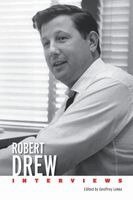
Robert Drew
Interviews
335 kr
Kommande
Fler format och utgåvor
Beskrivning
The American director and producer Robert Drew (1924–2014) was one of the most influential documentary filmmakers of his generation, known for his development of cinema verité (or direct cinema), a mode of observational filmmaking. Following his career at Life magazine, Drew produced a number of landmark "fly-on-the-wall" documentaries in the 1960s, including his acclaimed portraits of John F. Kennedy in Primary, Adventures on the New Frontier, and Crisis: Behind a Presidential Commitment. The notion of "crisis" is central to Drew’s methods, as he sought to capture human subjects in the throes of a real-life drama, rejecting the semistaged realities of traditional documentary films and the self-conscious reconstructions of everyday life associated with French cinema. Drew’s influence is most easily charted through the careers of his close collaborators. Drew Associates, the documentary film company founded in 1960 by Drew, included the filmmakers Richard Leacock, D. A. Pennebaker, and Albert Maysles, all of whom went on to refashion and popularize Drew’s approach in their own lauded projects. Despite his immediate impact and contemporaneous acclaim, Drew’s oeuvre has been largely overlooked in recent decades. Robert Drew: Interviews helps reestablish the filmmaker’s place within contemporary film studies and details the history of how Drew changed cinema—in his own words. In addition to electoral politics, Drew Associates films are often concerned with race, desegregation, and the civil rights movement and its fallout. Drew produced a number of high-profile documentaries on entertainers and performers—actors, musicians, dancers, and athletes. A pilot himself, Drew also directed—and on occasion photographed for himself—several films on flight and aeronautics. Included in this volume, alongside archival and unpublished interviews, is a three-part essay written for Drew Associates employees in which Drew set out his ideas in both practical and philosophical terms.
Produktinformation
Utforska kategorier
Mer om författaren



Hoppa över listan


Du kanske också är intresserad av
- 10% rabatt på allt
- 10% rabatt på allt
Del 3
- 10% rabatt på allt
Del 4
- 10% rabatt på allt
- 10% rabatt på allt