• Fri frakt över 249 kr
  • •
  • Snabba leveranser
  • •
  • Billiga böcker
Kundservice

Du är på sajten för privatpersoner.

Företag, bibliotek eller offentlig verksamhet?

Du handlar på classic.bokus.com, där alla dina funktioner finns intakta.
Till classic.bokus.com
Bokus logotyp. Gå till startsidan.
  • Erbjudanden
  • Nyheter
  • Student
  • Topplistor
  • Barn & ungdom
  • Bokus Play
  • E-böcker
  • Pocketböcker
  • Spel & pussel

10% rabatt på allt med kod: NYSTART10 →

Sidfot

Mina sidor

    Hjälp

    • Kundservice
    • Vanliga frågor och svar
    • Frakt och leverans
    • Retur vid ångerrätt
    • Reklamera vara
    • Betalning
    • Köpvillkor
    • Allmänna villkor
    • Information om webbplatsens tillgänglighet

    Om Bokus

    • Om oss
    • Pressrum
    • För studenter
    • För företag
    • För bibliotek och offentlig verksamhet
    • För leverantörer
    • Hållbarhet

    Populärt

    • Aktuella erbjudanden
    • Presentkort
    • Studentlitteratur
    • Nya böcker
    • Topplistor
    • Signerade böcker
    • Engelska böcker

    Inspiration

    • Boktips
    • BookTok
    • Populära bokserier
    • Barnbokskaraktärer
    • Populära författare
    Logotyp för Bokus
    Följ oss på Facebook (extern länk)Följ oss på Instagram (extern länk)Följ oss på YouTube (extern länk)Följ oss på TikTok (extern länk)
    bokus @ CookiesAnpassa cookiesIntegritetspolicyKöpvillkor
    Till Citymail hemsida (extern länk)Till Budbee hemsida (extern länk)Till Postnord hemsida (extern länk)Till Schenker hemsida (extern länk)Till Early Bird hemsida (extern länk)Till Walleys hemsida (extern länk)
    1. Ekonomi och Ledarskap
    2. Nationalekonomi

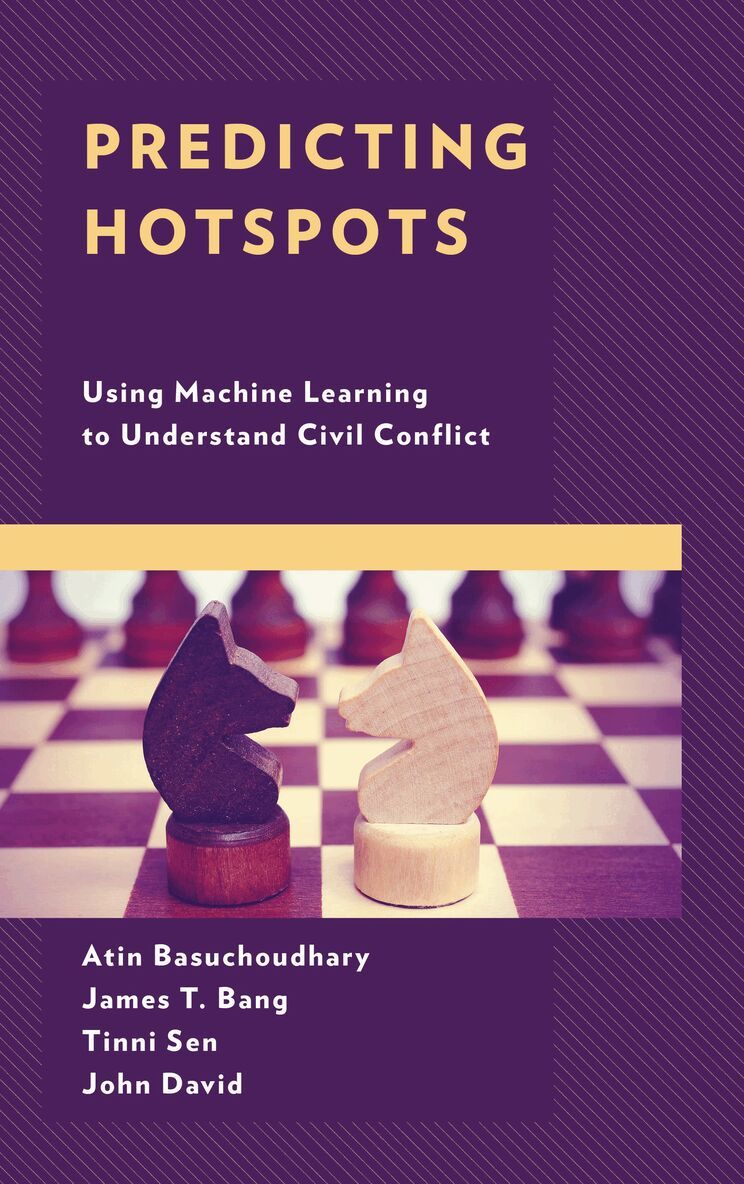
    Predicting Hotspots

    Using Machine Learning to Understand Civil Conflict

    AvAtin Basuchoudhary,James T. Bang

    Inbunden, Engelska, 2018

    1 186 kr

    Beställningsvara. Skickas inom 10-15 vardagar. Fri frakt över 249 kr.

    Beskrivning

    This book should be useful to anyone interested in identifying the causes of civil conflict and doing something to end it. It even suggests a pathway for the lay reader. Civil conflict is a persistent source of misery to humankind. Its study, however, lacks a comprehensive theory of its causes. Nevertheless, the question of cooperation or conflict is at the heart of political economy. This book introduces Machine Learning to explore whether there even is a unified theory of conflict, and if there is, whether it is a ‘good’ one. A good theory is one that not only identifies the causes of conflict, but also identifies those causes that predict conflict. Machine learning algorithms use out of sample techniques to choose between competing hypotheses about the sources of conflict according to their predictive accuracy. This theoretically agnostic ‘picking’ has the added benefit of offering some protection against many of the problems noted in the current literature; the tangled causality between conflict and its correlates, the relative rarity of civil conflict at a global level, missing data, and spectacular statistical assumptions. This book argues that the search for a unified theory of conflict must begin among these more predictive sources of civil conflict. In fact, in the book, there is a clear sense that game theoretic rational choice models of bargaining/commitment failure predict conflict better than any other approach. In addition, the algorithms highlight the fact that conflict is path dependent - it tends to continue once started. This is intuitive in many ways but is roundly ignored as a matter of science. It should not. Further, those causes of conflict that best predict conflict can be used as policy levers to end or prevent conflict. This book should therefore be of interest to military and civil leaders engaged in ending civil conflict. Last, though not least, the book highlights how the sources of conflict affect conflict. This additional insight may allow the crafting of policies that match a country’s specific circumstance.

    Produktinformation

    • Utgivningsdatum:2018-09-15
    • Mått:159 x 231 x 20 mm
    • Vikt:454 g
    • Format:Inbunden
    • Språk:Engelska
    • Antal sidor:178
    • Förlag:Bloomsbury Publishing Plc
    • ISBN:9781498520676

    Utforska kategorier

    • Nationalekonomi inom Ekonomi och Ledarskap
    • Referensverk och tvärvetenskap inom Samhälle och politik
    • Politik och statsskick inom Samhälle och politik

    Mer om författaren

    Atin Basuchoudhary, is professor of business and economics at Virginia Military InstituteJames T. Bang, is professor of economics at St. Ambrose UniversityTinni Sen, is professor of business and economics at Virginia Military InstituteJohn David, is professor of applied mathematics at Virginia Military Institute

    Recensioner i media

    In Predicting Hotspots: Using Machine Learning to Understand Civil Conflict James T. Bang, Atin Basuchoudhary, John David, and Tinni Sen provide a vital contribution to the social scientific study of civil wars and other forms of violence within states. Whereas most theoretical and empirical studies of intrastate conflicts emphasize the correlates or the causes of violence, this book offers a variety of standard and innovative methodologies to best predict future civil wars. The book is a must-have for scholars and policymakers concerned about predicting future civil wars and what can be done to prevent them.

    Innehållsförteckning

    • Chapter 1: An Overview of the Literature reviewChapter 2: An Overview of Machine Learning TechniquesChapter 3: A Description of Our VariablesChapter 4: Preparing the DataChapter 5: Implementing Machine Learning to Predict Conflict Using RChapter 6: Models and ResultsChapter 7: Choosing Among Seminal Models of Conflict TheoryChapter 8: Choosing between Microeconomic Models of ConflictChapter 9: Bargaining Failure, Commitment Problems, and The Likelihood of ConflictChapter 10: Toward a Predictive Theoretical Model of Civil Conflict: Some Speculation