• Fri frakt över 249 kr
  • •
  • Snabba leveranser
  • •
  • Billiga böcker
Kundservice

Du är på sajten för privatpersoner.

Företag, bibliotek eller offentlig verksamhet?

Du handlar på classic.bokus.com, där alla dina funktioner finns intakta.
Till classic.bokus.com
Bokus logotyp. Gå till startsidan.
  • Erbjudanden
  • Nyheter
  • Student
  • Topplistor
  • Barn & ungdom
  • Bokus Play
  • E-böcker
  • Pocketböcker
  • Spel & pussel

Må bättre, för mindre! Upp till 50% rabatt på hälsoböcker

Sidfot

Mina sidor

    Hjälp

    • Kundservice
    • Vanliga frågor och svar
    • Frakt och leverans
    • Retur vid ångerrätt
    • Reklamera vara
    • Betalning
    • Köpvillkor
    • Allmänna villkor
    • Information om webbplatsens tillgänglighet

    Om Bokus

    • Om oss
    • Pressrum
    • För studenter
    • För företag
    • För bibliotek och offentlig verksamhet
    • För leverantörer
    • Hållbarhet

    Populärt

    • Aktuella erbjudanden
    • Presentkort
    • Studentlitteratur
    • Nya böcker
    • Topplistor
    • Signerade böcker
    • Engelska böcker

    Inspiration

    • Boktips
    • BookTok
    • Populära bokserier
    • Barnbokskaraktärer
    • Populära författare
    Logotyp för Bokus
    Följ oss på Facebook (extern länk)Följ oss på Instagram (extern länk)Följ oss på YouTube (extern länk)Följ oss på TikTok (extern länk)
    bokus @ CookiesAnpassa cookiesIntegritetspolicyKöpvillkor
    Till Citymail hemsida (extern länk)Till Budbee hemsida (extern länk)Till Postnord hemsida (extern länk)Till Schenker hemsida (extern länk)Till Early Bird hemsida (extern länk)Till Walleys hemsida (extern länk)
    1. Skönlitteratur
    2. Litteraturvetenskap
    3. Barn- och ungdomslitteratur

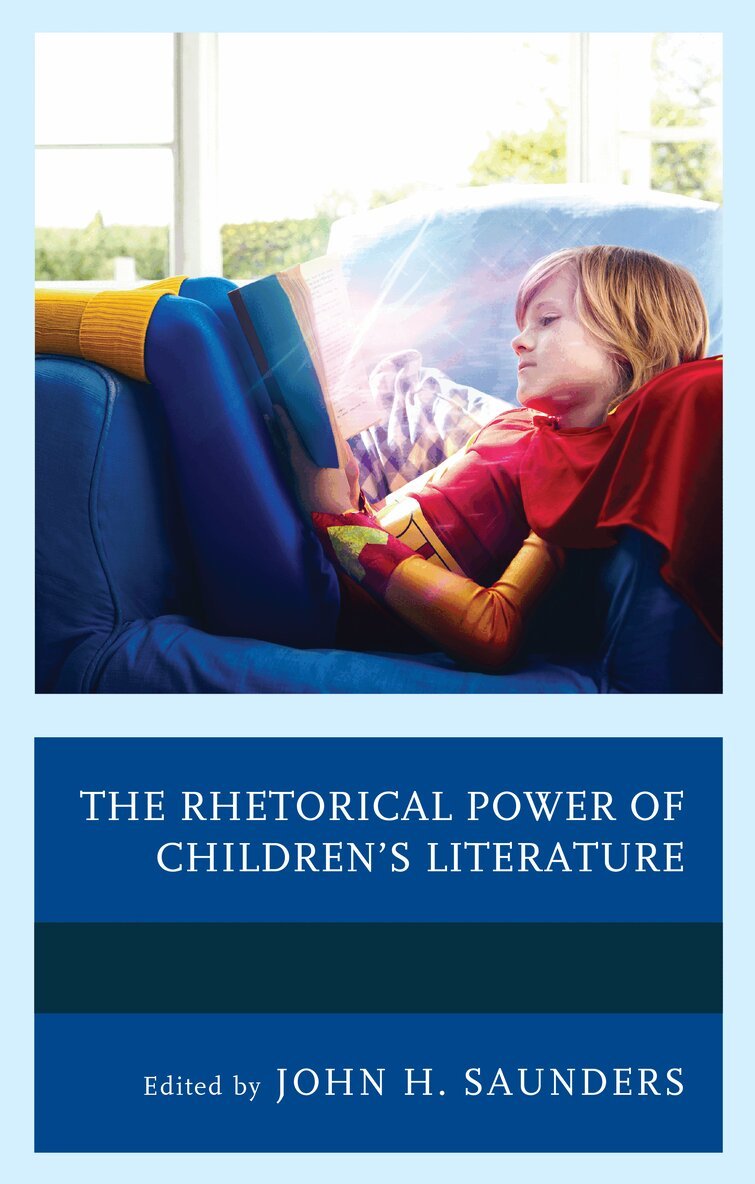
    Rhetorical Power of Children's Literature

    AvJohn H. Saunders

    Häftad, Engelska, 2018

    Del i serien Children and Youth in Popular Culture

    598 kr

    Beställningsvara. Skickas inom 10-15 vardagar. Fri frakt över 249 kr.

    Beskrivning

    The Rhetorical Power of Children's Literature is an edited volume with contributions from established and new scholars of rhetoric offering case studies that analyze a full array of genres in children’s literature from picture books to young adult novels. Collectively, this volume’s contributions interrogate how children’s literature is a powerful yet under examined space of rhetorical discourse that influences one of the most vulnerable segments of our population. This book is singularly unique given that it will be the first collection of essays on children’s literature from the distinct perspective of the field of Communication. Beyond topical novelty, the contributors utilize a range of scholarly methods to analyze instances of the rhetoric of children’s literature. Consequently, essays in this volume may be read for both their specific topical content and as exemplars for multiple methodological approaches to the study of the rhetoric of children’s literature. Collectively, the contributors set out to contribute to our knowledge of how instances of children’s literature operate as rhetorical discourses. The volume is organized by case studies approached through critical, rhetorical lenses that analyze specific instances of children’s literature from two distinct stages of children’s developmental reading experiences including pre/early literacy and fluent reading. Structurally, the book includes eight content chapters divided evenly with four chapters analyzing books for young children and four chapters analyzing books targeting audiences from late-childhood to adolescence. An overview of each content chapter accompanies this proposal.

    Produktinformation

    • Utgivningsdatum:2018-11-06
    • Mått:153 x 218 x 15 mm
    • Vikt:295 g
    • Format:Häftad
    • Språk:Engelska
    • Serie:Children and Youth in Popular Culture
    • Antal sidor:192
    • Förlag:Bloomsbury Publishing Plc
    • ISBN:9781498543316

    Utforska kategorier

    • Barn- och ungdomslitteratur inom Skönlitteratur
    • Litteraturvetenskap inom Skönlitteratur

    Mer om författaren

    John H. Saunders is visiting assistant professor at the University of Central Arkansas.

    Recensioner i media

    These essays reveal, as Saunders (Univ. of Central Arkansas) writes in the first essay, that children’s literature is replete with "complex cultural or political messages, beyond what a child can comprehend, but which present children with obvious, superficial messages that act as seeds, some destined to take root and others to wither away.” Covering everything from picture books, to bedtime stories, to young adult literature, the essays look beyond story lines to reveal the rhetoric that lies beneath. For example, one essay uses a Marxist lens to examine allegories depicting the harmful effects of industrial capitalism; another uses a Western perspective in considering allegories supporting the notion that hard work and intelligence lead to security and economic prosperity. In other words, with their books children's authors often reveal the ideologies and values that they wish their readers to have. The rhetoric of children’s books also lends itself to instruction—for example, about sex, troubling/traumatic historical moments, race, violence—bypassing adult discomfort and the sad comedy of children pretending not know things in order to protect adults. In sum, children’s literature—from picture books to YA—has the power to help children comprehend a complex world. Summing Up: Recommended. Upper-division undergraduates through faculty and professionals.

    Innehållsförteckning

    • Bedtime RhetoricJohn H. SaundersTSZ, TSZ, TSZ to Industrial ‘Cap’italism: A Marxist Analysis of Caps for SaleChristopher J. OldenburgPigs and Wolves: The Rhetorical Construction of a Traditional Tale and a Contemporary PasticheMary Elizabeth Bezanson and Deborah Lee NorlandThe Cat in the Hat: The Complexity of a Simple TaleJohn H. SaundersMommy and Daddy Were Married, and Other Creation Myths in Children’s Books About SexBrett L. Lunceford“Good Readers” in Narnia: C. S. Lewis’s Rhetoric of InvitationJoshua D. Hill“Why Do You Hurt These Children?”: The Rhetoric of “Risky Stories” in Children’s LiteratureLauren LemleySubversive Identification and the Coincidentia Oppositorum in Ursula Le Guin’s A Wizard of EarthseaMichael Warren Tumolo and Jennifer BeidendorfThe Multi-Gaze Perspective of Harry PotterLauren Rose CamacciConclusionJohn H. Saunders