• Fri frakt över 249 kr
  • •
  • Snabba leveranser
  • •
  • Billiga böcker
Kundservice

Du är på sajten för privatpersoner.

Företag, bibliotek eller offentlig verksamhet?

Du handlar på classic.bokus.com, där alla dina funktioner finns intakta.
Till classic.bokus.com
Bokus logotyp. Gå till startsidan.
  • Erbjudanden
  • Nyheter
  • Student
  • Topplistor
  • Barn & ungdom
  • Bokus Play
  • E-böcker
  • Pocketböcker
  • Spel & pussel

10% rabatt på allt med kod NYSTART10 →

Sidfot

Mina sidor

    Hjälp

    • Kundservice
    • Vanliga frågor och svar
    • Frakt och leverans
    • Retur vid ångerrätt
    • Reklamera vara
    • Betalning
    • Köpvillkor
    • Allmänna villkor
    • Information om webbplatsens tillgänglighet

    Om Bokus

    • Om oss
    • Pressrum
    • För studenter
    • För företag
    • För bibliotek och offentlig verksamhet
    • För leverantörer
    • Hållbarhet

    Populärt

    • Aktuella erbjudanden
    • Presentkort
    • Studentlitteratur
    • Nya böcker
    • Topplistor
    • Signerade böcker
    • Engelska böcker

    Inspiration

    • Boktips
    • BookTok
    • Populära bokserier
    • Barnbokskaraktärer
    • Populära författare
    Logotyp för Bokus
    Följ oss på Facebook (extern länk)Följ oss på Instagram (extern länk)Följ oss på YouTube (extern länk)Följ oss på TikTok (extern länk)
    bokus @ CookiesAnpassa cookiesIntegritetspolicyKöpvillkor
    Till Citymail hemsida (extern länk)Till Budbee hemsida (extern länk)Till Postnord hemsida (extern länk)Till Schenker hemsida (extern länk)Till Early Bird hemsida (extern länk)Till Walleys hemsida (extern länk)
    1. Samhälle och politik
    2. Politik och statsskick
    3. Politiska ideologier och rörelser

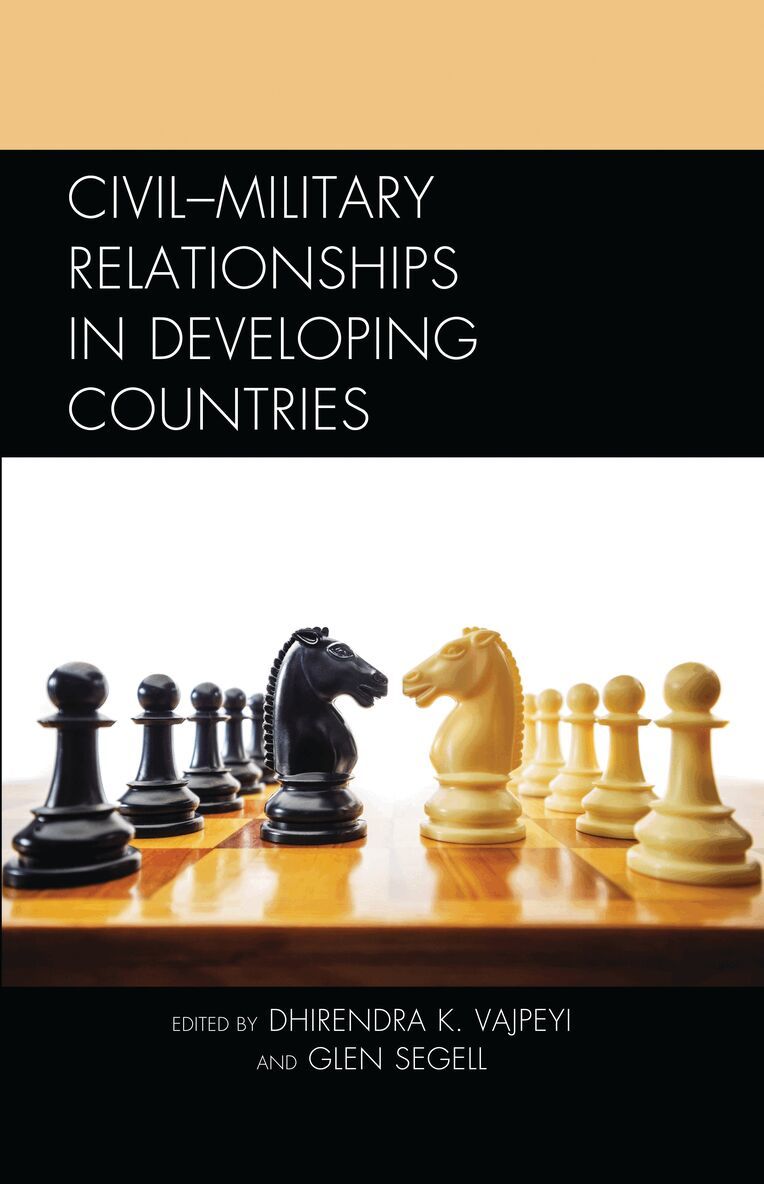
    Civil–Military Relationships in Developing Countries

    AvDhirendra K. Vajpeyi,Glen Segell

    Häftad, Engelska, 2016

    701 kr

    Beställningsvara. Skickas inom 10-15 vardagar. Fri frakt över 249 kr.

    Beskrivning

    This book examines two sides of civil–military relations in developing countries. One is the place of civil-military relations within a state’s political and economic systems; the other is the role of the military on a state’s maintenance of peace and stability. The book thus proposes that the function of soldiers is not only to defend and deter, but also to develop. The chapters provide a comprehensive analysis of civil–military relationship with comparative cases on Botswana, China, El Salvador, Honduras, Guatemala, India, Indonesia, Nicaragua, Nigeria, Pakistan, and The Arab Spring Countries of the Middle East including Bahrain, Sudan, Iraq, Jordan, Saudi Arabia, Egypt, Tunisia, Yemen and Libya. Each chapter analyzes the historical, cultural and political factors that shape the direction of the man on the white horse (military elite) and the politician. In doing so, this book reveals the potential impact of the nature of civil military relations on democratization, political and economic development, and on regional/international security. Dhirendra Vajpeyi and Glen Segell discuss and critique the current models and literature on civil-military relations. The innovative framework and careful choice of case studies, presented in a jargon-free, accessible style, makes this book attractive to scholars and students of civil military relations and development studies, as well as policymakers.

    Produktinformation

    • Utgivningsdatum:2016-11-14
    • Mått:151 x 230 x 14 mm
    • Vikt:295 g
    • Format:Häftad
    • Språk:Engelska
    • Antal sidor:222
    • Förlag:Bloomsbury Publishing Plc
    • ISBN:9781498550413

    Utforska kategorier

    • Politiska ideologier och rörelser inom Samhälle och politik
    • Internationella relationer inom Samhälle och politik

    Mer om författaren

    Dhirendra Vajpeyi is professor of political science at the University of Northern Iowa. He is editor of Climate Change, Sustainable Development, and Human Security: A Comparative Analysis and Water Resource Conflict and International Security: A Global Perspective.Glen Segell is lecturer at Bar-Ilan University and scientist at the Institute for National Security Studies, Tel-Aviv.

    Recensioner i media

    This book deals directly with some of the most intractable civil–military relations of our time and does so with a very clear and helpful ‘debate’ format in which each expert chapter is followed by editors’ notes. Glen Segell’s typology of the possible political outcomes of the broad phenomenon now known as the ‘Arab Spring’ is both perceptive and very effective. He sheds important light upon the requisites of democracy in the twenty-first century and the political options that stem from particular patterns of civil-military relations. Dhirendra Vajpeyi’s analysis of the profoundly different systems in Pakistan and India sheds new light on those confusing conundra. Orlando Perez brings his extensive expertise to bear on the Central American countries, incorporating Alfred Stepan’s concept of ‘military prerogatives’ to enhance our understanding of civil–military relations, and hence democracy, in these complex cases. Additional chapters by an impressive list of authors on Central American, Chinese, Indonesian, Nigerian, and Botswanan civil–military relations reinforce the impression that this book is a major contribution to civil–military relations, and thus to the often overlooked prerequisites to democracy, the dominant, but by no means permanently assured, political pattern of our age.

    Innehållsförteckning

    • List of Figures and TablesPrefaceChapter 1: IntroductionDhirendra K. VajpeyiGlen SegellChapter 2: Civil–Military Relations and the Arab SpringGlen SegellChapter 3: Civil–Military Relations in India and Pakistan: Genesis of Two Models in South AsiaDhirendra K. VajpeyiChapter 4: Bringing Back Maoism: Civil-Military Relations in a Period of Weakening Civilian Authority in ChinaYoram EvronChapter 5: Reforming the Indonesian ArmyMary Jo HalderChapter 6: Terrorism, International Military Deployment and Civil–Military Relations in NigeriaPita O. AgbeseChapter 7: The Trajectory of Civil–Military Relations In BotswanaMpho G. MolomoChapter 8: ConclusionDhirendra K. VajpeyiGlen SegellSelected Bibliography