• Fri frakt över 249 kr
  • •
  • Snabba leveranser
  • •
  • Billiga böcker
Kundservice

Du är på sajten för privatpersoner.

Företag, bibliotek eller offentlig verksamhet?

Du handlar på classic.bokus.com, där alla dina funktioner finns intakta.
Till classic.bokus.com
Bokus logotyp. Gå till startsidan.
  • Erbjudanden
  • Nyheter
  • Student
  • Topplistor
  • Barn & ungdom
  • Bokus Play
  • E-böcker
  • Pocketböcker
  • Spel & pussel

10% rabatt på allt med kod: NYSTART10 →

Sidfot

Mina sidor

    Hjälp

    • Kundservice
    • Vanliga frågor och svar
    • Frakt och leverans
    • Retur vid ångerrätt
    • Reklamera vara
    • Betalning
    • Köpvillkor
    • Allmänna villkor
    • Information om webbplatsens tillgänglighet

    Om Bokus

    • Om oss
    • Pressrum
    • För studenter
    • För företag
    • För bibliotek och offentlig verksamhet
    • För leverantörer
    • Hållbarhet

    Populärt

    • Aktuella erbjudanden
    • Presentkort
    • Studentlitteratur
    • Nya böcker
    • Topplistor
    • Signerade böcker
    • Engelska böcker

    Inspiration

    • Boktips
    • BookTok
    • Populära bokserier
    • Barnbokskaraktärer
    • Populära författare
    Logotyp för Bokus
    Följ oss på Facebook (extern länk)Följ oss på Instagram (extern länk)Följ oss på YouTube (extern länk)Följ oss på TikTok (extern länk)
    bokus @ CookiesAnpassa cookiesIntegritetspolicyKöpvillkor
    Till Citymail hemsida (extern länk)Till Budbee hemsida (extern länk)Till Postnord hemsida (extern länk)Till Schenker hemsida (extern länk)Till Early Bird hemsida (extern länk)Till Walleys hemsida (extern länk)
    1. Samhälle och politik
    2. Politik och statsskick
    3. Centralt styre och förvaltning

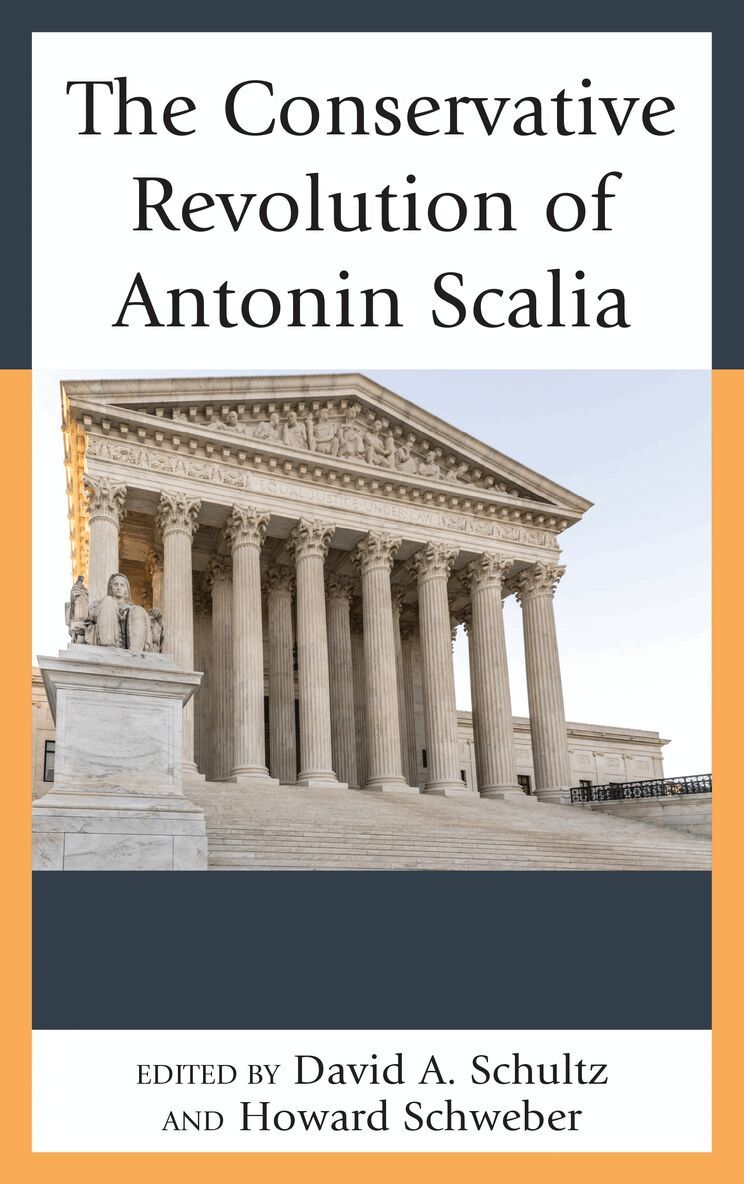
    Conservative Revolution of Antonin Scalia

    AvDavid A Schultz,Howard Schweber

    Häftad, Engelska, 2020

    607 kr

    Beställningsvara. Skickas inom 10-15 vardagar. Fri frakt över 249 kr.

    Beskrivning

    Many hoped or feared that Antonin Scalia’s appointment to the Supreme Court in 1986 would guarantee a conservative counter-revolution that would reverse the liberal jurisprudence of the Supreme Court under Chief Justice Earl Warren and which was continued to some extent under the Burger Court though the influence of Justice William Brennan. In addition, President Reagan described Scalia’s nomination as part of a project to remake the role of the Court, promote an interpretive approach of originalism, and shift authority and discretion to the States. Yet by the time of his death in 2016 it was unclear to what extent Scalia had effected the legal, institutional, or political revolutions that had been anticipated. While the Court did move to the right doctrinally, and reversed or modified many Vinson-Warren-Burger precedents, Scalia’s influence on constitutional jurisprudence turned out to be far less than it could have been, and his ability to persuade other Justices to adopt his legal views—both substantively and methodologically—was less than many mainstream media accounts recognize. Scalia’s institutional and political legacies are similarly complex: he was neither as transformative a figure as some of his allies might have hoped nor so unimportant as some of his detractors might have wished. The fact that his death and the controversy surrounding his replacement is so intense speaks to the fragile legacy that Scalia really has had on the Supreme Court after 30 years. This book will assess Scalia’s legacy in an edited volume that assembles leading legal and political science scholars who will evaluate his impact across a range of jurisprudential, institutional, and political issues.

    Produktinformation

    • Utgivningsdatum:2020-07-07
    • Mått:153 x 231 x 21 mm
    • Vikt:535 g
    • Format:Häftad
    • Språk:Engelska
    • Antal sidor:390
    • Förlag:Bloomsbury Publishing Plc
    • ISBN:9781498564502

    Utforska kategorier

    • Centralt styre och förvaltning inom Samhälle och politik
    • Rättsordning inom Juridik
    • Amerikas historia inom Historia och arkeologi

    Mer om författaren

    David A. Schultz is professor of political science at Hamline University.Howard Schweber is professor of political science at the University of Wisconsin, Madison.

    Recensioner i media

    The death of Antonin Scalia on February 13, 2016, marked the end of one of the most consequential careers in American legal history. In 30 years on the Supreme Court, Scalia introduced, articulated, and defended a pathbreaking school of constitutional (and political) thinking, doing so with a jaunty and caustic writing style that was utterly distinctive. This edited volume, featuring 14 chapters by scholarly contributors from the fields of political science, criminal justice, and law, assesses Scalia’s legacy. The chapters include appraisals of Scalia’s jurisprudence, an examination of the impact of his confirmation hearing, and analysis of his role as the avatar of originalism, the idea that the provisions of the Constitution should be interpreted in a way that reflects the intentions of the drafters of those provisions. A controversial doctrine, originalism itself is scrutinized throughout the book, and also in one dedicated chapter. The volume concludes with a contemplation of whether Scalia was a “great” Supreme Court justice, a complicated question about a seminal intellectual thinker on the Court, but one who was not always able to assemble a coalition of colleagues to sign onto his judicial philosophy.Summing Up: Highly recommended. Upper-division undergraduates through faculty.

    Innehållsförteckning

    • Introduction: Assessing Antonin Scalia’s Place in Supreme Court HistoryDavid Schultz and Howard SchweberChapter 1: Scalia, Sissies, and Administrative LawDavid SchultzChapter 2: Justice Scalia’s Modest Employment Discrimination Law LegacyHenry L. Chambers, Jr.Chapter 3: Playing Defense in the “Culture Wars”: Justice Scalia on Race, Gender, and Sexual OrientationMary Welek AtwellChapter 4: Justice Scalia and Criminal Justice: A Mixed Record with Conservative ImpactChristopher E. Smith and Charles F. JacobsChapter 5: Threat and Suspicion: Scalia’s Legacy for A Transnational Judicial DialogueMaureen StobbChapter 6: The Anti-Madison: Antonin Scalia’s Theory of PoliticsHoward SchweberChapter 7: Justice Scalia and the Legal Conservative Movement: An Exploration of Nino’s NeoconservatismJesse MerriamChapter 8: Justice Scalia and the Originalist FallacyStephen M. FeldmanChapter 9: The Jurisprudence of Justice Scalia: Common-Law Judging Behind an Originalist FaçadeRonald Kahn and Gerard Michael D’EmilioChapter 10: Justice Scalia and Oral Arguments at the Supreme CourtTim Johnson, Ryan Black, and Ryan OwensChapter 11: Justice Scalia’s Concurring Opinion WritingRyan J. Owens and Christopher J. KrewsonChapter 12: Justice Scalia’s Confirmation Hearing LegacyAlexander Denison and Justin WedekingChapter 13: Was Antonin Scalia a “Great” Supreme Court Justice?James StaabAbout the Editors and Contributors