• Fri frakt över 249 kr
  • •
  • Snabba leveranser
  • •
  • Billiga böcker
Kundservice

Du är på sajten för privatpersoner.

Företag, bibliotek eller offentlig verksamhet?

Du handlar på classic.bokus.com, där alla dina funktioner finns intakta.
Till classic.bokus.com
Bokus logotyp. Gå till startsidan.
  • Erbjudanden
  • Nyheter
  • Student
  • Topplistor
  • Barn & ungdom
  • Bokus Play
  • E-böcker
  • Pocketböcker
  • Spel & pussel

10% studentrabatt med kod TERM26

Sidfot

Mina sidor

    Hjälp

    • Kundservice
    • Vanliga frågor och svar
    • Frakt och leverans
    • Retur vid ångerrätt
    • Reklamera vara
    • Betalning
    • Köpvillkor
    • Allmänna villkor
    • Information om webbplatsens tillgänglighet

    Om Bokus

    • Om oss
    • Pressrum
    • För studenter
    • För företag
    • För bibliotek och offentlig verksamhet
    • För leverantörer
    • Hållbarhet

    Populärt

    • Aktuella erbjudanden
    • Presentkort
    • Studentlitteratur
    • Nya böcker
    • Topplistor
    • Signerade böcker
    • Engelska böcker

    Inspiration

    • Boktips
    • BookTok
    • Populära bokserier
    • Barnbokskaraktärer
    • Populära författare
    Logotyp för Bokus
    Följ oss på Facebook (extern länk)Följ oss på Instagram (extern länk)Följ oss på YouTube (extern länk)Följ oss på TikTok (extern länk)
    bokus @ CookiesAnpassa cookiesIntegritetspolicyKöpvillkor
    Till Citymail hemsida (extern länk)Till Budbee hemsida (extern länk)Till Postnord hemsida (extern länk)Till Schenker hemsida (extern länk)Till Early Bird hemsida (extern länk)Till Walleys hemsida (extern länk)
    1. Samhälle och politik
    2. Samhälle och kultur
    3. Sociala och etiska frågor

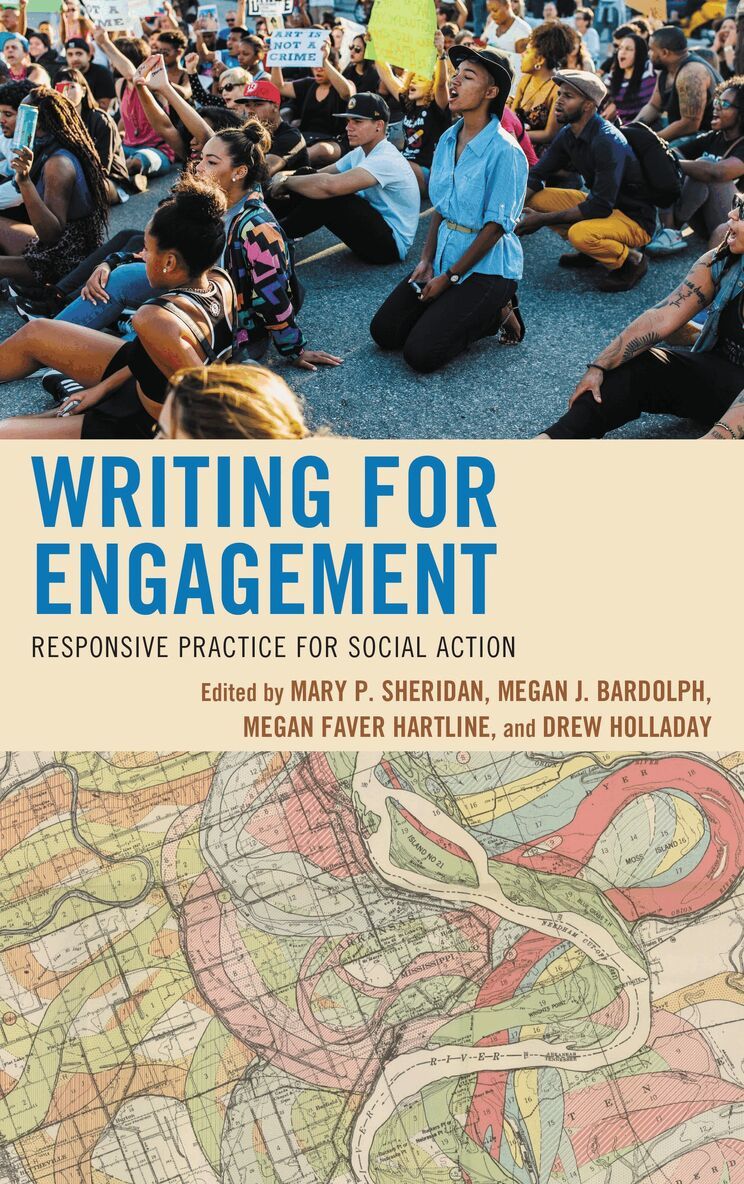
    Writing for Engagement

    Responsive Practice for Social Action

    AvMary P. Sheridan,Megan J. Bardolph

    Inbunden, Engelska, 2018

    Del i serien Cultural Studies/Pedagogy/Activism

    1 396 kr

    Beställningsvara. Skickas inom 10-15 vardagar. Fri frakt över 249 kr.

    Beskrivning

    Engagement is trendy. Although paired most often with community, diverse invocations of engagement have gained cache, capturing longstanding shifts toward new practices of knowledge making that both reflect and facilitate multiple ways of being an academic. Engagement functions as a gloss for these shifts—addressing more expansive understandings of where, how, and with whom we research, teach, and partner. This book examines these shifts, locating them within socio-economic trends within and beyond the higher educational landscape, with particular focus on how they have been enacted within the diverse subfields of writing studies. In so doing, this book provides concrete models for enacting these new responsive practices, thereby encouraging scholars to examine how they can facilitate writing for social action through taking positions, building relationships, and crossing boundaries.

    Produktinformation

    • Utgivningsdatum:2018-05-07
    • Mått:161 x 232 x 25 mm
    • Vikt:689 g
    • Format:Inbunden
    • Språk:Engelska
    • Serie:Cultural Studies/Pedagogy/Activism
    • Antal sidor:314
    • Förlag:Bloomsbury Publishing Plc
    • ISBN:9781498565561

    Utforska kategorier

    • Sociala och etiska frågor inom Samhälle och politik
    • Skrivande och redigering inom Språk och ordböcker

    Mer om författaren

    Mary P. Sheridan is professor of English at University of Louisville.Megan J. Bardolph is assistant professor of English at Penn State New Kensington.Megan Faver Hartline is the associate director of Community Learning at Trinity College.Drew Holladay is assistant professor of digital humanities at University of Maryland, Baltimore County.

    Recensioner i media

    I foresee scholars in rhetoric and composition drawing on these essays in their scholarship, particularly those working on issues of community literacy and community-engaged writing projects.

    Innehållsförteckning

    • IntroductionMary P. SheridanSection 1: Taking Positions1. Taking Action in the Age of Reaction: Constructing Architectures of Participation Linda Adler-Kassner2. Engage, Respond, Advocate: Copyright in ContextDànielle DeVoss3. The Figured Worlds of Digital Mediation in SchoolsRachel Gramer4. Witnessing Learning: Building Relationships between Past, Present, and Future SelvesBump Halbritter and Julie Lindquist5. Imagining Pedagogical Engagement: On the Rhetorical Limits of VulnerabilityKellie Sharp-Hoskins6. Police Use-of-Force Policy: Engagement and the Mediation/Negotiation of Responsibility in a Public Institutional GenreMichael Knievel7. From Public Writing to Writing-in-Common: Community Literacy after the Public SphereStephen SchneiderAfterword for Section 1: Taking PositionsDrew HolladaySection 2: Building Relationships8. The Rhetoric of Outrage: Responding through Memoir and Public HistoryShannon Carter and Donna Dunbar-Odom9. Remixed Literacies and Radical Cooperation at Play in a Youth-Directed Media ProjectLondie T. Martin and Adela C. Licona10. Enacting Confianza: Responsive Community Literacy Learning Research in Mexington, KentuckySteven Alvarez11. From the Center to the Sidelines: Responsive Leadership in a High School-College Writing PartnershipHeather Lindenman12. The SISTA Project: Literacy Outreach in Response to Community NeedsDavid A. Jolliffe, Julia Paganelli-Martin, Daniele Cunningham, andShiloh PetersAfterword for Section 2: Building RelationshipsMegan Faver HartlineSection 3: Crossing Boundaries13. Writing, Democracy, Activism: Palestine, Israel, and Community PublishingSteve Parks14. Carceral Windows and the Promise of LiteracyPatrick W. Berry15. Habitus, Disposition, and Disruption in MOOCs: Developing Responsive Pedagogy at ScaleBen McCorkle, Cynthia L. Selfe, Kaitlin Clinnin, and Kay Halasek16. Meeting Students Where They Are: Practicing Responsive PedagogyKaitlin Clinnin, Kay Halasek, Ben McCorkle, and Cynthia L. Selfe17. Refugee Literacy Learning and Liminal Belonging: A Neoliberal Context of DiversityStephanie Rae Larson18. “Responsive Understanding” and Receptivity to Global Writing ResearchChristiane DonahueAfterword for Section 3: Crossing BoundariesMegan J. Bardolph