• Fri frakt över 249 kr
  • •
  • Snabba leveranser
  • •
  • Billiga böcker
Kundservice

Du är på sajten för privatpersoner.

Företag, bibliotek eller offentlig verksamhet?

Du handlar på classic.bokus.com, där alla dina funktioner finns intakta.
Till classic.bokus.com
Bokus logotyp. Gå till startsidan.
  • Erbjudanden
  • Nyheter
  • Student
  • Topplistor
  • Barn & ungdom
  • Bokus Play
  • E-böcker
  • Pocketböcker
  • Spel & pussel

Må bättre, för mindre! Upp till 50% rabatt på hälsoböcker

Sidfot

Mina sidor

    Hjälp

    • Kundservice
    • Vanliga frågor och svar
    • Frakt och leverans
    • Retur vid ångerrätt
    • Reklamera vara
    • Betalning
    • Köpvillkor
    • Allmänna villkor
    • Information om webbplatsens tillgänglighet

    Om Bokus

    • Om oss
    • Pressrum
    • För studenter
    • För företag
    • För bibliotek och offentlig verksamhet
    • För leverantörer
    • Hållbarhet

    Populärt

    • Aktuella erbjudanden
    • Presentkort
    • Studentlitteratur
    • Nya böcker
    • Topplistor
    • Signerade böcker
    • Engelska böcker

    Inspiration

    • Boktips
    • BookTok
    • Populära bokserier
    • Barnbokskaraktärer
    • Populära författare
    Logotyp för Bokus
    Följ oss på Facebook (extern länk)Följ oss på Instagram (extern länk)Följ oss på YouTube (extern länk)Följ oss på TikTok (extern länk)
    bokus @ CookiesAnpassa cookiesIntegritetspolicyKöpvillkor
    Till Citymail hemsida (extern länk)Till Budbee hemsida (extern länk)Till Postnord hemsida (extern länk)Till Schenker hemsida (extern länk)Till Early Bird hemsida (extern länk)Till Walleys hemsida (extern länk)
    1. Samhälle och politik
    2. Politik och statsskick
    3. Internationella relationer

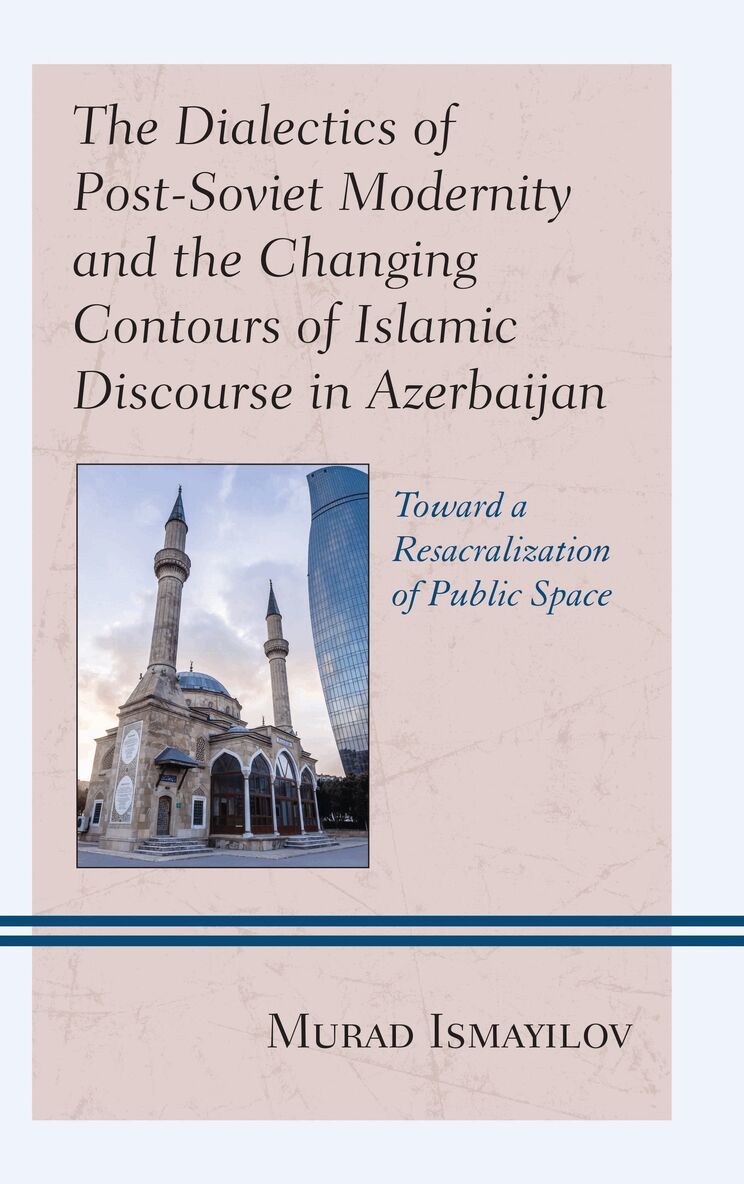
    Dialectics of Post-Soviet Modernity and the Changing Contours of Islamic Discourse in Azerbaijan

    Toward a Resacralization of Public Space

    AvMurad Ismayilov

    Inbunden, Engelska, 2018

    Del i serien Contemporary Central Asia: Societies, Politics, and Cultures

    1 256 kr

    Beställningsvara. Skickas inom 10-15 vardagar. Fri frakt över 249 kr.

    Beskrivning

    Azerbaijan’s independence came after seven decades of militant atheism of Soviet modernization project and emerged into staunch secularism of Western modernity, two factors that, on a par with the country’s precarious neighborhood, promised a sustained indigenous effort towards the desacralization of the country’s political space and the associated exclusion of religion from politics, a modern blueprint that the Azerbaijani state and its society have stood united to diligently follow over the cause of the country’s independent existence. Yet the specific dynamics facing the country in the third decade of independence and the changing contours of its international engagements have gradually been working to set the country free from the stifling grips of Western-style modernity and lay the groundwork for quintessentially and esoterically Azerbaijani pathway of statehood to follow, one combining the nation’s historical embeddedness in an Islamic milieu with its century-old practical experience of modern policy making.This book offers a detailed account of the dynamics behind the religious-secular divide in Azerbaijan over the past two decades of independence and the conditions underlying the ongoing process of normalization of Islamic discourse and the rising cooperation across the country’s secular-religious political landscape and looks into some future dynamics this transformation is set to unleash. It begins with an outline of hybrid intentionality behind the elite’s manifold attitudes to Islam, with particular focus on the strategy of separation between religion and politics in which those attitudes have found expression. It then proceeds to show the complicity of civil society and the broader populace, as well as the international community and the country’s Islamic stratum itself, in the reproduction of the narrative of Islamic danger and the resultant religious-secular divide in post-Soviet Azerbaijan. The study then continues with an account of a number of dialectical tensions inherent in policy outcomes to which the hybrid nature of elite intentionality has given rise. It then follows on to discuss key factors contributing to the ongoing normalization of Islam across the public realm and the gradual bridging of the religious-secular divide amidst the ongoing state repression. The volume concludes with a comparative insight into some common features and conditioning factors behind the dynamics underlying the religious-secular nexus in Azerbaijan and across the broader region of the Middle East. It also offers an insight into some future potentialities that the current dynamics have laid bare.

    Produktinformation

    • Utgivningsdatum:2018-09-15
    • Mått:158 x 231 x 21 mm
    • Vikt:472 g
    • Format:Inbunden
    • Språk:Engelska
    • Serie:Contemporary Central Asia: Societies, Politics, and Cultures
    • Antal sidor:194
    • Förlag:Bloomsbury Publishing Plc
    • ISBN:9781498568364

    Utforska kategorier

    • Internationella relationer inom Samhälle och politik

    Mer om författaren

    Murad Ismayilov is doctoral researcher in development studies and research fellow at the Central Asia Forum at the University of Cambridge.

    Recensioner i media

    The volume combines argumentative thoroughness with an enjoyable narrative style . . . This book is an important addition to the literature on the role of Islam in post-Soviet Eurasia and a valuable resource for students of political science, scholars and policymakers working on Azerbaijan.

    Innehållsförteckning

    • Chapter 1: Hybrid Intentionality and Exogenous Sources of the Elite's Manifold Attitudes to Islam in Azerbaijan: Geography, Soviet Legacy, and the Quest for Western RecognitionChapter 2: The Complicity of the Domestic Populace, Secular Opposition, Civil Society, and the International Community in Reproducing the Religious Secular Divide and the Representation of Islam as a ThreatChapter 3: The Contextual Dialectics of Elite Attitudes to Islam in AzerbaijanChapter 4: The Dynamics of Change: The Bridging of the Religious-Secular Divide and the Normalization of Islamic Discourse across Azerbaijan's Social-Political LandscapeChapter 5: Normalization of Islamic Discourse and the Future of Islam in Azerbaijan: Quo Vadis?Chapter 6: A Shared Landscape of Islamism across the Secularized Middle East