Murad Ismayilov – författare
657 kr
Skickas inom 10-15 vardagar
724 kr
Skickas inom 10-15 vardagar
2 324 kr
Skickas inom 10-15 vardagar
2 425 kr
Skickas inom 10-15 vardagar
757 kr
Läs direkt efter köp
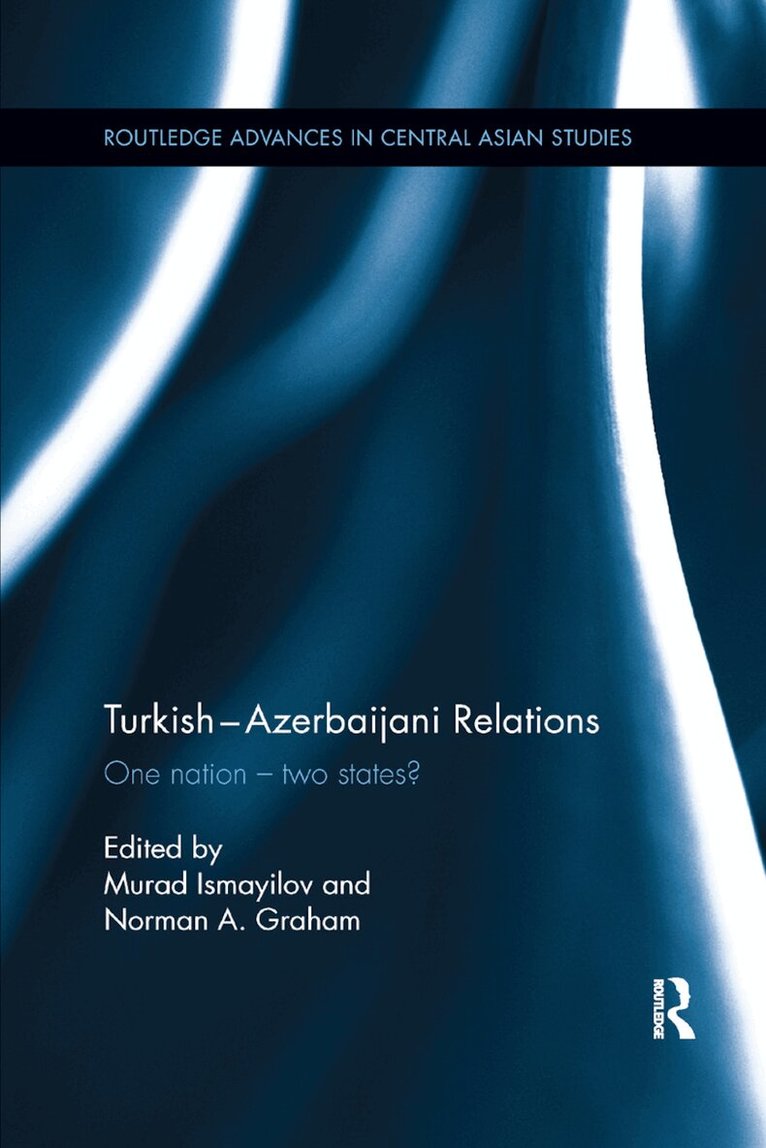
An east-west axis of Azerbaijan and Turkey has grown into prominence within the broader structure of regional dynamics in Eurasia over the past two decades. Yet few, including among policy advisors and policy makers in either of the two states, have attempted to look deeper into the forces that lie behind the workings of this important regional nexus, a reality that resulted in a dual crisis in bilateral relations towards the end of the second decade of interaction.
This volume investigates the underlying causes that shaped the dynamics within the structure of the bilateral relationship between Azerbaijan and Turkey. It features chapters by both scholars from the region and international experts in the field, and therefore provides both in-house and outside perspectives on developments within the complex structure of the relationship. With its analysis portfolio including historical, political, economic, socio-cultural, ideological, and international underpinnings of this regional alliance, the volume offers the most systematic and broad ranged analysis of the matter available to date.
The book will serve as an important resource for students and scholars of post-Soviet Studies, Central Asia and the Caucasus, and the Middle East, while also being of interest to those of International Relations and political science disciplines.
757 kr
Läs direkt efter köp
An east-west axis of Azerbaijan and Turkey has grown into prominence within the broader structure of regional dynamics in Eurasia over the past two decades. Yet few, including among policy advisors and policy makers in either of the two states, have attempted to look deeper into the forces that lie behind the workings of this important regional nexus, a reality that resulted in a dual crisis in bilateral relations towards the end of the second decade of interaction.
This volume investigates the underlying causes that shaped the dynamics within the structure of the bilateral relationship between Azerbaijan and Turkey. It features chapters by both scholars from the region and international experts in the field, and therefore provides both in-house and outside perspectives on developments within the complex structure of the relationship. With its analysis portfolio including historical, political, economic, socio-cultural, ideological, and international underpinnings of this regional alliance, the volume offers the most systematic and broad ranged analysis of the matter available to date.
The book will serve as an important resource for students and scholars of post-Soviet Studies, Central Asia and the Caucasus, and the Middle East, while also being of interest to those of International Relations and political science disciplines.
824 kr
Läs direkt efter köp
The multicultural region of Central Eurasia is living through its early post-independence years and as such serves as an ideal case to study and analyse theories of identity and foreign policy in a non-European context. Looking to re-introduce identity as a multidimensional factor informing state behaviour, this book analyses the experiences of the different Central Eurasian states in their post-independence pursuits.
The book is structured into two broadly defined sections, with the first half examining the different ways in which the combination of domestic, regional, international and trans-national forces worked to advance one national identity over the others in the states that comprise the region of post-Soviet Central Eurasia. In the second half, chapters analyse the many ways in which identity, once shaped, affected foreign policy behaviours of the regional states, as well as the overall security dynamics in the region. The book also looks at the ways in which identity, by doing so, enjoys an intricate, mutually constitutive relationship with the strategic context in which it bears its effects on the state and the region. Finally, given the special role Russia has historically played in defining the evolutionary trajectory of the regional states, the book discusses the ways in which Russia itself and its post-cold war policies towards its former colonies have been conditioned by factors associated with Russia’s evolving post-Soviet identity.
Placing the region firmly within existing theories of identity and state practices, the book will be of interest to students and scholars of Central Asian Politics, Security Studies, Foreign Policy and International Relations.
824 kr
Läs direkt efter köp
The multicultural region of Central Eurasia is living through its early post-independence years and as such serves as an ideal case to study and analyse theories of identity and foreign policy in a non-European context. Looking to re-introduce identity as a multidimensional factor informing state behaviour, this book analyses the experiences of the different Central Eurasian states in their post-independence pursuits.
The book is structured into two broadly defined sections, with the first half examining the different ways in which the combination of domestic, regional, international and trans-national forces worked to advance one national identity over the others in the states that comprise the region of post-Soviet Central Eurasia. In the second half, chapters analyse the many ways in which identity, once shaped, affected foreign policy behaviours of the regional states, as well as the overall security dynamics in the region. The book also looks at the ways in which identity, by doing so, enjoys an intricate, mutually constitutive relationship with the strategic context in which it bears its effects on the state and the region. Finally, given the special role Russia has historically played in defining the evolutionary trajectory of the regional states, the book discusses the ways in which Russia itself and its post-cold war policies towards its former colonies have been conditioned by factors associated with Russia’s evolving post-Soviet identity.
Placing the region firmly within existing theories of identity and state practices, the book will be of interest to students and scholars of Central Asian Politics, Security Studies, Foreign Policy and International Relations.
1 258 kr
Skickas inom 10-15 vardagar