• Fri frakt över 249 kr
  • •
  • Snabba leveranser
  • •
  • Billiga böcker
Kundservice

Du är på sajten för privatpersoner.

Företag, bibliotek eller offentlig verksamhet?

Du handlar på classic.bokus.com, där alla dina funktioner finns intakta.
Till classic.bokus.com
Bokus logotyp. Gå till startsidan.
  • Erbjudanden
  • Nyheter
  • Student
  • Topplistor
  • Barn & ungdom
  • Bokus Play
  • E-böcker
  • Pocketböcker
  • Spel & pussel

10% rabatt på allt med kod: NYSTART10 →

Sidfot

Mina sidor

    Hjälp

    • Kundservice
    • Vanliga frågor och svar
    • Frakt och leverans
    • Retur vid ångerrätt
    • Reklamera vara
    • Betalning
    • Köpvillkor
    • Allmänna villkor
    • Information om webbplatsens tillgänglighet

    Om Bokus

    • Om oss
    • Pressrum
    • För studenter
    • För företag
    • För bibliotek och offentlig verksamhet
    • För leverantörer
    • Hållbarhet

    Populärt

    • Aktuella erbjudanden
    • Presentkort
    • Studentlitteratur
    • Nya böcker
    • Topplistor
    • Signerade böcker
    • Engelska böcker

    Inspiration

    • Boktips
    • BookTok
    • Populära bokserier
    • Barnbokskaraktärer
    • Populära författare
    Logotyp för Bokus
    Följ oss på Facebook (extern länk)Följ oss på Instagram (extern länk)Följ oss på YouTube (extern länk)Följ oss på TikTok (extern länk)
    bokus @ CookiesAnpassa cookiesIntegritetspolicyKöpvillkor
    Till Citymail hemsida (extern länk)Till Budbee hemsida (extern länk)Till Postnord hemsida (extern länk)Till Schenker hemsida (extern länk)Till Early Bird hemsida (extern länk)Till Walleys hemsida (extern länk)
    1. Ekonomi och Ledarskap
    2. Nationalekonomi
    3. Ekonomisk historia

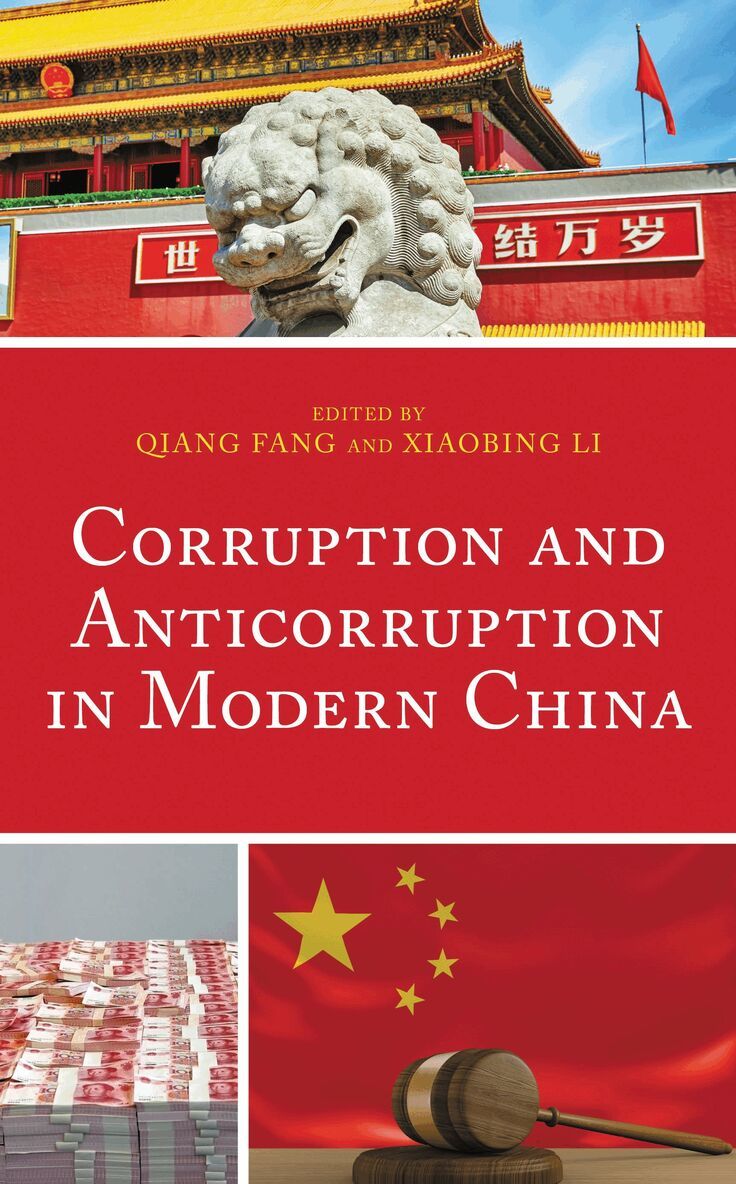
    Corruption and Anticorruption in Modern China

    AvQiang Fang,Xiaobing Li

    Inbunden, Engelska, 2018

    1 672 kr

    Beställningsvara. Skickas inom 10-15 vardagar. Fri frakt över 249 kr.

    Beskrivning

    Corruption and Anti-Corruption in Modern China collects essays from the scholars in their fields and examines the ongoing corruption in China by addressing this important topic from a historical perspective through a cooperative interdisciplinary research effort among Chinese-American scholars interested in the subject. Their scholarship makes a significant contribution through multi-faceted components from different fields such as history, economics, political science, criminal justice, and popular culture. The authors introduce and explore the theory and practice of policy patterns, political systems, and social institutions by identifying key issues in Chinese government and society contained within the larger framework of the international sphere.This book describes a historical transition when the Chinese Communist Party (CCP) maintained its forceful control of cities while the middle class reluctantly sacrificed its rights in exchange for retaining their economic benefits. To survive market economy, the party leadership became more flexible and was able to adapt to economic and social change. The CCP governments in our research responded to the rising demands and expectations of the society. They were willing and able to cope with the middle class by making a few compromises and following certain legal procedures in exchange for continuing political support. These practical comprises characterized a new political culture in PRC history since 1949.The book voices the complaints and resentments in the cities, and interprets government policies and legal practices. It emphasizes the consequence for governance, human rights, and commercial rule of law, all of which threatens the legitimacy of the CCP. It also suggests an important evolution of the CCP. The reform movement since the 1980s has not yet contributed significantly to the country’s democratic transformation or to its social stability. The leaders in the 1990s focused on liberal economic reform while discouraging and even stifling political reform. As a result, economic interest groups successfully established an alliance with CCP officials to control economic policy-making and to share political governance. In the 2010s, Chinese leaders have paid special attention to political scandals, corruption, and mismanagement in the government and in the Party.

    Produktinformation

    • Utgivningsdatum:2018-12-20
    • Mått:160 x 229 x 27 mm
    • Vikt:667 g
    • Format:Inbunden
    • Språk:Engelska
    • Antal sidor:398
    • Förlag:Bloomsbury Publishing Plc
    • ISBN:9781498574310

    Utforska kategorier

    • Ekonomisk historia inom Ekonomi och Ledarskap
    • Politik och statsskick inom Samhälle och politik

    Mer om författaren

    Qiang Fang is professor of East Asian history at the University of Minnesota Duluth and president of Chinese Historians in the United States.Xiaobing Li is professor and chair of the Department of History and Geography and director of the Western Pacific Institute at the University of Central Oklahoma.

    Recensioner i media

    The authors of this fascinating volume deftly explore the intersecting issues of moral corruption, bureaucratic corruption, and no-holds-barred political struggle across Chinese history and even (in the final chapter) in the arena of American politics. In doing so, they enhance our understanding of a major issue of debate among historians of China and place Xi Jinping’s contemporary anti-corruption campaign in historical and international perspective.

    Innehållsförteckning

    • Introduction: Who to Blame: Party, State, or Society? By Qiang Fang and Xiaobing LiList of AbbreviationsPart I: Centralized Power and AuthoritarianismChapter 1: Fundamental Flaws: Corruption Reporting and Tackling in the Qing, Qiang FangChapter 2: Accountability, Supervision, and Penalty: Yuan Shikai as a Watchdog in Managing Government Officials, Patrick Fuliang ShanPart II: Political Parties and LegitimacyChapter 3: Chiang Kai-shek versus Guomindang’s Corruption in the Republic Era, Sherman Xiaogang LaiChapter 4: Anti-corruption Policy and Party Politics: The Lost Political Battle and the Fate of the GMD, Xiaobing LiChapter 5: Crime (or No Crime) and Punishment: The Making of the First Big Case in New China and Legitimation of CCP Party Governance, 1950–1991, Zhiguo YangPart III: Government, Individuals, and Conflict InterestsChapter 6: Connection, Corruption, and Confrontation: Lake Weishan, Xiaojia HouChapter 7: Power versus Law: Anticorruption in Shaanxi during Jiang Zemin’s Era, Dongyu YangChapter 8: Runaway Chinese Officials and International Chase, Yue Li and Chen LiuChapter 9: Language of Protest: Corruption Exposed in Popular Rhymes, Helen Xiaoyan WuChapter 10: Corruption during China's Golden Ages: Case Studies in the Han and Tang Dynasties, Stella Y. XuPart IV: New Century, New StruggleChapter 11: Hu Jintao’s Anti-corruption Action (or non action): The Bo Xilai Case and After, Xiansheng TianChapter 12: The New Leadership Fights the Old Battle: Eight Regulations, Xiaoxiao LiChapter 13: Xi Jinping’s Anti-Corruption in a Historical Perspective, Qiang FangConclusion: Anticorruption: A Global Thorny Task, Qiang Fang and Xiaobing Li