Inbunden, Engelska, 2019
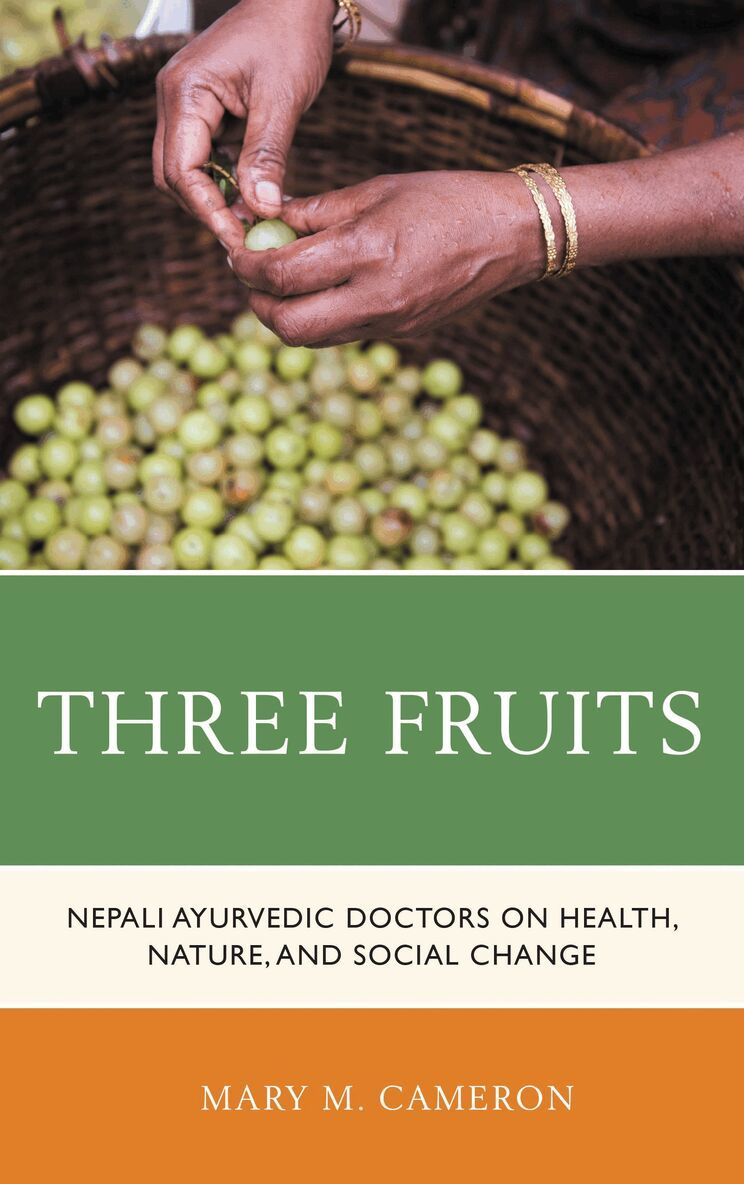
Three Fruits
Nepali Ayurvedic Doctors on Health, Nature, and Social Change
Del i serien Anthropology of Well-Being: Individual, Community, Society
1274 kr
Beställningsvara. Skickas inom 10-15 vardagar. Fri frakt över 249 kr.
Beskrivning
Produktinformation
- Utgivningsdatum: 2019-04-24
- Mått: 161 x 231 x 25 mm
- Vikt: 576 g
- Format: Inbunden
- Språk: Engelska
- Serie: Anthropology of Well-Being: Individual, Community, Society
- Antal sidor: 264
- Förlag: Bloomsbury Publishing Plc
- ISBN: 9781498594233
Utforska kategorier
Mer om författaren
Mary M. Cameron is professor of anthropology at Florida Atlantic University.
Recensioner i media
Cameron focuses on observations and interviews she carried out between 1997 and 2012 with eight Nepali Ayurveda doctors, including five women. She presents Ayurveda (“knowledge of life”) as a plant-based, person-centered, holistic body of theory and practice that interconnects diet, daily routine, lifestyle, social milieu, mental attitude, and environment with bodily, sensorial, mental, and spiritual health. According to one of the interviewees, “plants can heal humans because both are microcosms of the same biosocial world." The “three fruits” of the title refer to a common Ayurvedic preparation, made from three varieties of trees that grow in Nepal, widely used for digestive problems and as a strengthening tonic. Cameron emphasizes that Ayurveda is accessible to ordinary people in Nepal, and according to the World Health Organization, “75 percent of the population use traditional medicine, mainly that based upon the Ayurvedic system." Ironically, political and economic threats to Ayurveda from supporters of allopathic medicine have enhanced the opportunity of women to engage in professional medicine within Ayurvedic institutions. In addition the conservation of medicinal plants is a valuable bridge between the interests of so-called “traditional” medicine and the environmental consciousness and well-being of modern society.Summing Up: Recommended. Lower-division undergraduates through faculty.
Betyg & recensioner
0 recensioner
Inga recensioner tillgängliga.