• Fri frakt över 249 kr
  • •
  • Snabba leveranser
  • •
  • Billiga böcker
Kundservice

Du är på sajten för privatpersoner.

Företag, bibliotek eller offentlig verksamhet?

Du handlar på classic.bokus.com, där alla dina funktioner finns intakta.
Till classic.bokus.com
Bokus logotyp. Gå till startsidan.
  • Erbjudanden
  • Nyheter
  • Student
  • Topplistor
  • Barn & ungdom
  • Bokus Play
  • E-böcker
  • Pocketböcker
  • Spel & pussel

10% rabatt på allt med kod: NYSTART10 →

Sidfot

Mina sidor

    Hjälp

    • Kundservice
    • Vanliga frågor och svar
    • Frakt och leverans
    • Retur vid ångerrätt
    • Reklamera vara
    • Betalning
    • Köpvillkor
    • Allmänna villkor
    • Information om webbplatsens tillgänglighet

    Om Bokus

    • Om oss
    • Pressrum
    • För studenter
    • För företag
    • För bibliotek och offentlig verksamhet
    • För leverantörer
    • Hållbarhet

    Populärt

    • Aktuella erbjudanden
    • Presentkort
    • Studentlitteratur
    • Nya böcker
    • Topplistor
    • Signerade böcker
    • Engelska böcker

    Inspiration

    • Boktips
    • BookTok
    • Populära bokserier
    • Barnbokskaraktärer
    • Populära författare
    Logotyp för Bokus
    Följ oss på Facebook (extern länk)Följ oss på Instagram (extern länk)Följ oss på YouTube (extern länk)Följ oss på TikTok (extern länk)
    bokus @ CookiesAnpassa cookiesIntegritetspolicyKöpvillkor
    Till Citymail hemsida (extern länk)Till Budbee hemsida (extern länk)Till Postnord hemsida (extern länk)Till Schenker hemsida (extern länk)Till Early Bird hemsida (extern länk)Till Walleys hemsida (extern länk)
    1. Språk och ordböcker
    2. Språkvetenskap och lingvistik

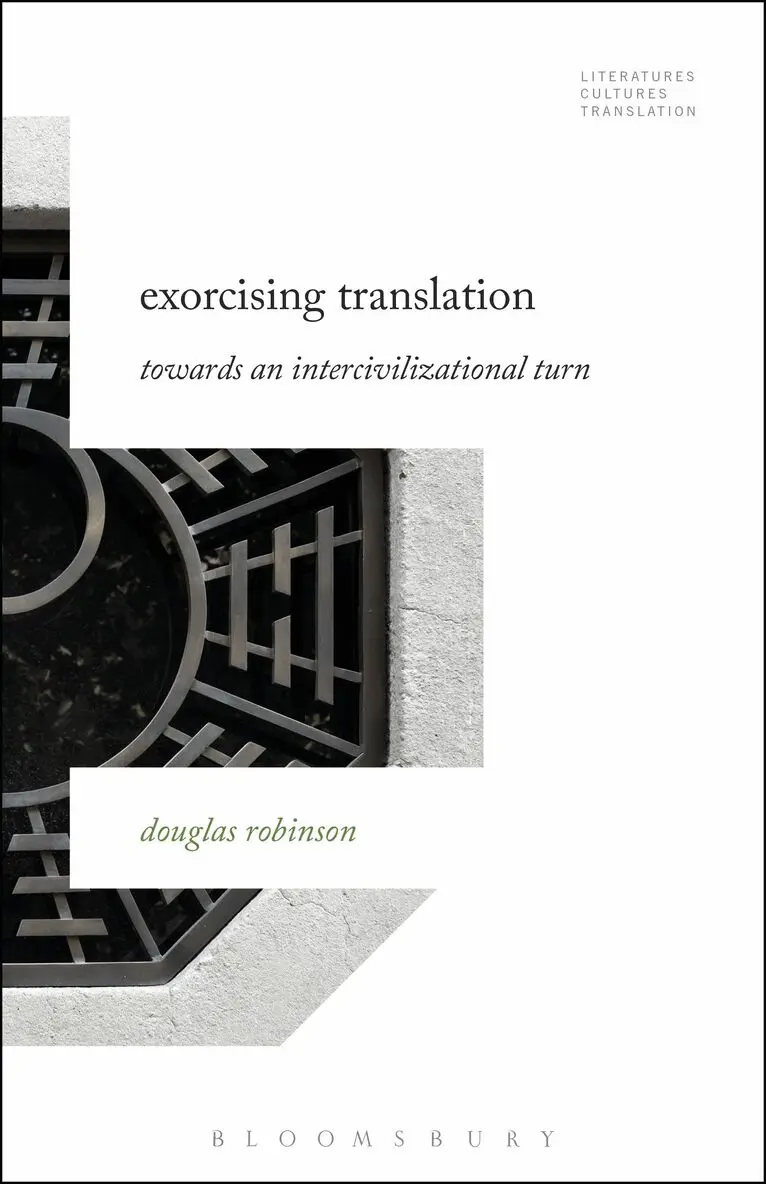
    Exorcising Translation

    Towards an Intercivilizational Turn

    AvDouglas Robinson,Brian James Baer

    Häftad, Engelska, 2016

    Del i serien Literatures, Cultures, Translation

    487 kr

    Beställningsvara. Skickas inom 10-15 vardagar. Fri frakt över 249 kr.

    Fler format och utgåvor

    Inbunden

    1 605 kr

    E-bok

    466 kr

    E-bok

    466 kr

    Beskrivning

    Exorcising Translation, a new volume in Bloomsbury's Literatures, Cultures, Translation series, makes critical contributions to translation as well as to comparative and postcolonial literary studies. The hot-button issue of Eurocentrism in translation studies has roiled the discipline in the past few years, with critiques followed by defenses and defenses followed by enhanced critiques. Douglas Robinson identifies Eurocentrism in translation studies as what Sakai Naoki calls a “civilizational spell.” Exorcising Translation tracks two translation histories. In the first, moving from Friedrich Nietzsche to Harold Bloom, we find ourselves caught, trapped, cursed, haunted by the spell. In the second, focused on English translations and translators of Chinese literature, Robinson explores accusations against American translators not only for their inadequate (or even totally absent) knowledge of Chinese and Daoism, but for their Americanness, their trappedness in individualistic and secular Western thought. A closer look at that history shows that Western thought and Chinese thought are mutually shaped in fascinating ways. Exorcising Translation presents a major re-envisioning of translation studies, and indeed the literary relationship between East and West, by a pioneering scholar in the field.

    Produktinformation

    • Utgivningsdatum:2016-12-15
    • Mått:134 x 214 x 14 mm
    • Vikt:260 g
    • Format:Häftad
    • Språk:Engelska
    • Serie:Literatures, Cultures, Translation
    • Antal sidor:208
    • Förlag:Bloomsbury Publishing Plc
    • ISBN:9781501326042

    Utforska kategorier

    • Språkvetenskap och lingvistik inom Språk och ordböcker
    • Litteraturvetenskap inom Skönlitteratur

    Mer om författaren

    Douglas Robinson is Chair Professor of English at Hong Kong Baptist University, Hong Kong, and is one of the world’s leading experts on translation. He is the author of path-breaking publications in translation studies, including The Translator’s Turn (1991), Translation and Taboo (1996), Translation and the Problem of Sway (2011), and The Dao of Translation (2015). He is also author of important works on postcoloniality, from Translation and Empire (1997) to Displacement and the Somatics of Postcolonial Culture (2013).

    Recensioner i media

    While the introduction and legitimation of CTS (Critical Translation Studies) to plain old TS (Translation Studies) frames Exorcising Translation, its significance for readers outside of Translation Studies is considerably deeper. In short, out of Sakai’s notion of the “civilizational spell," Robinson builds a critical apparatus that can explain Orientalism and its less discursively-defined other Occidentalism, critiquing renowned scholars and philosophers for being spellbound to “ethnocentric misunderstandings of other cultures and other civilizations”. … [Robinson] builds a framework for a more ambitious Translation Studies.

    Innehållsförteckning

    • Preface0.1 Panicked Eurocentrism0.2 The Structure of the Book0.3 AcknowledgmentsChapter 1: Sakai Naoki on Translation 1.1 Sakai’s Model1.2 Implications for Civilizational SpellsChapter 2: The Casting of Civilizational Spells: Nietzsche as Precursor, Bloom as Ephebe2.1 Nietzsche 1: Slave Morality as a Civilizational Spell2.2 Nietzsche 2: The Mnemotechnics of Pain2.3 Bloom 1: The Western Canon as a Tug-of-War Between Civilizational Spells2.4 Bloom 2: The Canon as Memory as Pain2.5 Nietzsche 3: Guilt and Debt2.6 Nietzsche 4: The Desomatization of Somatic Codes2.7 Bloom 3: The Western Canon, Universalized2.8 Cofiguration?Chapter 3: East and West: Towards an Intercivilizational Turn3.1 An East-to-West Countertradition as a Cofigurative Regime of Translation3.2 The Occidentalist Attack on “Immature, Self-Centered Western Minds”3.2.1 Kirkland on Distortions of Daoism3.2.2 Problems in Kirkland’s Attack3.3 Three Historical Stages of Laozi Translation3.3.1 Christianity3.3.2 Esotericism3.3.3 Romanticism3.4 First Conclusion: Civilizational Spells, Again3.5 Second Conclusion: Eurocentrism, Decentered3.6 Third Conclusion: An Intercivilizational Turn?ReferencesEndnotesIndex