• Fri frakt över 249 kr
  • •
  • Snabba leveranser
  • •
  • Billiga böcker
Kundservice

Du är på sajten för privatpersoner.

Företag, bibliotek eller offentlig verksamhet?

Du handlar på classic.bokus.com, där alla dina funktioner finns intakta.
Till classic.bokus.com
Bokus logotyp. Gå till startsidan.
  • Erbjudanden
  • Nyheter
  • Student
  • Topplistor
  • Barn & ungdom
  • Bokus Play
  • E-böcker
  • Pocketböcker
  • Spel & pussel

10% rabatt på allt med kod: NYSTART10 →

Sidfot

Mina sidor

    Hjälp

    • Kundservice
    • Vanliga frågor och svar
    • Frakt och leverans
    • Retur vid ångerrätt
    • Reklamera vara
    • Betalning
    • Köpvillkor
    • Allmänna villkor
    • Information om webbplatsens tillgänglighet

    Om Bokus

    • Om oss
    • Pressrum
    • För studenter
    • För företag
    • För bibliotek och offentlig verksamhet
    • För leverantörer
    • Hållbarhet

    Populärt

    • Aktuella erbjudanden
    • Presentkort
    • Studentlitteratur
    • Nya böcker
    • Topplistor
    • Signerade böcker
    • Engelska böcker

    Inspiration

    • Boktips
    • BookTok
    • Populära bokserier
    • Barnbokskaraktärer
    • Populära författare
    Logotyp för Bokus
    Följ oss på Facebook (extern länk)Följ oss på Instagram (extern länk)Följ oss på YouTube (extern länk)Följ oss på TikTok (extern länk)
    bokus @ CookiesAnpassa cookiesIntegritetspolicyKöpvillkor
    Till Citymail hemsida (extern länk)Till Budbee hemsida (extern länk)Till Postnord hemsida (extern länk)Till Schenker hemsida (extern länk)Till Early Bird hemsida (extern länk)Till Walleys hemsida (extern länk)
    1. Kultur
    2. Musikböcker
    3. Musik: stilar och genrer
    4. Populärmusik

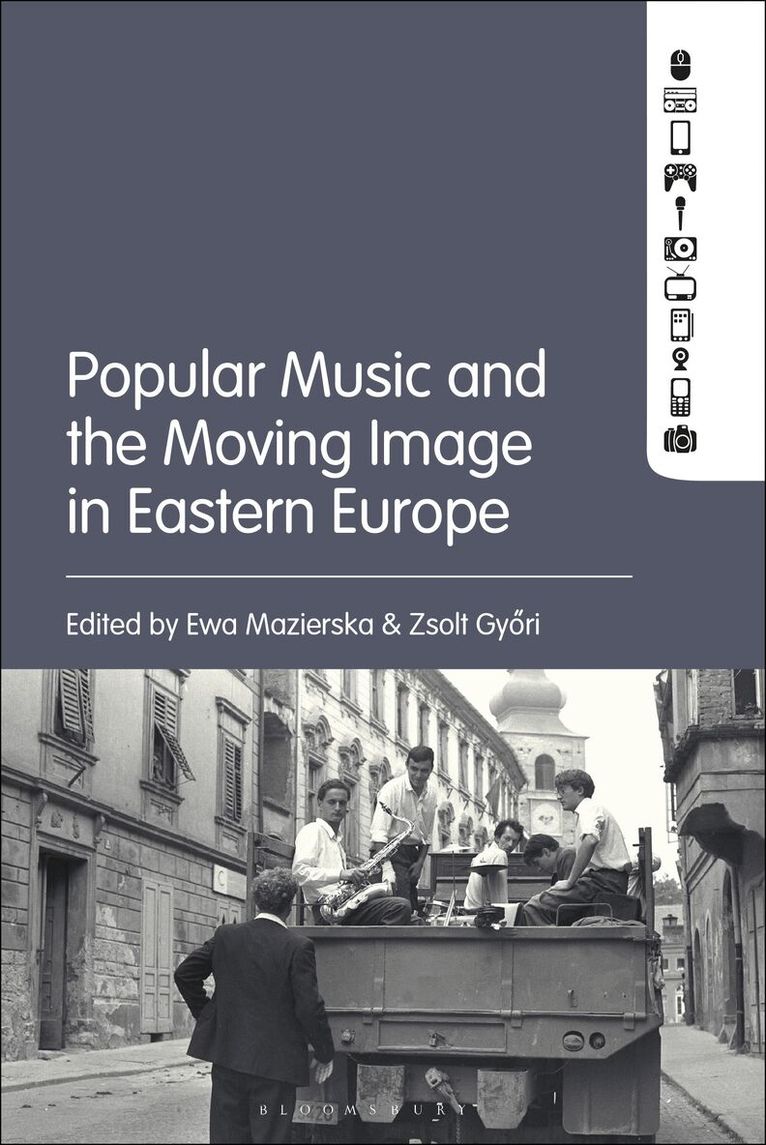
    Popular Music and the Moving Image in Eastern Europe

    AvEwa Mazierska,Zsolt Gyori

    Häftad, Engelska, 2020

    493 kr

    Beställningsvara. Skickas inom 10-15 vardagar. Fri frakt över 249 kr.

    Beskrivning

    Popular Music and the Moving Image in Eastern Europe is the first collection to discuss the ways in which popular music has been used cinematically, from musicals to music videos to documentary film, in Eastern Europe from 1945 to the present day. It argues that during the period of state socialism, moving image was an important tool of promoting music in the respective countries and creating popular cinema. Yet despite this importance, filmmakers who specialized in musicals lacked the social prestige of leading 'auteurs' and received little critical attention. The resulting scholarly prejudice towards pop culture created a severe shortage of critical studies of the genre.With the fall of state socialism - and with it, the need for economically viable film and media industries - brought about an unprecedented upsurge of films utilizing popular music, and a greater recognition of popular cinema as a legitimate object of study. Popular Music and the Moving Image in Eastern Europe fills the gap and demonstrates why the popular music-cinema interface needs to be theorized with respect to the political, ideological, and social forces invested in popular culture.

    Produktinformation

    • Utgivningsdatum:2020-06-25
    • Mått:152 x 229 x 17 mm
    • Vikt:349 g
    • Format:Häftad
    • Språk:Engelska
    • Antal sidor:250
    • Förlag:Bloomsbury Publishing Plc
    • ISBN:9781501365027

    Utforska kategorier

    • Populärmusik inom Kultur
    • Film inom Kultur

    Mer om författaren

    Ewa Mazierska is Professor of Film Studies at the University of Central Lancashire, UK. She has published over twenty monographs and edited collections on film and popular music, including Popular Music in Eastern Europe: Breaking the Cold War Paradigm (2016), Relocating Popular Music (2015), co-edited with Georgina Gregory, From Self- Fulfillment to Survival of the Fittest: Work in European Cinema from the 1960s to the Present (2015), and European Cinema and Intertextuality: History, Memory, Politics (2011). Mazierska is the principal editor of the Studies in Eastern European Cinema journal.Zsolt Gyori is an Assistant Professor in the Department of British Studies at the University of Debrecen, Hungary. He has edited collections of essays in Hungarian on British cinema, on body, subjectivity, race and gender in post-communist Hungarian cinema and the connective structures of space, power and identity in Hungarian cinema. He is also the author of Films, Auteurs, Critical-Clinical Readings (2014).

    Recensioner i media

    This book changes the current miniscule landscape by proposing twelve chapters reflecting the way popular music has been used in musicals, biopics, music videos and documentary film in Eastern Europe from 1945 to the present day. The historical period renders this offering even more interesting, in view of the huge impact of the political regime change three decades ago, but also that of more recent transnationalization, commodification and neoliberalization of the creative industries.

    Innehållsförteckning

    • Table of Contents Introductions: Popular Music and the Moving Image in Eastern Europe Ewa Mazierska (University of Central Lancashire, UK) and Zsolt Gyori (University of Debrecen, Hungary)Chapter 1 1968 Leftist Utopianism in The Young Girls of Rochefort and Hot SummerEvan Torner (University of Cincinnati, USA)Chapter 2 Representing Modern Romania in the Musical of State Socialist Period Gabriela Filippi (I.L. Caragiale National University of Theatre and Film, Romania)Chapter 3 Worlds That Never Were: Contemporary Eastern European Musical Comedies and the Memory of Socialism Balázs Varga (Eötvös Loránd University, Hungary)Chapter 4 Pop Music, Nostalgia and Melancholia in Dollybirds and Liza, the Fox Fairy Hajnal Király (Insitute for Hungarian Literary and Cultural Studies, Eötvös Lóránd University, Hungary)Chapter 5 When the Golden Kids Met the Bright Young Men and Women: Rebellion, Innovation and Cultural Tradition in the Czech 1960s Music Film Jonathan Owen (Courtauld Institute of Art, UK)Chapter 6 ‘Music Isn’t Music, Words Aren’t Words’: Underground Music in the Hungarian Cinema of the New Sensibility Zsolt GyoriChapter 7 Socialist Night Fever: Yugoslav Disco on Film and Television Marko Zubak (Croatian Institute of History, Croatia)Chapter 8 Disco Polo and Techno according to Maria Zmarz-Koczanowicz Ewa Mazierska Chapter 9 Musical Variations in Karpo Godina’s Alternative Cinema Andrej Šprah (Slovenian Cinematheque, Slovenia)Chapter 10 Polish Music Videos: Between Parochialism and Universalism Ewa Mazierska Chapter 11 ‘She Stole It from Beyoncé!’ – Transnational Borrowing in Bulgarian Pop-Folk Music Videos and Audience Reaction to the Practice Maya Nedyalkova (Oxford Brookes University, UK)Chapter 12 Postsocialist Social Reality in Hungarian Rap Music Videos Anna Batori (Babes-Bolyai University, Cluj-Napoca, Romania)List of ContributorsIndex