• Fri frakt över 249 kr
  • •
  • Snabba leveranser
  • •
  • Billiga böcker
Kundservice

Du är på sajten för privatpersoner.

Företag, bibliotek eller offentlig verksamhet?

Du handlar på classic.bokus.com, där alla dina funktioner finns intakta.
Till classic.bokus.com
Bokus logotyp. Gå till startsidan.
  • Erbjudanden
  • Nyheter
  • Student
  • Topplistor
  • Barn & ungdom
  • Bokus Play
  • E-böcker
  • Pocketböcker
  • Spel & pussel

10% studentrabatt med kod TERM26

Sidfot

Mina sidor

    Hjälp

    • Kundservice
    • Vanliga frågor och svar
    • Frakt och leverans
    • Retur vid ångerrätt
    • Reklamera vara
    • Betalning
    • Köpvillkor
    • Allmänna villkor
    • Information om webbplatsens tillgänglighet

    Om Bokus

    • Om oss
    • Pressrum
    • För studenter
    • För företag
    • För bibliotek och offentlig verksamhet
    • För leverantörer
    • Hållbarhet

    Populärt

    • Aktuella erbjudanden
    • Presentkort
    • Studentlitteratur
    • Nya böcker
    • Topplistor
    • Signerade böcker
    • Engelska böcker

    Inspiration

    • Boktips
    • BookTok
    • Populära bokserier
    • Barnbokskaraktärer
    • Populära författare
    Logotyp för Bokus
    Följ oss på Facebook (extern länk)Följ oss på Instagram (extern länk)Följ oss på YouTube (extern länk)Följ oss på TikTok (extern länk)
    bokus @ CookiesAnpassa cookiesIntegritetspolicyKöpvillkor
    Till Citymail hemsida (extern länk)Till Budbee hemsida (extern länk)Till Postnord hemsida (extern länk)Till Schenker hemsida (extern länk)Till Early Bird hemsida (extern länk)Till Walleys hemsida (extern länk)
    1. Kultur
    2. Konstböcker
    3. Konsthistoria

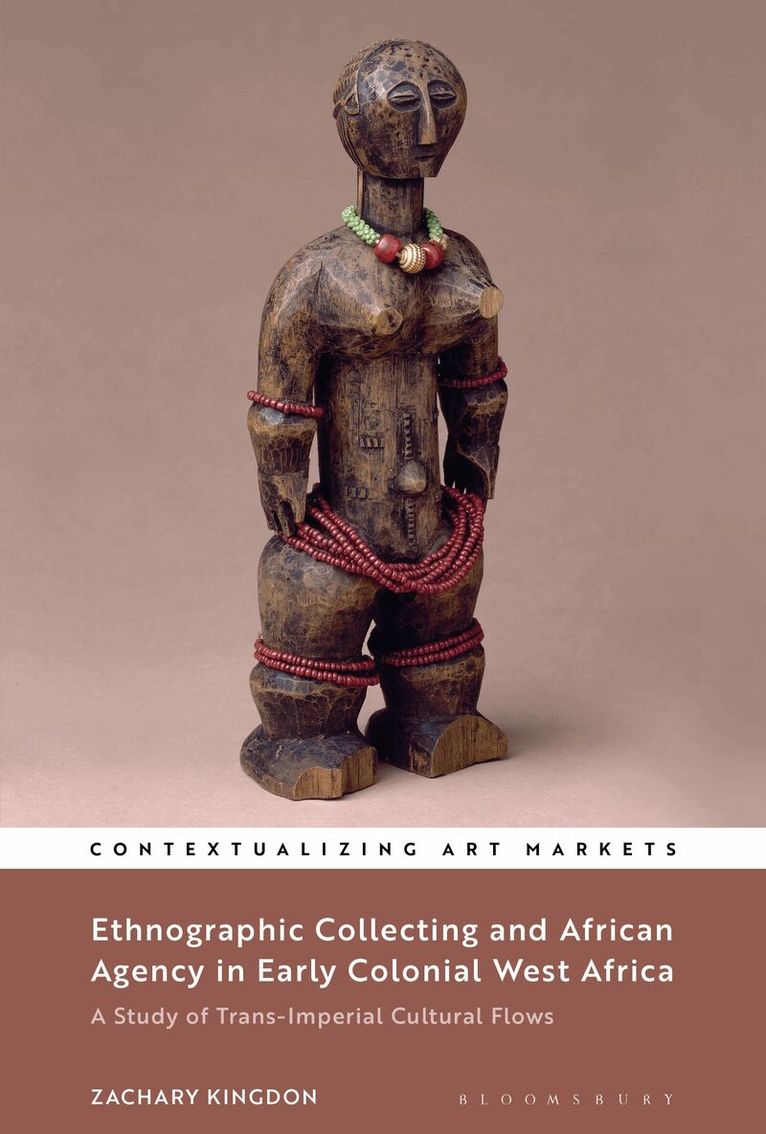
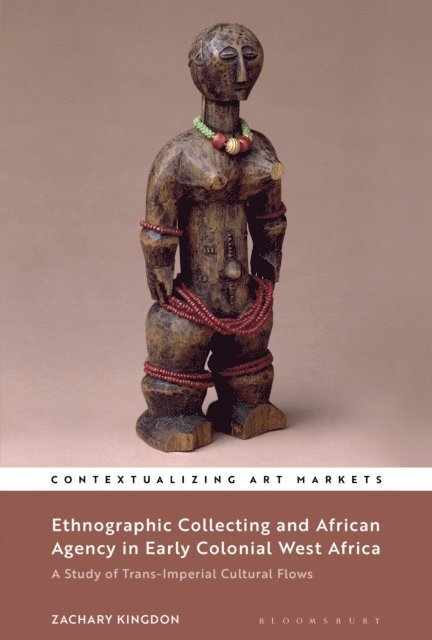
    Ethnographic Collecting and African Agency in Early Colonial West Africa

    A Study of Trans-Imperial Cultural Flows

    AvZachary Kingdon,Kathryn Brown

    Häftad, Engelska, 2021

    Del i serien Contextualizing Art Markets

    405 kr

    Skickas . Fri frakt över 249 kr.

    Fler format och utgåvor

    Inbunden

    2 009 kr

    E-bok

    421 kr

    E-bok

    435 kr

    Beskrivning

    The early collections from Africa in Liverpool’s World Museum reflect the city’s longstanding shipping and commercial links with Africa’s Atlantic coast. A principal component of these collections is an assemblage of several thousand artefacts from western Africa that were transported to institutions in northwest England between 1894 and 1916 by the Liverpool steam ship engineer Arnold Ridyard. While Ridyard’s collecting efforts can be seen to have been shaped by the steamers’ dynamic capacity to connect widely separated people and places, his Methodist credentials were fundamental in determining the profile of his African networks, because they meant that he was not part of official colonial authority in West Africa. Kingdon’s study uncovers the identities of many of Ridyard’s numerous West African collaborators and discusses their interests and predicaments under the colonial dispensation. Against this background account, their agendas are examined with reference to surviving narratives that accompanied their donations and within the context of broader processes of trans-imperial exchange, through which they forged new identities and statuses for themselves and attempted to counter expressions of British cultural imperialism in the region. The study concludes with a discussion of the competing meanings assigned to the Ridyard assemblage by the Liverpool Museum and examines the ways in which its re-contextualization in museum contexts helped to efface signs of the energies and narratives behind its creation.

    Produktinformation

    • Utgivningsdatum:2021-06-03
    • Mått:152 x 228 x 20 mm
    • Vikt:680 g
    • Format:Häftad
    • Språk:Engelska
    • Serie:Contextualizing Art Markets
    • Antal sidor:336
    • Förlag:Bloomsbury Publishing PLC
    • ISBN:9781501377884

    Utforska kategorier

    • Konsthistoria inom Kultur

    Mer om författaren

    Zachary Kingdon is Curator of African Collections at National Museums Liverpool, UK.

    Recensioner i media

    Kingdon’s timely efforts help to challenge our understanding of UK museums and their histories. Close archival reading and attention to complex socio-economic context illuminates the material and intellectual contributions of a fascinating group of West African individuals. This is essential reading for scholars of museums and collections, of West Africa and beyond.

    Innehållsförteckning

    • List of IllustrationsList of Colour PlatesAcknowledgements1. IntroductionApproachStructure and Outline2. Prologue: Western Africa, Africans, and Liverpool’s Municipal MuseumAfter the Slave TradeThe Niger ExpeditionJoseph Mayer and the Inauguration of Liverpool’s Ethnography CollectionBetween Empire and Trade Conclusion3. Arnold Ridyard and his Assemblage Ridyard’s Family Background and Methodist IdentityMaritime Career, Collecting Practices and Social NetworksAcquisition and Generosity Ridyard’s Dissenting InterestsConclusion4. Diasporic Dialogues: The Sierra Leonean Donors I W. R. Renner, West African CapitalistKrio Diaspora: Collecting and Culture in the Early Twentieth CenturyWomen Donors: Mrs W. E. Johnson and Miss B Yorke The Muslim Donors: Colonial Exclusion, African Regional Trajectories Conclusion5. Trans-Imperial Identities: The Sierra Leonean Donors II Freetown, Architecture, and Krio Self-OrientationKrio Male Elites‘Upbuilding’ and EmpireClaudius D. Hotobah DuringConclusion6. Coastal ‘Kings’: The Gold Coast Donors I Ababio IV, Amonu V, Acquah II, and Prince TackieKojo Ababio IV, Accra Political PlayerPotters of Accra’s Western PlainsAmbiguous ‘Traditionalist’: E. W. Quartey-PapafioDr. Edward Mettle, ‘Man of Mystery and Power’Conclusion7. Coastal Cosmopolitans: The Gold Coast Donors IIFrederick Lutterodt, West African PhotographerArthur Robert Chinery, Euro-Ga Professional John Mensah Sarbah, ‘Cosmopolitan Patriot’J. P. Brown, C. J. Bannerman and other ‘Cosmopolitan Patriots’Mobile Elites: C. J. Reindorf, H. Van Hien and othersConclusion8. Museum Meanings: Regimes of Classification, Representation and Display Exhibiting OrderRe-arranging and Re-evaluating the Liverpool Museum African Collection in the 1930s Erosion and Occlusion: The Ridyard Assemblage at the Liverpool Museum, 1905 to 1968ConclusionEpilogueReferencesIndex