• Fri frakt över 249 kr
  • •
  • Snabba leveranser
  • •
  • Billiga böcker
Kundservice

Du är på sajten för privatpersoner.

Företag, bibliotek eller offentlig verksamhet?

Du handlar på classic.bokus.com, där alla dina funktioner finns intakta.
Till classic.bokus.com
Bokus logotyp. Gå till startsidan.
  • Erbjudanden
  • Nyheter
  • Student
  • Topplistor
  • Barn & ungdom
  • Bokus Play
  • E-böcker
  • Pocketböcker
  • Spel & pussel

10% rabatt på allt med kod: NYSTART10 →

Sidfot

Mina sidor

    Hjälp

    • Kundservice
    • Vanliga frågor och svar
    • Frakt och leverans
    • Retur vid ångerrätt
    • Reklamera vara
    • Betalning
    • Köpvillkor
    • Allmänna villkor
    • Information om webbplatsens tillgänglighet

    Om Bokus

    • Om oss
    • Pressrum
    • För studenter
    • För företag
    • För bibliotek och offentlig verksamhet
    • För leverantörer
    • Hållbarhet

    Populärt

    • Aktuella erbjudanden
    • Presentkort
    • Studentlitteratur
    • Nya böcker
    • Topplistor
    • Signerade böcker
    • Engelska böcker

    Inspiration

    • Boktips
    • BookTok
    • Populära bokserier
    • Barnbokskaraktärer
    • Populära författare
    Logotyp för Bokus
    Följ oss på Facebook (extern länk)Följ oss på Instagram (extern länk)Följ oss på YouTube (extern länk)Följ oss på TikTok (extern länk)
    bokus @ CookiesAnpassa cookiesIntegritetspolicyKöpvillkor
    Till Citymail hemsida (extern länk)Till Budbee hemsida (extern länk)Till Postnord hemsida (extern länk)Till Schenker hemsida (extern länk)Till Early Bird hemsida (extern länk)Till Walleys hemsida (extern länk)
    1. Samhälle och politik
    2. Sociologi och antropologi
    3. Sociologi

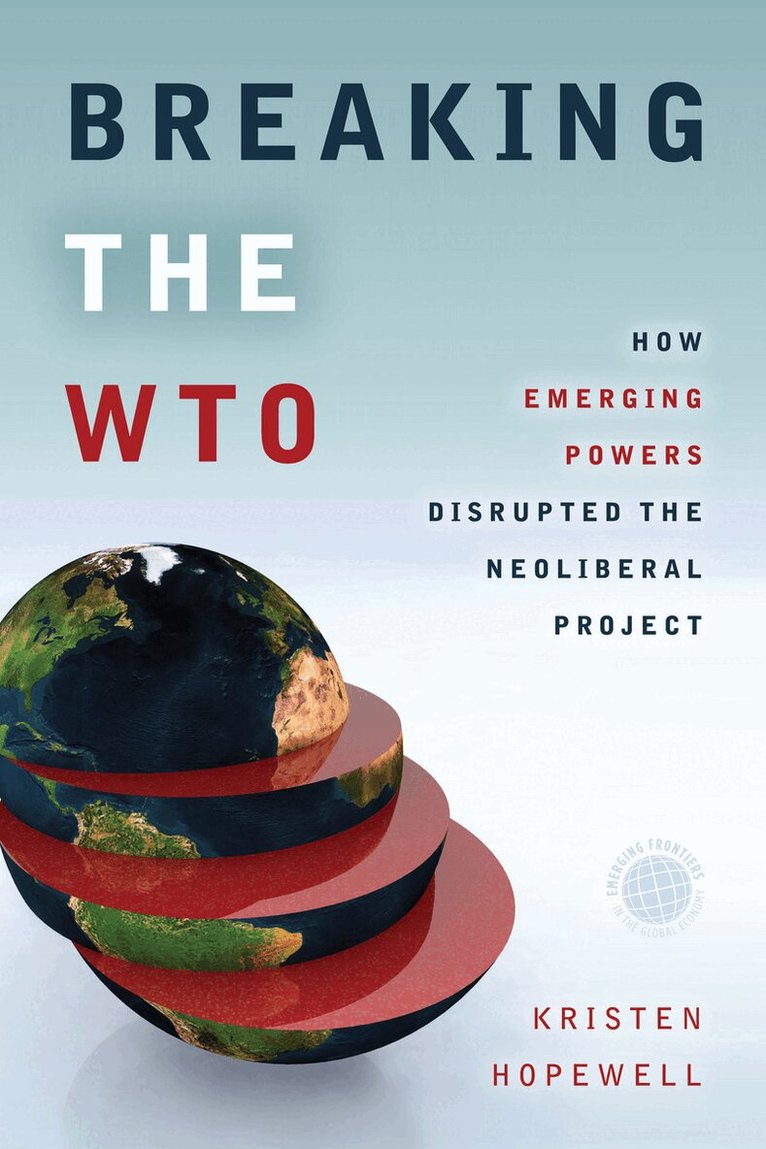
    Breaking the WTO

    How Emerging Powers Disrupted the Neoliberal Project

    AvKristen Hopewell

    Häftad, Engelska, 2016

    Del i serien Emerging Frontiers in the Global Economy

    376 kr

    Beställningsvara. Skickas inom 5-8 vardagar. Fri frakt över 249 kr.

    Fler format och utgåvor

    Inbunden

    1 541 kr

    E-bok

    437 kr

    Beskrivning

    The world economic order has been upended by the rise of the BRIC nations and the attendant decline of the United States' international influence. In Breaking the WTO, Kristen Hopewell provides a groundbreaking analysis of how these power shifts have played out in one of the most important theaters of global governance: the World Trade Organization. Hopewell argues that the collapse of the Doha Round negotiations in 2008 signals a crisis in the American-led project of neoliberal globalization. Historically, the U.S. has pressured other countries to open their markets while maintaining its own protectionist policies. Over the course of the Doha negotiations, however, China, India, and Brazil challenged America's hypocrisy. They did so not because they rejected the multilateral trading system, but because they embraced neoliberal rhetoric and sought to lay claim to its benefits. By demanding that all members of the WTO live up to the principles of "free trade," these developing states caused the negotiations to collapse under their own contradictions. Breaking the WTO probes the tensions between the WTO's liberal principles and the underlying reality of power politics, exploring what the Doha conflict tells us about the current and coming balance of power in the global economy.

    Produktinformation

    • Utgivningsdatum:2016-08-03
    • Mått:152 x 229 x 16 mm
    • Vikt:414 g
    • Format:Häftad
    • Språk:Engelska
    • Serie:Emerging Frontiers in the Global Economy
    • Antal sidor:288
    • Förlag:Stanford University Press
    • ISBN:9781503600591

    Utforska kategorier

    • Sociologi inom Samhälle och politik

    Mer om författaren

    Kristen Hopewell is Senior Lecturer in International Political Economy at the University of Edinburgh.

    Recensioner i media

    Hopewell offers a novel account of international negotiations at a time when the U.S. is no longer able to force other countries into compliance. Her explanation of how BRIC nations are using 'the master's tools' to disrupt the world order makes for a fascinating read."—Nitsan Chorev, Brown University and author of Remaking U.S. Trade Policy "Hopewell's book provides much rich detail on the efforts of Brazil, India, and China to challenge the unbalanced nature of WTO rules and to liberalize foreign markets for their growing exports. The analysis provides an important perspective on shifting power in trade politics and the paralysis of the Doha Round."—Eric Helleiner, University of Waterloo "In this intriguing study, Kristen Hopewell uncovers a central paradox in the World Trade Organization. Brazil, India, and China exposed market liberalization as a pretense even as they embraced it, disabling an unequal trade regime from within. This is a well-researched and wonderfully nuanced lens through which to view geopolitical power dynamics in a multi-centric age."—Philip McMichael, Cornell University "Hopewell's analysis is invaluable to understanding one of global neoliberalism's key institutions. Her lucid dissection of interstate politics within the WTO shows how China, India, and Brazil have learned to use arguments for free trade to pursue their own interests, just as the U.S. and Europe have always done, resulting in a deadlock that has left the WTO floundering."—Peter Evans, University of California, Berkeley "In her book, Hopewell provides a deep analysis of how power shifts in the world economic order have played out in the World Trade Organization, which for her is one of the most important theaters of global governance....Hopewell's book is an interesting contribution to consider the importance that power dynamics have in this globalized era and how alliances could change the direction of international organizations."—Nicolás Albertoni, Global Policy

    Innehållsförteckning

    • 1. Introduction2. Liberalism and the Contradictions of American Hegemony3. Power, Multilateralism, and Neoliberalism at the WTO4. Power Shift5. Brazil: New Drivers of Liberalization6. China: A Delicate Dance7. India: Balancing Complex Trade Interests8. Conclusion: A Rupture in the Neoliberal Project