• Fri frakt över 249 kr
  • •
  • Snabba leveranser
  • •
  • Billiga böcker
Kundservice

Du är på sajten för privatpersoner.

Företag, bibliotek eller offentlig verksamhet?

Du handlar på classic.bokus.com, där alla dina funktioner finns intakta.
Till classic.bokus.com
Bokus logotyp. Gå till startsidan.
  • Erbjudanden
  • Nyheter
  • Student
  • Topplistor
  • Barn & ungdom
  • Bokus Play
  • E-böcker
  • Pocketböcker
  • Spel & pussel

10% rabatt på allt med kod: NYSTART10 →

Sidfot

Mina sidor

    Hjälp

    • Kundservice
    • Vanliga frågor och svar
    • Frakt och leverans
    • Retur vid ångerrätt
    • Reklamera vara
    • Betalning
    • Köpvillkor
    • Allmänna villkor
    • Information om webbplatsens tillgänglighet

    Om Bokus

    • Om oss
    • Pressrum
    • För studenter
    • För företag
    • För bibliotek och offentlig verksamhet
    • För leverantörer
    • Hållbarhet

    Populärt

    • Aktuella erbjudanden
    • Presentkort
    • Studentlitteratur
    • Nya böcker
    • Topplistor
    • Signerade böcker
    • Engelska böcker

    Inspiration

    • Boktips
    • BookTok
    • Populära bokserier
    • Barnbokskaraktärer
    • Populära författare
    Logotyp för Bokus
    Följ oss på Facebook (extern länk)Följ oss på Instagram (extern länk)Följ oss på YouTube (extern länk)Följ oss på TikTok (extern länk)
    bokus @ CookiesAnpassa cookiesIntegritetspolicyKöpvillkor
    Till Citymail hemsida (extern länk)Till Budbee hemsida (extern länk)Till Postnord hemsida (extern länk)Till Schenker hemsida (extern länk)Till Early Bird hemsida (extern länk)Till Walleys hemsida (extern länk)
    1. Samhälle och politik
    2. Politik och statsskick
    3. Internationella relationer

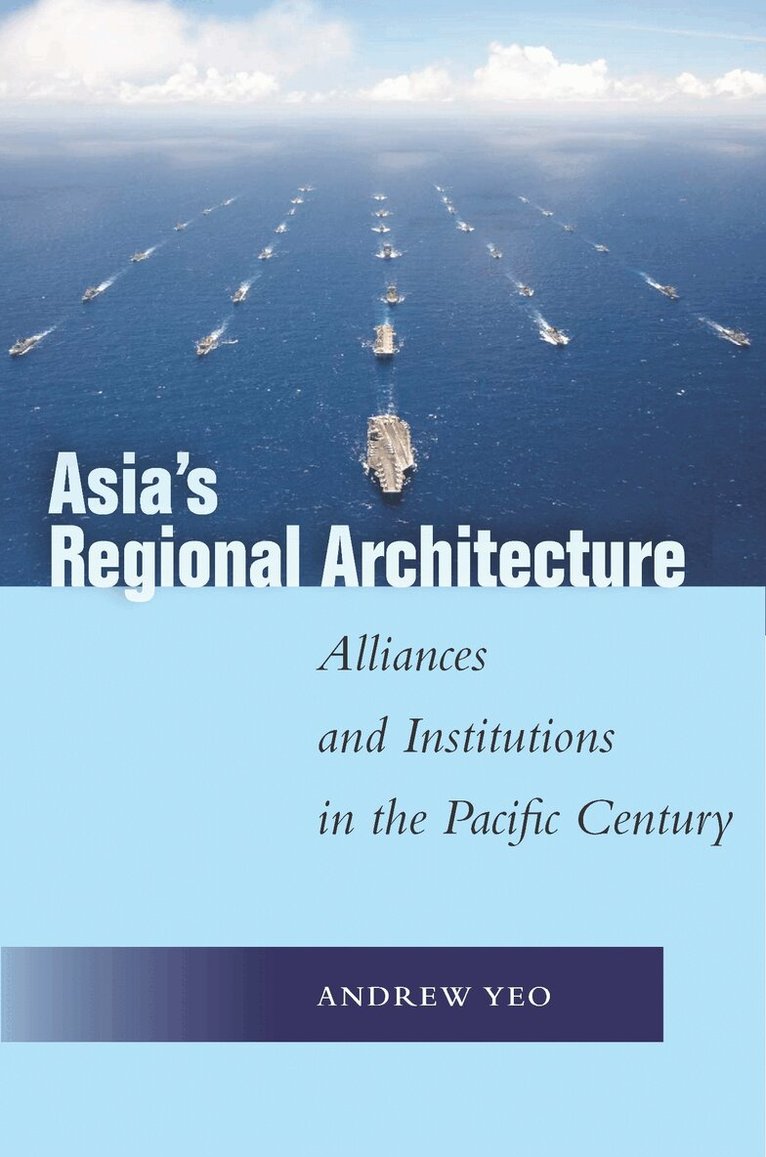
    Asia's Regional Architecture

    Alliances and Institutions in the Pacific Century

    AvAndrew Yeo

    E-bok
    Engelska, 2019

    Del i serien Studies in Asian Security

    942 kr

    Läs direkt i Bokus Reader – eller ladda ned till din enhet

    Fler format och utgåvor

    Inbunden

    828 kr

    Beskrivning

    During the Cold War, the U.S. built a series of alliances with Asian nations to erect a bulwark against the spread of communism and provide security to the region. Despite pressure to end bilateral alliances in the post-Cold War world, they persist to this day, even as new multilateral institutions have sprung up around them. The resulting architecture may aggravate rivalries as the U.S., China, and others compete for influence. However, Andrew Yeo demonstrates how Asia's complex array of bilateral and multilateral agreements may ultimately bring greater stability and order to a region fraught with underlying tensions.Asia's Regional Architecture transcends traditional international relations models. It investigates change and continuity in Asia through the lens of historical institutionalism. Refuting claims regarding the demise of the liberal international order, Yeo reveals how overlapping institutions can promote regional governance and reduce uncertainty in a global context. In addition to considering established institutions such as the Association of Southeast Asian Nations and the Asia-Pacific Economic Cooperation, he discusses newer regional arrangements including the East Asia Summit, Trans-Pacific Partnership, and the Belt and Road Initiative. This book has important implications for how policymakers think about institutional design and regionalism in Asia and beyond.

    Produktinformation

    • Utgivningsdatum:2019-04-02
    • Språk:Engelska
    • Antal sidor:264
    • Filformat:EPUB
    • Kopieringsskydd:LCP
    • ISBN:9781503608801
    • Förlag:Stanford University Press
    • Serie:Studies in Asian Security

    Utforska kategorier

    • Internationella relationer inom Samhälle och politik

    Mer om författaren

    Andrew Yeo is Associate Professor of Politics at The Catholic University of America in Washington D.C.

    Recensioner i media

    "Andrew Yeo has written an informed, nuanced, and vivid account of Asia's regional architecture. His historical institutionalist framework captures well the richness and diversity of efforts at cooperation among regional actors. A welcome and significant contribution to the literature."—Victor D. Cha, D.S. Song-KF Professor and Chairholder, School of Foreign Service and Government Department, Georgetown University "This innovative and important book puts changes in Asia's regional architecture into a broad historical and institutional perspective. In an era of unilateral transactional American diplomacy, Andrew Yeo reminds us of how and why the complex patchwork of past bilateral and multilateral security and economic arrangements will shape our and Asia's future."—Peter J. Katzenstein, Walter S. Carpenter, Jr. Professor of International Studies, Cornell University "Andrew Yeo offers a rich account of how Asia's security and economic architecture has evolved since 1945. Asia's Regional Architecture convincingly explains stability and change, and the eclectic approach ties all the empirical evidence together."—Ralf Emmers, Professor and Associate Dean at the S. Rajaratnam School of International Studies, Nanyang Technological University "Yeo has written a book with indisputable value for understanding international cooperation in the Asia-Pacific region. Its 'big tent' approach to theoretically analyzing historical events also should appeal to a range of scholars and policymakers. With Asia's centrality to many events in global politics, Yeo's research should find its way onto the bookshelves of regional specialists, scholars of both alliance politics and international institutions, and students with an interest in learning about the complexities of Asian diplomacy."—Stephen Herzog, H-Diplo "[Bilateralism] and multilateralism in Asia have been extensively researched since the end of the Cold War....Yeo contributes to the literature by bringing all of this material together and analyzing it through the application of a less well-known conceptual framework—historical institutionalism. To my knowledge, this has never before been attempted, making the book both original and innovative. The end result is that Asia's Regional Architecture takes a long-term view that enriches the existing analysis and provides a sense of perspective."—Ralph Emmers, Asia Policy "Yeo offers a discussion that, more than most, tries to account for Asia's different moving parts....Asia's Regional Architecture is a worthwhile contribution to the debate about Asian security and especially the U.S. role in the region."—Alice D. Ba, Asia Policy [Yeo] provides detailed yet succinct accounts of the main political, economic, and security regional institutions in Asia. A plethora of insights are contained in this book....[Its] broad definition of institutions—ranging from ASEAN-led regional multilateral frameworks to U.S.-led bilateral security alliances—opens up new research questions regarding the interactive dynamics within regional institutions."—Kei Koga, Asia Policy "Asia's Regional Architecture provides a comprehensive and timely account of the evolution, development, and operation of the various institutions that compose the region's security architecture....Yeo's use of historical institutionalism makes this text a coherent, dynamic, and theoretically insightful account of the beginning, development, and future of Asia's architecture."—Renato Cruz de Castro, Asia Policy "Yeo offers a refreshing perspective through the use of the historical-institutionalist framework....This book should be required reading, not only for students, analysts and experts of East Asian affairs, but also for present and future US administration officials to understand the consequential role the US has played and will continue to play in the East Asian order and for regional stability."—Bhubhindar Singh, Asian Studies Review "Yeo's book serves as an outstanding primer on how the institutional landscape developed the way it did and why. It is an absolutely essential addition to the literature on regionalism and security architecture in the Asia-Pacific, and comes highly recommended for students, scholars, and practitioners alike."—Thomas Wilkins, Pacific Affairs

    Innehållsförteckning

    • 1. Asia's Regional Architecture: A Historical Institutional Perspective2. Bilateralism, Multilateralism, and the Making of an Alliance Consensus3. Change and Continuity: 1989–19974. Rising Regionalism: 1998–20075. Complex Patchwork: 2008–20176. America First, China's Rise, and Regional Order7. Conclusion: Theory, Policy, and the Relevance of Historical Institutionalism and Asia