Andrew Yeo – författare
Visar alla böcker från författaren Andrew Yeo. Handla med fri frakt och snabb leverans.
14 produkter
14 produkter
Häftad, Engelska, 2026
375 kr
Kommande
Since the 2010s, South Korea has established itself as a 'middle power', but it has rarely been factored into conversations of grand strategy and global order. This is beginning to change as South Korea and its neighbors increasingly think about its strategic mark. But how does a small country surrounded by major powers navigate geopolitical competition in an increasingly fractured world?Andrew Yeo examines how South Korea is evolving in response to its strategic environment and, in doing so, is becoming an 'adaptive middle power'. Yeo focuses on the role that narratives - the stories told and retold by a nation - play in shaping how South Korea defines and pursues its national objectives. At the strategic level, policymakers draw on narratives to justify and legitimize grand strategy to domestic and foreign audiences. At a deeper level, narratives are constitutive of national identity, reflecting historical and cultural legacies, ideology, and belief systems that weigh heavily on a country's strategic outlook. Moving beyond narrow debates over 'alliance versus autonomy', Yeo demonstrates how South Korea has built upon foundational and strategic narratives to leverage both hard and soft power to craft a more expansive global role. The Oxford Studies in Grand Strategy is a major new series of cutting-edge monographs that examine the grand strategies of states, and those intergovernmental organizations and nonstate actors who credibly aspire to sovereignty. Books concentrate on the contemporary aspects of grand strategy, while paying due respect to the historical antecedents of a nation's grand strategy and their relevance for a leadership's current choices. The series is pluralistic in terms of theory and method, and maintains a broad view of the ways, means, and ends that undergird a grand strategy. Analytical and explanatory in contribution, books in the series feature a rigorous analysis of the interaction between domestic factors and global forces and provide a clear understanding of how that interaction shapes a grand strategy's formulation, codification, and implementation.Series Editors: Thierry Balzacq (Sciences Po, Paris), Peter Dombrowski (US Naval War College), and Simon Reich (Rutgers University, Newark)
Inbunden, Engelska, 2026
1 604 kr
Kommande
Since the 2010s, South Korea has established itself as a 'middle power', but it has rarely been factored into conversations of grand strategy and global order. This is beginning to change as South Korea and its neighbors increasingly think about its strategic mark. But how does a small country surrounded by major powers navigate geopolitical competition in an increasingly fractured world?Andrew Yeo examines how South Korea is evolving in response to its strategic environment and, in doing so, is becoming an 'adaptive middle power'. Yeo focuses on the role that narratives - the stories told and retold by a nation - play in shaping how South Korea defines and pursues its national objectives. At the strategic level, policymakers draw on narratives to justify and legitimize grand strategy to domestic and foreign audiences. At a deeper level, narratives are constitutive of national identity, reflecting historical and cultural legacies, ideology, and belief systems that weigh heavily on a country's strategic outlook. Moving beyond narrow debates over 'alliance versus autonomy', Yeo demonstrates how South Korea has built upon foundational and strategic narratives to leverage both hard and soft power to craft a more expansive global role. The Oxford Studies in Grand Strategy is a major new series of cutting-edge monographs that examine the grand strategies of states, and those intergovernmental organizations and nonstate actors who credibly aspire to sovereignty. Books concentrate on the contemporary aspects of grand strategy, while paying due respect to the historical antecedents of a nation's grand strategy and their relevance for a leadership's current choices. The series is pluralistic in terms of theory and method, and maintains a broad view of the ways, means, and ends that undergird a grand strategy. Analytical and explanatory in contribution, books in the series feature a rigorous analysis of the interaction between domestic factors and global forces and provide a clear understanding of how that interaction shapes a grand strategy's formulation, codification, and implementation.Series Editors: Thierry Balzacq (Sciences Po, Paris), Peter Dombrowski (US Naval War College), and Simon Reich (Rutgers University, Newark)
Häftad, Engelska, 2011
330 kr
Skickas inom 7-10 vardagar
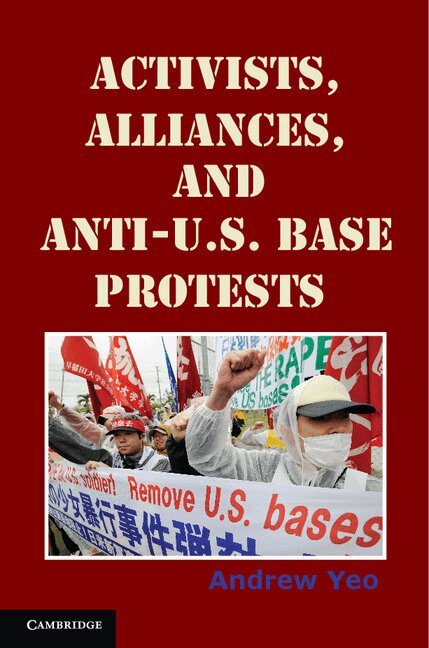
Anti-U.S. base protests, played out in parliaments and the streets of host nations, continue to arise in different parts of the world. In a novel approach, this book examines the impact of anti-base movements and the important role bilateral alliance relationships play in shaping movement outcomes. The author explains not only when and how anti-base movements matter, but also how host governments balance between domestic and international pressure on base-related issues. Drawing on interviews with activists, politicians, policy makers and U.S. base officials in the Philippines, Japan (Okinawa), Ecuador, Italy and South Korea, the author finds that the security and foreign policy ideas held by host government elites act as a political opportunity or barrier for anti-base movements, influencing their ability to challenge overseas U.S. basing policies.
Inbunden, Engelska, 2024
903 kr
Skickas inom 10-15 vardagar
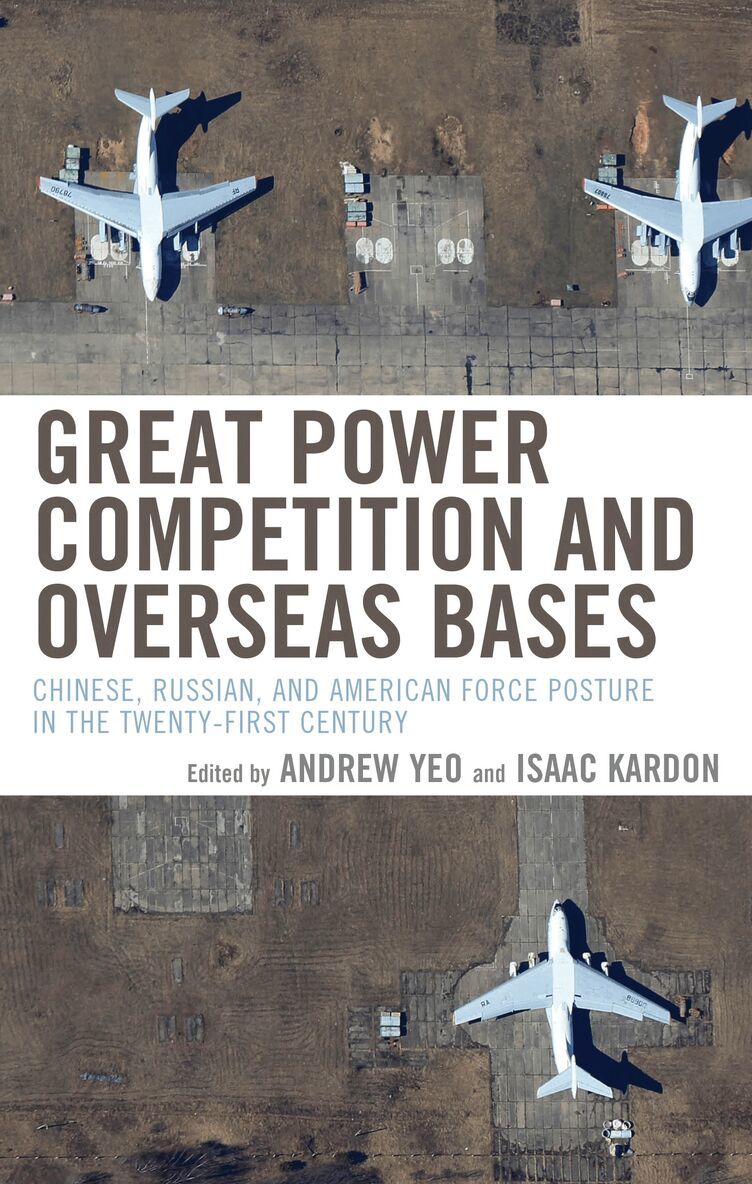
What challenges and risks do Chinese and Russian bases pose to the United States’ military strategy? How do the military postures of great powers interact and with what consequences for regional and global security? This book examines the emerging dynamics of geostrategic competition for overseas military bases and base access. The comparative framework adopted in this volume examines how the geopolitical interests of the United States, China, and Russia and their respective underlying force posture interact in different regions including the Indo-Pacific, Europe, sub-Sahara Africa, the Indian Ocean, the Middle East, and the Arctic Circle. By exploring the security, political economic, and domestic political dynamics of specific regions, the contributors to this volume reveal varied motivations for overseas military bases and base access among great powers. With analysis on the particular dynamics of overseas bases in major regional theaters, the book offers a valuable window into the nature and scope of the broader “great power competition” underway in the twenty-first century.
Häftad, Engelska, 2024
365 kr
Skickas inom 10-15 vardagar
What challenges and risks do Chinese and Russian bases pose to the United States’ military strategy? How do the military postures of great powers interact and with what consequences for regional and global security? This book examines the emerging dynamics of geostrategic competition for overseas military bases and base access. The comparative framework adopted in this volume examines how the geopolitical interests of the United States, China, and Russia and their respective underlying force posture interact in different regions including the Indo-Pacific, Europe, sub-Sahara Africa, the Indian Ocean, the Middle East, and the Arctic Circle. By exploring the security, political economic, and domestic political dynamics of specific regions, the contributors to this volume reveal varied motivations for overseas military bases and base access among great powers. With analysis on the particular dynamics of overseas bases in major regional theaters, the book offers a valuable window into the nature and scope of the broader “great power competition” underway in the twenty-first century.
E-bok
Engelska, 2024380 kr
Läs direkt efter köp
What challenges and risks do Chinese and Russian bases pose to the United States’ military strategy? How do the military postures of great powers interact and with what consequences for regional and global security? This book examines the emerging dynamics of geostrategic competition for overseas military bases and base access. The comparative framework adopted in this volume examines how the geopolitical interests of the United States, China, and Russia and their respective underlying force posture interact in different regions including the Indo-Pacific, Europe, sub-Sahara Africa, the Indian Ocean, the Middle East, and the Arctic Circle. By exploring the security, political economic, and domestic political dynamics of specific regions, the contributors to this volume reveal varied motivations for overseas military bases and base access among great powers. With analysis on the particular dynamics of overseas bases in major regional theaters, the book offers a valuable window into the nature and scope of the broader “great power competition” underway in the twenty-first century.
Inbunden, Engelska, 2011
1 071 kr
Skickas inom 7-10 vardagar
Anti-U.S. base protests, played out in parliaments and the streets of host nations, continue to arise in different parts of the world. In a novel approach, this book examines the impact of anti-base movements and the important role bilateral alliance relationships play in shaping movement outcomes. The author explains not only when and how anti-base movements matter, but also how host governments balance between domestic and international pressure on base-related issues. Drawing on interviews with activists, politicians, policy makers and U.S. base officials in the Philippines, Japan (Okinawa), Ecuador, Italy and South Korea, the author finds that the security and foreign policy ideas held by host government elites act as a political opportunity or barrier for anti-base movements, influencing their ability to challenge overseas U.S. basing policies.
Inbunden, Engelska, 2018
1 260 kr
Skickas inom 7-10 vardagar
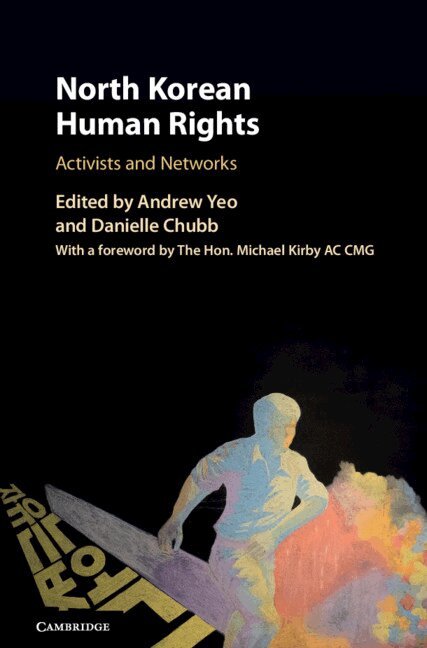
The evidentiary weight of North Korean defectors' testimony depicting crimes against humanity has drawn considerable attention from the international community in recent years. Despite the attention to North Korean human rights, what remains unexamined is the rise of the transnational advocacy network, which drew attention to the issue in the first place. Andrew Yeo and Danielle Chubb explore the 'hard case' that is North Korea and challenge existing conceptions of transnational human rights networks, how they operate, and why they provoke a response from even the most recalcitrant regimes. In this volume, leading experts and activists assemble original data from multiple language sources, including North Korean sources, and adopt a range of sophisticated methodologies to provide valuable insight into the politics, strategy, and policy objectives of North Korean human rights activism.
Häftad, Engelska, 2019
452 kr
Skickas inom 7-10 vardagar
The evidentiary weight of North Korean defectors' testimony depicting crimes against humanity has drawn considerable attention from the international community in recent years. Despite the attention to North Korean human rights, what remains unexamined is the rise of the transnational advocacy network, which drew attention to the issue in the first place. Andrew Yeo and Danielle Chubb explore the 'hard case' that is North Korea and challenge existing conceptions of transnational human rights networks, how they operate, and why they provoke a response from even the most recalcitrant regimes. In this volume, leading experts and activists assemble original data from multiple language sources, including North Korean sources, and adopt a range of sophisticated methodologies to provide valuable insight into the politics, strategy, and policy objectives of North Korean human rights activism.
Häftad, Engelska, 2021
213 kr
Skickas
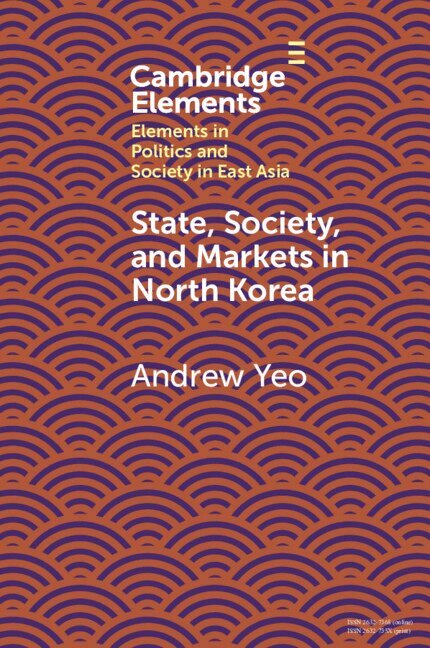
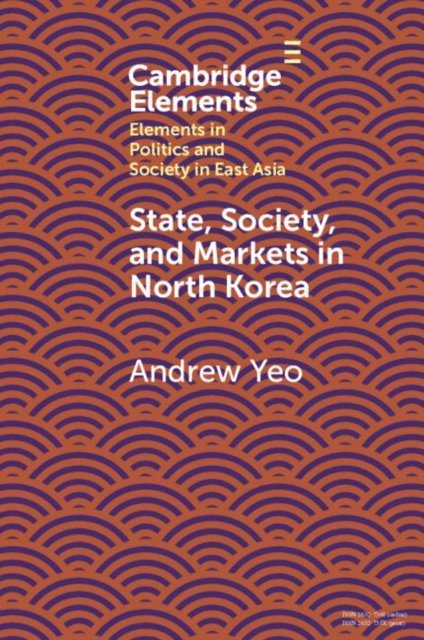
Under Kim Jong-un, North Korea has experienced growing economic markets, an emerging 'nouveau riche,' and modest levels of urban development. To what extent is North Korean politics and society changing? How has the growth of markets transformed state-society relations? This Element evaluates the shifting relationship between state, society, and markets in a deeply authoritarian context. If the regime implements controlled economic measures, extracts rent, and subsumes the market economy into its ideology, the state will likely retain strong authoritarian control. Conversely, if it fails to incorporate markets into its legitimating message, as private actors build informal trust networks, share information, and collude with state bureaucrats, more fundamental changes in state-society relations are in order. By opening the 'black box' of North Korea, this Element reveals how the country manages to teeter forward, and where its domestic future may lie.
E-bok
Engelska, 2021275 kr
Läs direkt efter köp
Under Kim Jong-un, North Korea has experienced growing economic markets, an emerging ''nouveau riche,'' and modest levels of urban development. To what extent is North Korean politics and society changing? How has the growth of markets transformed state-society relations? This Element evaluates the shifting relationship between state, society, and markets in a deeply authoritarian context. If the regime implements controlled economic measures, extracts rent, and subsumes the market economy into its ideology, the state will likely retain strong authoritarian control. Conversely, if it fails to incorporate markets into its legitimating message, as private actors build informal trust networks, share information, and collude with state bureaucrats, more fundamental changes in state-society relations are in order. By opening the ''black box'' of North Korea, this Element reveals how the country manages to teeter forward, and where its domestic future may lie.
E-bok
PDF, Engelska, 2021275 kr
Läs direkt efter köp
Under Kim Jong-un, North Korea has experienced growing economic markets, an emerging ''nouveau riche,'' and modest levels of urban development. To what extent is North Korean politics and society changing? How has the growth of markets transformed state-society relations? This Element evaluates the shifting relationship between state, society, and markets in a deeply authoritarian context. If the regime implements controlled economic measures, extracts rent, and subsumes the market economy into its ideology, the state will likely retain strong authoritarian control. Conversely, if it fails to incorporate markets into its legitimating message, as private actors build informal trust networks, share information, and collude with state bureaucrats, more fundamental changes in state-society relations are in order. By opening the ''black box'' of North Korea, this Element reveals how the country manages to teeter forward, and where its domestic future may lie.
Inbunden, Engelska, 2019
823 kr
Skickas inom 5-8 vardagar
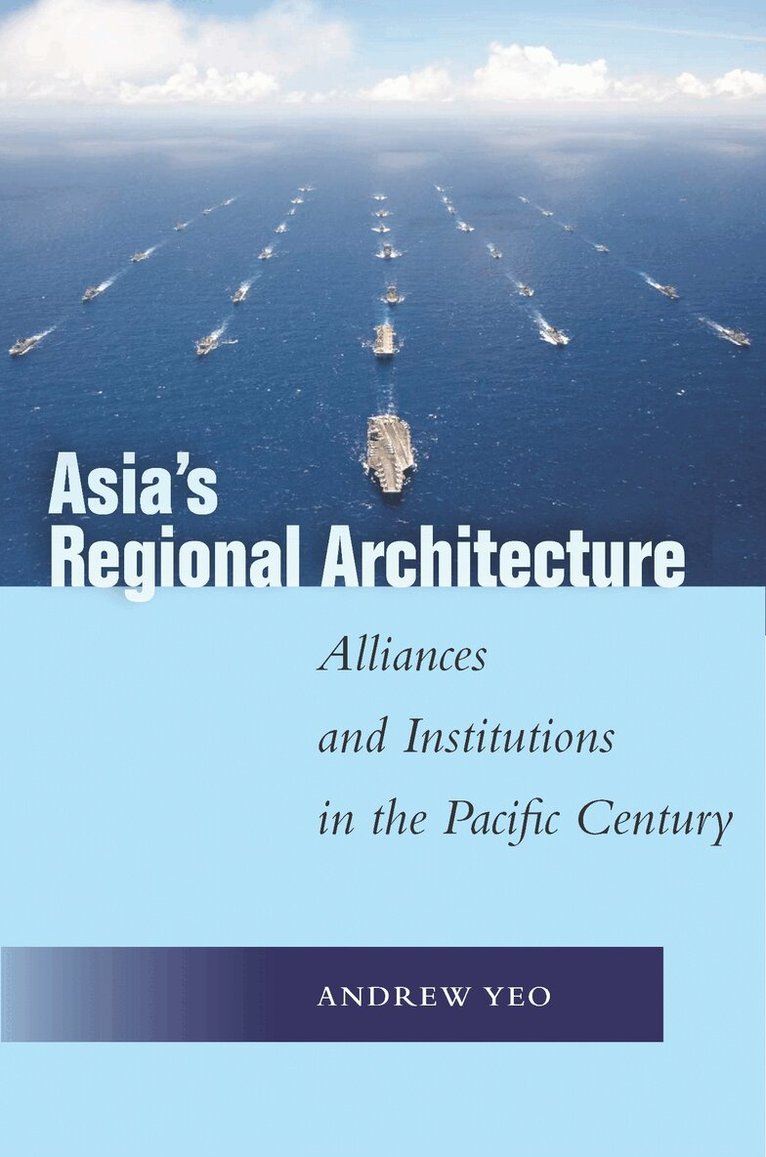
During the Cold War, the U.S. built a series of alliances with Asian nations to erect a bulwark against the spread of communism and provide security to the region. Despite pressure to end bilateral alliances in the post-Cold War world, they persist to this day, even as new multilateral institutions have sprung up around them. The resulting architecture may aggravate rivalries as the U.S., China, and others compete for influence. However, Andrew Yeo demonstrates how Asia's complex array of bilateral and multilateral agreements may ultimately bring greater stability and order to a region fraught with underlying tensions.Asia's Regional Architecture transcends traditional international relations models. It investigates change and continuity in Asia through the lens of historical institutionalism. Refuting claims regarding the demise of the liberal international order, Yeo reveals how overlapping institutions can promote regional governance and reduce uncertainty in a global context. In addition to considering established institutions such as the Association of Southeast Asian Nations and the Asia-Pacific Economic Cooperation, he discusses newer regional arrangements including the East Asia Summit, Trans-Pacific Partnership, and the Belt and Road Initiative. This book has important implications for how policymakers think about institutional design and regionalism in Asia and beyond.
909 kr
Läs direkt efter köp
During the Cold War, the U.S. built a series of alliances with Asian nations to erect a bulwark against the spread of communism and provide security to the region. Despite pressure to end bilateral alliances in the post-Cold War world, they persist to this day, even as new multilateral institutions have sprung up around them. The resulting architecture may aggravate rivalries as the U.S., China, and others compete for influence. However, Andrew Yeo demonstrates how Asia's complex array of bilateral and multilateral agreements may ultimately bring greater stability and order to a region fraught with underlying tensions.Asia's Regional Architecture transcends traditional international relations models. It investigates change and continuity in Asia through the lens of historical institutionalism. Refuting claims regarding the demise of the liberal international order, Yeo reveals how overlapping institutions can promote regional governance and reduce uncertainty in a global context. In addition to considering established institutions such as the Association of Southeast Asian Nations and the Asia-Pacific Economic Cooperation, he discusses newer regional arrangements including the East Asia Summit, Trans-Pacific Partnership, and the Belt and Road Initiative. This book has important implications for how policymakers think about institutional design and regionalism in Asia and beyond.