• Fri frakt över 249 kr
  • •
  • Snabba leveranser
  • •
  • Billiga böcker
Kundservice

Du är på sajten för privatpersoner.

Företag, bibliotek eller offentlig verksamhet?

Du handlar på classic.bokus.com, där alla dina funktioner finns intakta.
Till classic.bokus.com
Bokus logotyp. Gå till startsidan.
  • Erbjudanden
  • Nyheter
  • Student
  • Topplistor
  • Barn & ungdom
  • Bokus Play
  • E-böcker
  • Pocketböcker
  • Spel & pussel

10% rabatt på allt med kod: NYSTART10 →

Sidfot

Mina sidor

    Hjälp

    • Kundservice
    • Vanliga frågor och svar
    • Frakt och leverans
    • Retur vid ångerrätt
    • Reklamera vara
    • Betalning
    • Köpvillkor
    • Allmänna villkor
    • Information om webbplatsens tillgänglighet

    Om Bokus

    • Om oss
    • Pressrum
    • För studenter
    • För företag
    • För bibliotek och offentlig verksamhet
    • För leverantörer
    • Hållbarhet

    Populärt

    • Aktuella erbjudanden
    • Presentkort
    • Studentlitteratur
    • Nya böcker
    • Topplistor
    • Signerade böcker
    • Engelska böcker

    Inspiration

    • Boktips
    • BookTok
    • Populära bokserier
    • Barnbokskaraktärer
    • Populära författare
    Logotyp för Bokus
    Följ oss på Facebook (extern länk)Följ oss på Instagram (extern länk)Följ oss på YouTube (extern länk)Följ oss på TikTok (extern länk)
    bokus @ CookiesAnpassa cookiesIntegritetspolicyKöpvillkor
    Till Citymail hemsida (extern länk)Till Budbee hemsida (extern länk)Till Postnord hemsida (extern länk)Till Schenker hemsida (extern länk)Till Early Bird hemsida (extern länk)Till Walleys hemsida (extern länk)
    1. Samhälle och politik
    2. Sociologi och antropologi

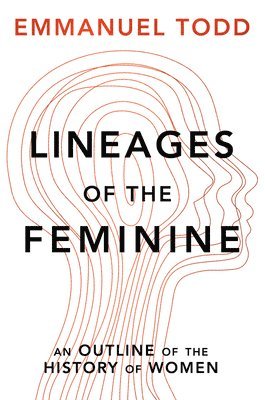
    Lineages of the Feminine

    An Outline of the History of Women

    AvEmmanuel Todd

    Inbunden, Engelska, 2023

    253 kr

    Beställningsvara. Skickas inom 5-8 vardagar. Fri frakt över 249 kr.

    Fler format och utgåvor

    E-bok

    395 kr

    Beskrivning

    We are experiencing an anthropological revolution. We see it in the #MeToo movement, in the denunciation of femicide and in an increasingly vociferous critique of patriarchal domination. Why this sudden rise of an antagonistic conception of the relationship between men and women, at the very moment when progress is accelerating and when the goals of first- and second-wave feminism seem on the verge of being achieved? In this book, the anthropologist and historian Emmanuel Todd, while not underestimating the importance of crucial inequalities that remain, argues that the emancipation of women has essentially already taken place but that it has given rise to new tensions and contradictions. As women gain more freedom, they also gain access to traditional male social pathologies: economic anxiety, the disorientation of anomie, and individual and class resentment. But because they remain women, with the ability to bear children, their burden as human beings, although richer, is now more difficult to bear than that of men. In order to understand our current condition, Todd retraces the evolution of the male/female relationship through the long history of the human species, from the emergence of Homo sapiens a hundred thousand years ago to the present. He also conducts a broad empirical study of the convergence between men and women today and of the differences that still separate them – in education, in employment and in relation to longevity, suicide and homicide, electoral behaviour and racism. He explores the relations between women’s liberation and other changes in contemporary societies such as the collapse of religion, the decline of industry, the decline of homophobia, the rise of bisexuality and the transgender phenomenon, and the decline in a sense of the collective life. And he shows how and why Western countries – and especially the Anglo-American world, Scandinavia and France – are, in their new feminist revolution, perhaps less universal than they think.

    Produktinformation

    • Utgivningsdatum:2023-06-16
    • Mått:155 x 234 x 33 mm
    • Vikt:635 g
    • Format:Inbunden
    • Språk:Engelska
    • Antal sidor:336
    • Förlag:Polity Press
    • ISBN:9781509555086
    • Översättare:Andrew Brown

    Utforska kategorier

    • Sociologi och antropologi inom Samhälle och politik

    Mer om författaren

    Emmanuel Todd is a sociologist, demographer and historical anthropologist at the National Institute of Demographic Studies (INED), Paris.

    Recensioner i media

    “Todd brings his immense learning to bear on current understandings of the position of women in different parts of the world, with a particular focus on contemporary feminist positions in the West. What is original in his analysis is the way he brings his longue durée anthropological approach to bear on cultural representations of gender. He integrates the analysis of family and kinship with the status of women over ten thousand years. He shows that the post-industrial revolution coincided with the emancipation of women and an elevation of their status, but with freedom and emancipation, women confront a world in disarray and develop new anxieties. It is hard to think of another scholar with Todd’s range, command of detail and breadth of reading. This is an important book, one which will be studied and debated for years to come.”David Sabean, Distinguished Professor of European History and the Henry J. Bruman Chair in German History, Emeritus, at UCLA“Lineages of the Feminine is a tour de force of thinking outside the box, adroitly grounded in historical anthropology and demography. The author’s deep knowledge of the history of family forms and relationships empowers him to open new debates about current social predicaments.”Kenneth Wachter, Emeritus Professor of Demography and Statistics, University of California, Berkeley“Todd’s work offers valuable insights into the persistent and evolving dynamics of gender in society.”The Muslim World Book Review

    Innehållsförteckning

    • Preface IntroductionThe future is nowThe singularity of the original human coupleResearch versus ideologyThe power of women todayEconomics and anthropologyWomen’s liberation, and the antagonism between (or abolition of) the sexes Part One. The contribution of historical anthropology Chapter OnePatriarchy, gender and intersectionalityThe fog of patriarchyThe emergence of the concept of genderGender: a useless and ideologized duplicationFor a generalized intersectionalityFrench intersectionality Chapter TwoDegendering anthropologyA tribute to female anthropologistsJulian Steward: sexual equality among hunter-gatherers described by a classical anthropologistMartin King Whyte: anthropology just before genderHenrietta Moore: The first disruptionsMarilyn G. Gelber: the monstrous manJanet Carsten: DecompositionAn insufficiently feminist history Chapter ThreeThe tools of historical anthropologyThe nuclear familyThe stem familyThe communitarian family The local group and marriage Chapter FourIn search of the original familyClassical anthropology and the original familyThe block in anthropologyThe conservatism of peripheral zones: English, Americans, French, Shoshone, Bushmen, Eskimos, Chukchi and Agtas in one humanitySaving Private MurdockA new geography of the world Chapter FiveThe confinement of women: history comes to a haltNomads and the history of the familyPatrilineality and social stratificationThe patrilineal impasse Chapter SixA detour by way of AustraliaThe debate on the AboriginesThe role of New Guinea Chapter SevenThe sexual division of labourIdeology versus realityIdeology against itselfCollectivist men versus individualist womenThe issue of equality: we are not chimpanzees Chapter EightChristianity, Protestantism and womenEarly Christianity and womenThe Church and sexual securityProtestant patricentrism Part Two. Our revolution Chapter NineLiberation: 1950-20201950-1965: the height of petty-bourgeois conformismThe educational and sexual revolution: 1965-2000 Women, services and industry Educational matridominance: 2000-2020 From hypergamy to hypogamy Differences according to social class Poverty and single-parent families The middle classes in survival strategy Women at the risk of anomie The concept of soft anomie Chapter TenMen resist but the collective collapsesThe persistent sexual division of labour, yet again The sex of the state The medical profession Mathematics The top 4%: a residual patridominance Even higher: capital has no sex Divorce at the heart of the system The masculine collective and its disintegration   Chapter ElevenGender: a petty bourgeois ideologyFrance in the face of the Anglo-American world The sex of social classes Anger as a general social phenomenon Ideological hegemony in the feminine: doctorates Matridominance at the OECD as well as at the INED Farewell to reality A provisional summary Chapter TwelveWomen and AuthorityWomen as less racistThe weakening of the collective, but not of authority The origin of Prohibition? Ideological anomaliesSwedish family types The riddle of authoritarian feminism No paternal authority without maternal authority The mother at the centre of the family Constructed authority and natural authority Chapter ThirteenThe mystery of SwedenAgainst the myth of an original matriarchy The Sweden of the originsInterpreting the runic steles Peasant patrilocality from the seventeenth to the twentieth century The birth of the ‘Swedish woman’: literacy in the seventeenth and eighteenth centuries Sweden and Denmark Chapter FourteenHomophobia: a male businessOrders of magnitude and causal sequences LGBT: a tactical alliance Words before things Homosexuality, a natural human behaviour Mapping homophobia: the BBO axis yet againHomophobia: a male business Chapter FifteenWomen, between Christianity and bisexualitySimple Protestant homophobia and Catholic ambivalence The collapse of religious sentiment and homophobia Are gays zombie Christians? The objection of Eastern EuropeMarriage for all men and all womenThe rise of female bisexuality Chapter SixteenThe social construction of transgenderThe case of the berdaches Berdaches and transgender people ‘My new vagina won’t make me happy’Ideological centrality…… but statistical weakness Women and identity The omnipotence of mothers Does society think through individuals? The Christian taste for extraordinary sexuality Chapter SeventeenEconomic globalization and the deviation from anthropological trajectoriesGlobalization and the tertiarization of the economyEconomic or anthropological specialization?The worker nations of Eastern EuropeSweden, yet again...The cost of rejecting liberation ConclusionHas humanity come of age? NotesIndex