• Fri frakt över 249 kr
  • •
  • Snabba leveranser
  • •
  • Billiga böcker
Kundservice

Du är på sajten för privatpersoner.

Företag, bibliotek eller offentlig verksamhet?

Du handlar på classic.bokus.com, där alla dina funktioner finns intakta.
Till classic.bokus.com
Bokus logotyp. Gå till startsidan.
  • Erbjudanden
  • Nyheter
  • Student
  • Topplistor
  • Barn & ungdom
  • Bokus Play
  • E-böcker
  • Pocketböcker
  • Spel & pussel

10% rabatt på allt med kod NYSTART10 →

Sidfot

Mina sidor

    Hjälp

    • Kundservice
    • Vanliga frågor och svar
    • Frakt och leverans
    • Retur vid ångerrätt
    • Reklamera vara
    • Betalning
    • Köpvillkor
    • Allmänna villkor
    • Information om webbplatsens tillgänglighet

    Om Bokus

    • Om oss
    • Pressrum
    • För studenter
    • För företag
    • För bibliotek och offentlig verksamhet
    • För leverantörer
    • Hållbarhet

    Populärt

    • Aktuella erbjudanden
    • Presentkort
    • Studentlitteratur
    • Nya böcker
    • Topplistor
    • Signerade böcker
    • Engelska böcker

    Inspiration

    • Boktips
    • BookTok
    • Populära bokserier
    • Barnbokskaraktärer
    • Populära författare
    Logotyp för Bokus
    Följ oss på Facebook (extern länk)Följ oss på Instagram (extern länk)Följ oss på YouTube (extern länk)Följ oss på TikTok (extern länk)
    bokus @ CookiesAnpassa cookiesIntegritetspolicyKöpvillkor
    Till Citymail hemsida (extern länk)Till Budbee hemsida (extern länk)Till Postnord hemsida (extern länk)Till Schenker hemsida (extern länk)Till Early Bird hemsida (extern länk)Till Walleys hemsida (extern länk)
    1. Juridik
    2. Rättsvetenskap
    3. Lag och samhälle

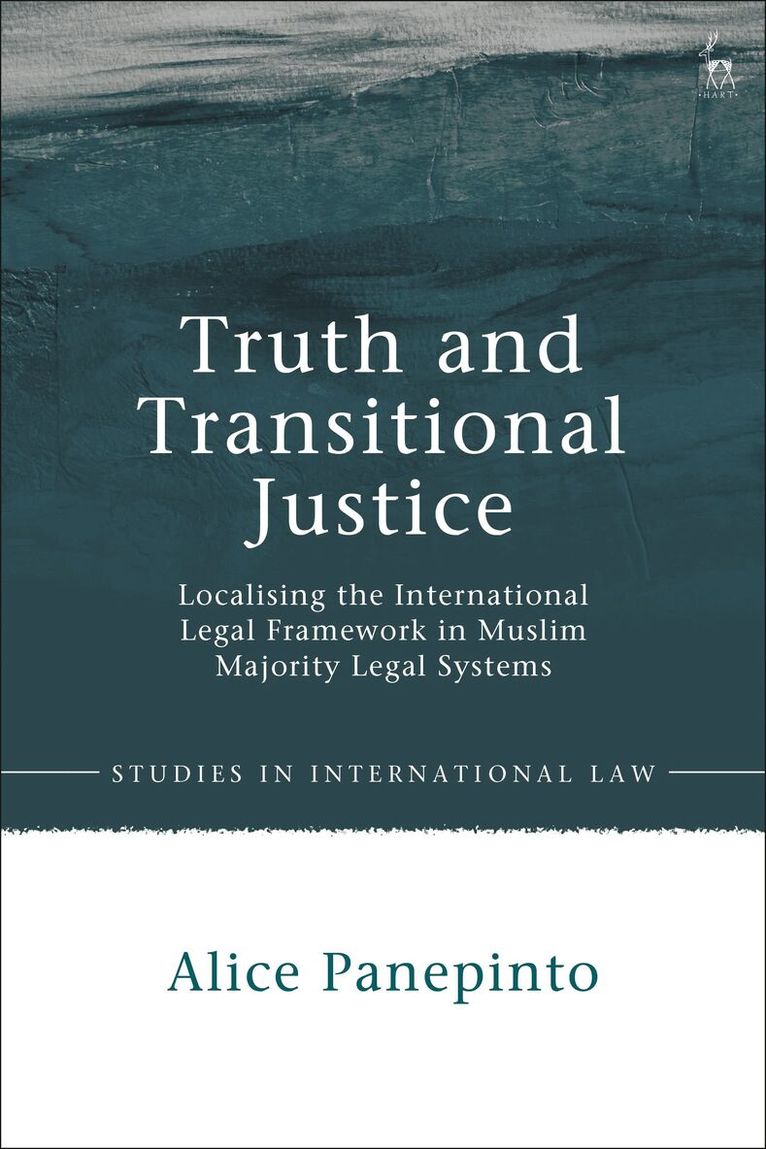
    Truth and Transitional Justice

    Localising the International Legal Framework in Muslim Majority Legal Systems

    AvAlice Panepinto

    Inbunden, Engelska, 2022

    Del i serien Studies in International Law

    1 220 kr

    Beställningsvara. Skickas inom 10-15 vardagar. Fri frakt över 249 kr.

    Fler format och utgåvor

    E-bok

    597 kr

    E-bok

    597 kr

    Häftad

    556 kr

    Beskrivning

    With a unique transitional justice perspective on the Arab Spring, this book assesses the relocation of transitional justice from the international paradigm to Islamic legal systems.The Arab uprisings and new and old conflicts in the Middle East, North Africa and other contexts where Islam is a prominent religion have sparked an interest in localising transitional justice in the legal systems of Muslim-majority communities to uncover the truth about past abuse and ensure accountability for widespread human rights violations. This raises pressing questions around how the international paradigm of transitional justice, and in particular its truth-seeking aims, might be implemented and adapted to local settings characterised by Muslim majority populations, and at the same time drawing from relevant norms and principles of Islamic law. This book offers a critical analysis of the relocation of transitional justice from the international paradigm to the legal systems of Muslim-majority societies in light of the inherently pluralistic realities of these contexts. It also investigates synergies between international law and Islamic law in furthering truth-seeking, the formation of collective memories and the victims’ right to know the truth, as key aims of the international paradigm of transitional justice and broadly supported by the shari’ah. This book will be a useful reference for scholars, practitioners and policymakers seeking to better understand the normative underpinnings of (potential) transitional truth-seeking initiatives in the legal systems of Muslim-majority societies. At the same time, it also proposes a more critical and creative way of thinking about the challenges and opportunities of localising transitional justice in contexts where the principles and ideas of Islamic law carry different meanings.

    Produktinformation

    • Utgivningsdatum:2022-02-24
    • Mått:158 x 236 x 22 mm
    • Vikt:1 140 g
    • Format:Inbunden
    • Språk:Engelska
    • Serie:Studies in International Law
    • Antal sidor:280
    • Förlag:Bloomsbury Publishing PLC
    • ISBN:9781509921263

    Utforska kategorier

    • Lag och samhälle inom Juridik

    Mer om författaren

    Alice Panepinto is Lecturer in Law at Queen’s University, Belfast.

    Recensioner i media

    Panepinto’s book goes to the heart of legitimacy in legal and social reform initiatives developed as a global norm, such as transitional justice. The author makes a strong case for the imperative of embedding legitimacy in transitional justice through the adoption of a culturally sensitive approach.

    Innehållsförteckning

    • Structure of the Book 1. Transitional Justice between International Law and Local Norms I. Introduction II. Problematising the Normative Framework of Transitional Justice A. A Merger of Legal Regimes, Soft Law and Normative Practices B. The Normativity of How Transitional Justice is Understood C. Transitional Justice as Legal Turmoil III. The Formal Sources of Transitional Justice: International Law A. International Humanitarian Law B. International Criminal Law C. International Human Rights Law IV. The Local Normative Sources of Transitional Justice A. The Shift to Local Transitional Justice: Opportunities and Challenges B. Religious Norms, Actors and Transitional Justice V. Conclusion 2. Localising the International Law Framework of Transitional Justice in Muslim-Majority Societies: Theoretical and Methodological Considerations I. Introduction II. Translating the International Paradigm of Transitional Justice into Local Settings: Concepts and Theoretical Considerations A. The International Framework of Transitional Justice through the Lens of Legal Pluralism B. Bridging Global and Local: Law, Culture and Society C. ‘Seeing’ the Relevant Laws in Pluralistic TJ: Borrowing the Tools of Comparative Legal Studies III. Understanding Local Settings in the Development of a Global Paradigm of Transitional Justice: Methods A. Comparative Law between Creative Thinking and Questionable Legacies B. The Theory of Legal Formants Meets the Localisation of Transitional Justice C. Comparative Law for Developing International Law and the Global Paradigm of Transitional Justice IV. Conclusion 3. Legal Truths, Judicial Rituals and Transitional Justice I. Introduction II. Truth Seeking and Transitional Justice: Issues, Ambitions and Limitations A. Legal/Legalised Truth-Seeking Mechanisms 3B. The Product of Legal/Legalised Truth-Seeking Mechanisms III. Interpreting Legal Truth in Transitional Justice A. The Construction and Limits of Legal Truths B. Stakeholders of the Legal Truth IV. Legal Truths between Collective Memories and Performances of Transitional Justice A. Ritual Performances, Legal Masks and Truth Seeking V. Conclusions 4. The Right to Truth in International Law I. Introduction II. The Emergence of the Right to Truth A. IACHR Contributions to the Right to Truth B. ECHR Contributions to the Right to Truth III. The Status of the Right to Truth in International Law A. The Right to Truth and Customary International Law B. The Right to Truth and General Principles C. The Right to Truth as a Reiterated ‘Performative Utterance’ in International Law IV. Conclusion 5. Islamic Law in the Legal Systems of Muslim-Majority Societies I. Introduction II. Islamic Law in Context: Divine Normativity in this World A. Sources of Islamic Law B. Objectives of Islamic Law (Maqasid as-Shari’ah) and Maslaha III. The Manifestations and Jurisprudential Evolutions of Islamic Law: Human Efforts A. The Role of Jurists (Judiciary, the Juristic Schools and the Jurisprudents) IV. Islamic Law and International Law: Foundations for Transitional Justice Truth SeekingA. The Overlap of Substantive Justice Aims of Islamic Law and ICL/IHRL B. The Convergence of Procedural Standards of Islamic Law and ICL/IHRL V. Conclusion 6. Transitional Truth Seeking and the Right to Truth in Muslim-Majority Legal Systems I. Introduction II. Truth Seeking: From International Law to Islamic Law A. Adjudication as Truth Seeking B. Extrajudicial Mechanisms for Truth Seeking III. The Production of Legal Truths in Muslim-Majority Societies: Historic Practice, Moral Imperatives,and Contemporary Applications A. Compiling Legal Truths in Historic Islamic Legal Practice B. Bridging the Tension between Legal Truths and Historical/Factual Truths in Islamic Law: The SpiritualImperatives of Convergence C. Contested Truths and Collective Memories: Recent Examples in Muslim-Majority States IV. Right to Truth in Islamic Law and Jurisprudence A. Key Violations: Torture, Extrajudicial Killings and Forced Disappearance B. Individual and Collective Dimensions of the Right to Truth C. State (Authority) Duty to Investigate V. Conclusion Conclusion How Islamic Law Can Embed and Develop Transitional Truth Seeking