• Fri frakt över 249 kr
  • •
  • Snabba leveranser
  • •
  • Billiga böcker
Kundservice

Du är på sajten för privatpersoner.

Företag, bibliotek eller offentlig verksamhet?

Du handlar på classic.bokus.com, där alla dina funktioner finns intakta.
Till classic.bokus.com
Bokus logotyp. Gå till startsidan.
  • Erbjudanden
  • Nyheter
  • Student
  • Topplistor
  • Barn & ungdom
  • Bokus Play
  • E-böcker
  • Pocketböcker
  • Spel & pussel

10% rabatt på allt med kod: NYSTART10 →

Sidfot

Mina sidor

    Hjälp

    • Kundservice
    • Vanliga frågor och svar
    • Frakt och leverans
    • Retur vid ångerrätt
    • Reklamera vara
    • Betalning
    • Köpvillkor
    • Allmänna villkor
    • Information om webbplatsens tillgänglighet

    Om Bokus

    • Om oss
    • Pressrum
    • För studenter
    • För företag
    • För bibliotek och offentlig verksamhet
    • För leverantörer
    • Hållbarhet

    Populärt

    • Aktuella erbjudanden
    • Presentkort
    • Studentlitteratur
    • Nya böcker
    • Topplistor
    • Signerade böcker
    • Engelska böcker

    Inspiration

    • Boktips
    • BookTok
    • Populära bokserier
    • Barnbokskaraktärer
    • Populära författare
    Logotyp för Bokus
    Följ oss på Facebook (extern länk)Följ oss på Instagram (extern länk)Följ oss på YouTube (extern länk)Följ oss på TikTok (extern länk)
    bokus @ CookiesAnpassa cookiesIntegritetspolicyKöpvillkor
    Till Citymail hemsida (extern länk)Till Budbee hemsida (extern länk)Till Postnord hemsida (extern länk)Till Schenker hemsida (extern länk)Till Early Bird hemsida (extern länk)Till Walleys hemsida (extern länk)
    1. Juridik
    2. Särskilda rättsområden
    3. Arbetsrätt

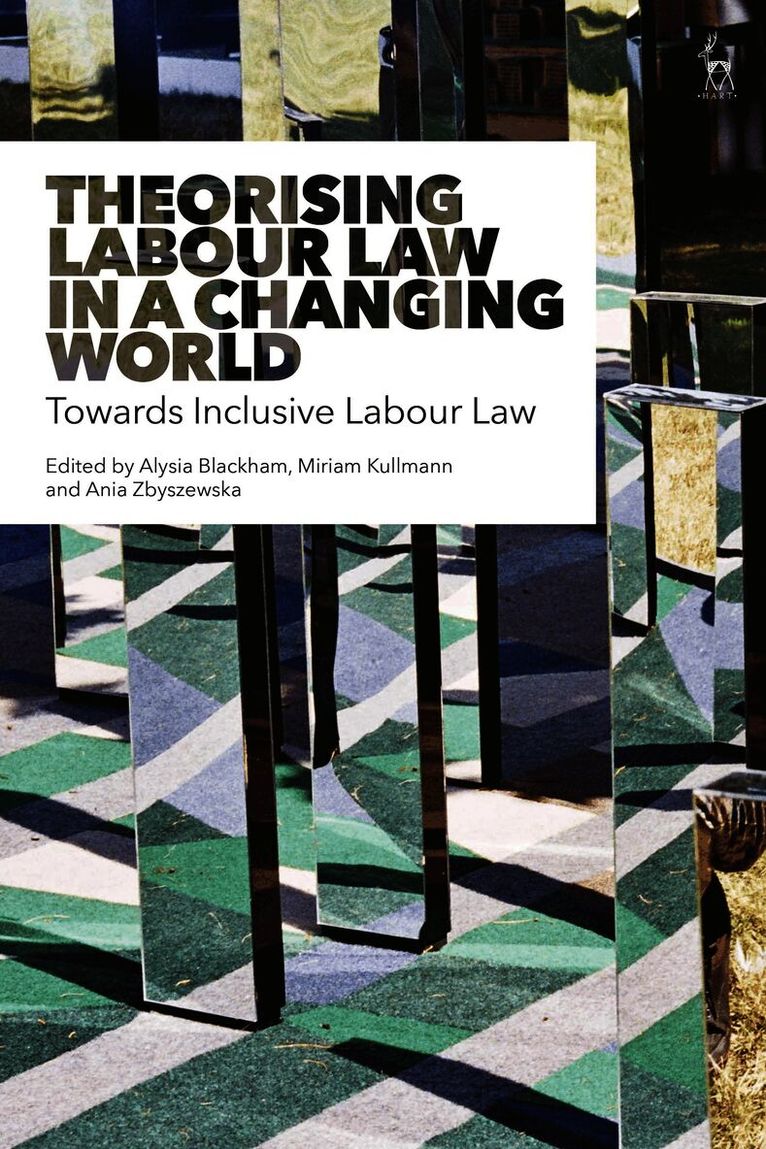
    Theorising Labour Law in a Changing World

    Towards Inclusive Labour Law

    AvAlysia Blackham,Miriam Kullmann

    Inbunden, Engelska, 2019

    1 155 kr

    Beställningsvara. Skickas inom 10-15 vardagar. Fri frakt över 249 kr.

    Beskrivning

    This collection brings together perspectives from industrial relations, political economy, political theory, labour history, sociology, gender studies and regulatory theory to build a more inclusive theory of labour law. That is, a theory of labour law that is more inclusive of non-traditional workers (including those in atypical work, or from non-traditional backgrounds); more inclusive of a variety of collective approaches to work regulation that foster solidarity between workers; and more inclusive of interdisciplinary and complex explanations of labour law and its regulatory spaces. The individual chapters speak to this theme of inclusivity in different ways and offer different suggestions for how it might be achieved. They break down the barriers between legal research and other fields, to promote fruitful and integrative conversations across disciplines. In the spirit of inclusivity and intergenerational dialogue, the book blends contributions from early career and emerging scholars with those from leading scholars in the field, featuring critical commentary from senior labour law figures alongside theoretically and empirically informed work.

    Produktinformation

    • Utgivningsdatum:2019-09-05
    • Mått:158 x 236 x 20 mm
    • Vikt:580 g
    • Format:Inbunden
    • Språk:Engelska
    • Antal sidor:304
    • Förlag:Bloomsbury Publishing PLC
    • ISBN:9781509921553

    Utforska kategorier

    • Arbetsrätt inom Juridik

    Mer om författaren

    Alysia Blackham is Associate Professor at Melbourne Law School, University of Melbourne.Miriam Kullmann is Assistant Professor at the Department of Private Law, WU Vienna University of Economics and Business.Ania Zbyszewska is Assistant Professor in Law and Work, Department of Law and Legal Studies, Carleton University.

    Recensioner i media

    Theorising Labour Law in a Changing World offers a modern, eclectic and, in the best sense of the term, unconventional contribution to the academic literature on labour law … a rich, innovative and, therefore, indispensable book for all those who want to broaden their view of labour law and obtain intellectual tools to participate in the construction of a more inclusive and, therefore, better future.

    Innehållsförteckning

    • 1. IntroductionMiriam Kullmann, Ania Zbyszewska and Alysia BlackhamPART AWORK REGULATION AND THE SOCIO-ECONOMIC ORDER2. Recovering the Impact of Normative Regimes on Labour Relations Practices: A Socio-Historical View of Institutional Requirements Robert Knegt3. Theorising Labour Law in the State of Exception: Political and Judicial Responses to Crisis Lisa Rodgers4. Redefining the Boundaries of Labour Law: Is ‘Double Alienness’ a Useful Concept for Classifying Employees in Times of Fractal Work? Vincenzo Pietrogiovanni5. Comment: Reconsidering Historical Perspectives Anew – Old Ideas Adapted to New Forms of Work Nicole BusbyPART BREVITALISING THE ROLE OF COLLECTIVE REPRESENTATION6. Back to the Future: Rediscovering the Non-Economic Role, Value and Scope of Labour Law and Collective Labour Institutions in a Changing World Fotis Vergis7. Trade Unions, the Gig Economy, and the Feminisation of Work: Lessons from the Past? Rebecca Zahn8. A Socio-Legal History of the Coalition of Immokalee WorkersManoj Dias-Abey9. Comment: Changing Collective Representation and Action to Meet the Challenges – Historical Lessons and Contemporary Learning Tonia Novitz10. Comment: Collectivism and Trade Unions (Past, Present and Future) and the New World of Work Nicola SmitPART CADVANCING THEORETICAL MODELS TO RESPOND TO THE NEW WORLD OF WORK11. Employment Regulation and Working Time Through the Lens of a Regulatory Space Approach Cristina Inversi12. Re-Systematising Labour Law: Beyond Traditional Systems Theory and Reflexive Law? Alysia Blackham13. Argumentative Strategies in the Defence of Labour Law: The Promises of Republican Theory Anja Eleveld14. Anti-Authoritarian Employment Relations? Labour Law from an Anarchist Perspective Andrea Iossa15. Challenging Labour Law’s ‘Productivity’ Bias Through a Feminist Lens: A Conversation Ania Zbyszewska and Supriya Routh16. Comment: Theories of Labour Law Assessed from the Perspective of Reflexive Labour Law Ralf Rogowski