• Fri frakt över 249 kr
  • •
  • Snabba leveranser
  • •
  • Billiga böcker
Kundservice

Du är på sajten för privatpersoner.

Företag, bibliotek eller offentlig verksamhet?

Du handlar på classic.bokus.com, där alla dina funktioner finns intakta.
Till classic.bokus.com
Bokus logotyp. Gå till startsidan.
  • Erbjudanden
  • Nyheter
  • Student
  • Topplistor
  • Barn & ungdom
  • Bokus Play
  • E-böcker
  • Pocketböcker
  • Spel & pussel

Må bättre, för mindre! Upp till 50% rabatt på hälsoböcker

Sidfot

Mina sidor

    Hjälp

    • Kundservice
    • Vanliga frågor och svar
    • Frakt och leverans
    • Retur vid ångerrätt
    • Reklamera vara
    • Betalning
    • Köpvillkor
    • Allmänna villkor
    • Information om webbplatsens tillgänglighet

    Om Bokus

    • Om oss
    • Pressrum
    • För studenter
    • För företag
    • För bibliotek och offentlig verksamhet
    • För leverantörer
    • Hållbarhet

    Populärt

    • Aktuella erbjudanden
    • Presentkort
    • Studentlitteratur
    • Nya böcker
    • Topplistor
    • Signerade böcker
    • Engelska böcker

    Inspiration

    • Boktips
    • BookTok
    • Populära bokserier
    • Barnbokskaraktärer
    • Populära författare
    Logotyp för Bokus
    Följ oss på Facebook (extern länk)Följ oss på Instagram (extern länk)Följ oss på YouTube (extern länk)Följ oss på TikTok (extern länk)
    bokus @ CookiesAnpassa cookiesIntegritetspolicyKöpvillkor
    Till Citymail hemsida (extern länk)Till Budbee hemsida (extern länk)Till Postnord hemsida (extern länk)Till Schenker hemsida (extern länk)Till Early Bird hemsida (extern länk)Till Walleys hemsida (extern länk)
    1. Juridik
    2. Internationell rätt
    3. Internationell rätt: transport och handel

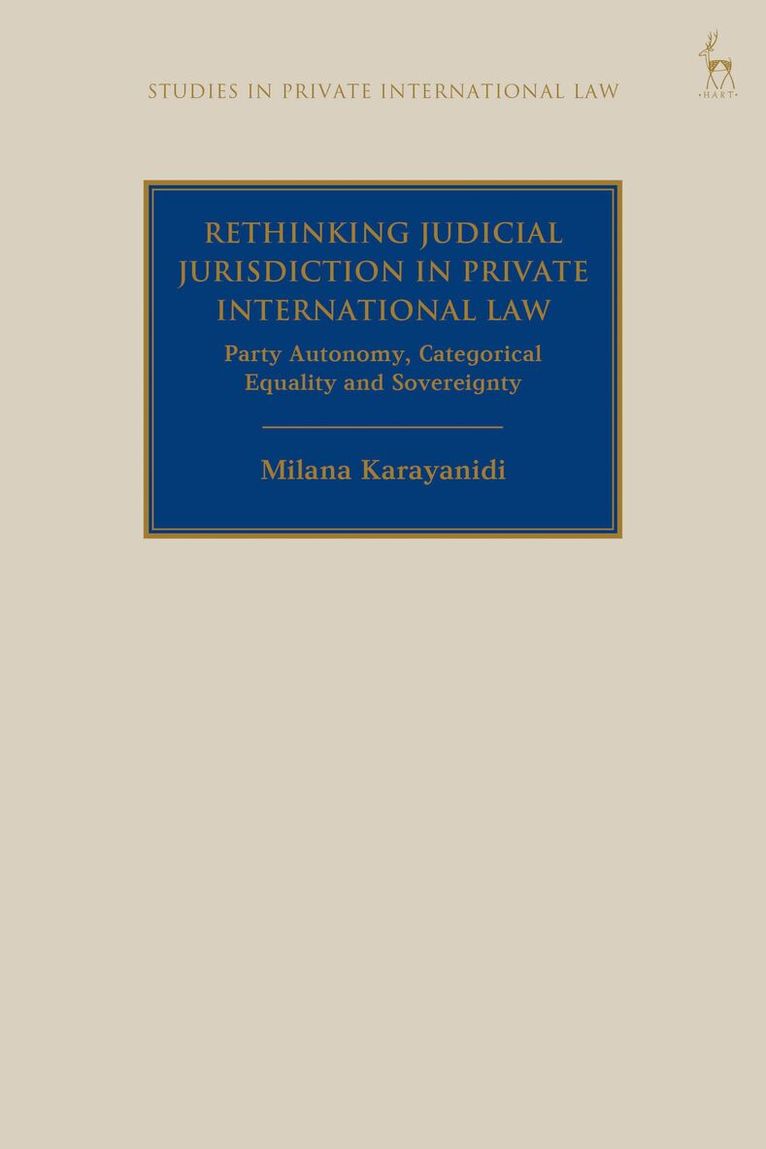
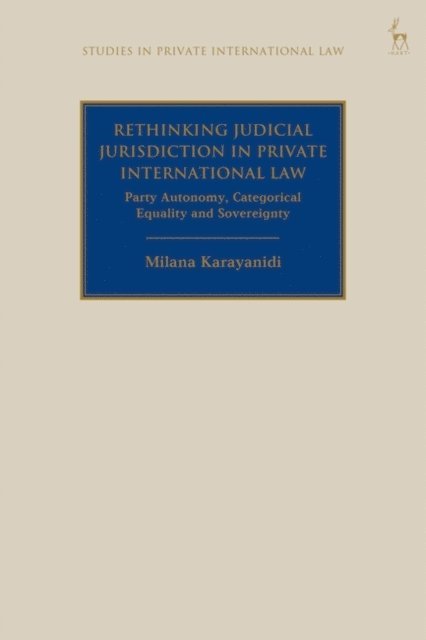
    Rethinking Judicial Jurisdiction in Private International Law

    Party Autonomy, Categorical Equality and Sovereignty

    AvMilana Karayanidi,Paul Beaumont

    Inbunden, Engelska, 2020

    Del i serien Studies in Private International Law

    1 283 kr

    Beställningsvara. Skickas inom 10-15 vardagar. Fri frakt över 249 kr.

    Fler format och utgåvor

    E-bok

    556 kr

    E-bok

    557 kr

    Häftad

    517 kr

    Beskrivning

    This book explores the theory and practice of judicial jurisdiction within the field of private international law. It offers a revised look at values justifying the power of courts to hear and decide cross-border disputes, and demonstrates that a re-conceptualisation of jurisdiction is needed. Rather than deriving from territorial power of states, jurisdiction in civil and commercial cross-border matters ought to be driven by party autonomy. This autonomy can be limited by certain considerations of equality and critical state sovereign interests. The book applies this normative view to the existing rules of jurisdiction in the European Union and the Russian Federation. These regimes are chosen due to their unique positions towards values in private international law and contrasting societal norms that generate and accommodate these values. Notwithstanding disparate cultural and political ideas, these regimes reveal a surprising level of consistency when it comes to enforcement of party autonomy. There is, nevertheless, room for improvement. The book demonstrates to scholars, policy makers and lawmakers that jurisdiction should be re-centred around the interests of private actors, and proposes ways to improve the current rules.

    Produktinformation

    • Utgivningsdatum:2020-02-20
    • Mått:236 x 164 x 22 mm
    • Vikt:580 g
    • Format:Inbunden
    • Språk:Engelska
    • Serie:Studies in Private International Law
    • Antal sidor:272
    • Förlag:Bloomsbury Publishing PLC
    • ISBN:9781509924776

    Utforska kategorier

    • Internationell rätt: transport och handel inom Juridik

    Mer om författaren

    Milana Karayanidi, PhD (Trinity College Dublin), LLM (Harvard Law School) is an attorney licensed in New York, and a Managing Associate at Dentons US LLP in Washington, DC, USA.

    Innehållsförteckning

    • 1. Introduction2. Reconciliation of Values in Jurisdiction I. The Big Picture II. Summary of Jurisdiction Rules in the EU and RussiaPART IPARTY AUTONOMY IN PRIVATE INTERNATIONAL LAW ON JURISDICTION3. Autonomy as a Foundational Value for Jurisdiction I. Introduction II. Definition of and Justification for Autonomy III. Autonomy as a Proper Foundation for Matters of Private International Law and Jurisdiction IV. Sovereignty: Not a Starting Point for the Law on Jurisdiction 4. Autonomy in the Law on Jurisdiction: Harmony and Controversy I. Linking Theory to Practice II. Party Autonomy ex ante III. Party Autonomy Bordering Other Issues IV. Party Autonomy ex post V. Conclusion PART IIPARTY EQUALITY5. Categorical Equality in the Law on Jurisdiction I. Introduction II. Equality Limiting Party Autonomy: Normative View III. Critical Analysis of Positive Law on Protective Jurisdiction IV. Conclusion 6. Jurisdiction in Tort and Contract in the Absence of Choice of Forum: Balance Exercise I. Introduction II. Jurisdiction in Torts: Interpretation and Justification III. No Choice of Forum in Contract: Jurisdiction at the Place of Performance IV. Conclusion PART IIISOVEREIGNTY AND PARTY AUTONOMY7. Sovereignty and Party Autonomy in Civil and Commercial Jurisdiction I. Introduction II. Extent of International Sovereignty in Private International Law III. Home Sovereignty and its Limited Role in the Law on Jurisdiction IV. Ultimate State Sovereignty: Public Interest 8. Sovereignty and Territoriality in the Law on Jurisdiction I. Defining Domicile for the Purpose of Jurisdiction II. State Sovereign Interests Overriding Party Autonomy to Protect the Integrity of the State III. Conclusion 9. Overall Conclusions and Recommendations I. Jurisdiction by Parties’ Agreement ex ante II. Jurisdiction by Parties’ Agreement ex post III. Jurisdiction Protecting Categorical Equality IV. Jurisdiction in the Absence of Forum Selection (Tort) V. Jurisdiction in the Absence of Forum Selection (Contract) VI. Jurisdiction in the Absence of Forum Selection (Other) VII. Limited Exclusive Jurisdiction Overriding Party Autonomy to Maintain Sovereignty