• Fri frakt över 249 kr
  • •
  • Snabba leveranser
  • •
  • Billiga böcker
Kundservice

Du är på sajten för privatpersoner.

Företag, bibliotek eller offentlig verksamhet?

Du handlar på classic.bokus.com, där alla dina funktioner finns intakta.
Till classic.bokus.com
Bokus logotyp. Gå till startsidan.
  • Erbjudanden
  • Nyheter
  • Student
  • Topplistor
  • Barn & ungdom
  • Bokus Play
  • E-böcker
  • Pocketböcker
  • Spel & pussel

10% rabatt på allt med kod NYSTART10 →

Sidfot

Mina sidor

    Hjälp

    • Kundservice
    • Vanliga frågor och svar
    • Frakt och leverans
    • Retur vid ångerrätt
    • Reklamera vara
    • Betalning
    • Köpvillkor
    • Allmänna villkor
    • Information om webbplatsens tillgänglighet

    Om Bokus

    • Om oss
    • Pressrum
    • För studenter
    • För företag
    • För bibliotek och offentlig verksamhet
    • För leverantörer
    • Hållbarhet

    Populärt

    • Aktuella erbjudanden
    • Presentkort
    • Studentlitteratur
    • Nya böcker
    • Topplistor
    • Signerade böcker
    • Engelska böcker

    Inspiration

    • Boktips
    • BookTok
    • Populära bokserier
    • Barnbokskaraktärer
    • Populära författare
    Logotyp för Bokus
    Följ oss på Facebook (extern länk)Följ oss på Instagram (extern länk)Följ oss på YouTube (extern länk)Följ oss på TikTok (extern länk)
    bokus @ CookiesAnpassa cookiesIntegritetspolicyKöpvillkor
    Till Citymail hemsida (extern länk)Till Budbee hemsida (extern länk)Till Postnord hemsida (extern länk)Till Schenker hemsida (extern länk)Till Early Bird hemsida (extern länk)Till Walleys hemsida (extern länk)
    1. Juridik
    2. Internationell rätt
    3. Folkrätt

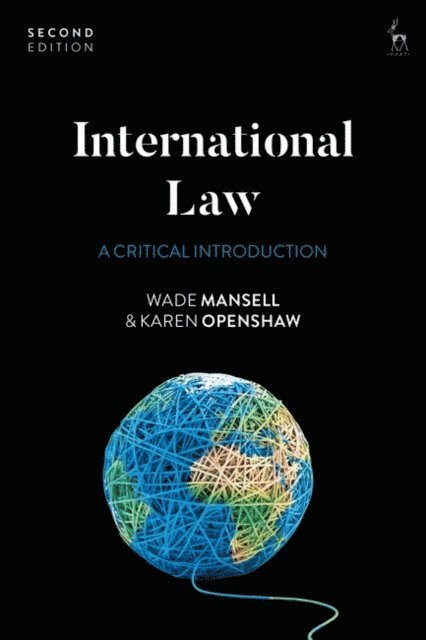
    International Law

    A Critical Introduction

    AvWade Mansell,Karen Openshaw

    Häftad, Engelska, 2019

    324 kr

    Skickas . Fri frakt över 249 kr.

    Fler format och utgåvor

    E-bok

    347 kr

    E-bok

    347 kr

    Beskrivning

    This new edition provides a critical introduction to the concepts, principles and rules of international law through a consideration of contemporary international events. It examines both the possibilities and limitations of the legal method in resolving international disputes, and notes the actual effects of international law upon international disagreements. Such an approach remains sceptical rather than cynical, and is intended to provide the means by which the role of international law may be evaluated. This entails discussion of the legal quality of international law; the relationship between international law and international relations; the Eurocentricity’ of international law; and the connection between political power and the ability to use or abuse (or ignore) international law. The new edition explores the impact of the United States’ latest direction in foreign policy (arguably an intensification of pre-existing neo-conservative trends); considers in greater depth the issue of economic self-determination in relation to ex-colonial nations; expands the discussion of jurisdiction to cover immunity from jurisdiction; and covers recent developments at the International Criminal Court.Underlying the book is the assertion that international law is political in content (in the sense of being concerned with the exercise of power) but that it draws much of its effectiveness from its self-portrayal as being apolitical, or at least politically neutral.
    Produktinformation

    • Utgivningsdatum:2019-08-22
    • Mått:156 x 232 x 24 mm
    • Vikt:640 g
    • Format:Häftad
    • Språk:Engelska
    • Antal sidor:408
    • Upplaga:2
    • Förlag:Bloomsbury Publishing PLC
    • ISBN:9781509926725

    Utforska kategorier

    • Folkrätt inom Juridik

    Mer om författaren

    Wade Mansell is Professor Emeritus at the Unviersity of Kent. Karen Openshaw holds a PhD in international law from the University of Kent.

    Recensioner i media

    The book is highly successful in its stated goal of providing a critical introduction to international law; one that foregrounds (rather than, as is customary, backgrounds) the operation of power and politics deep within the discipline itself and international law’s deep connectedness to the (usually asymmetrical) exercise of power.

    Innehållsförteckning

    • Introduction I. International Law and Domestic Law II. Paradoxes in the Contemporary World III. Law and Power IV. The Structure of the Book 1. The Distinctive Nature of International Law I. What is International Law? II. How International Law Differs from Domestic Law III. The Changing Nature of International Law IV. International Law and Common Sense V. What Makes International Law ‘Law’? VI. Why is it Necessary to Identify the Sources of International Law? 2. The Dynamic Quality of International Law I. Introduction II. The Concept of Sovereignty and Sovereign Equality III. The Concept of Sovereignty and Jurisdiction IV. Sovereignty and Controversial Bases of International Jurisdiction V. Sovereign Equality and the Concept of Universal Jurisdiction VI. Immunity from JurisdictionVII. Legal Personality in International Law VIII.The Place of the Individual in International Law IX. The Individual in International Law as Exemplified by the European Convention on Human Rights.. X. The Interrelationship between Sovereignty, Personality and the Individual in International Law3. Self-determination and Territory in International Law I. Introduction II. The Concept of Self-determination in International Law before the Creation of the United NationsIII.The United Nations Charter, Self-determination and Decolonisation IV.Self-determination after the Cold War V. States, Territory and Recognition VI.Territorial and Other Rights Over the Sea and its Bed VII. Conclusion 4. The International Obligations of States: Treaties and State Responsibility I. Introduction II. The Law of Treaties III.State Responsibility in International Law IV.Conclusion 5. The United Nations, the UN Charter and International Law I. Introduction II. The Origins of the UN III.The Structure of the UN IV.How the UN is Financed V. The UN Charter: A Constitution for the World? VI. Conclusion6. Human Rights in International Law I. Introduction II. What are Human Rights? III.The Politics of Human Rights IV.The International Bill of Human Rights V. Other Principal UN Human Rights Conventions and Bodies VI.Regional Protection of Human Rights VII. The International Criminal Court VIII.Conclusion 7. The Peaceful Settlement of Disputes in International Law I. Introduction II. Legal Method and International Dispute Resolution III.The International Court of Justice IV. International Arbitration V. Conclusion 8. Use of Force in International Law I. Introduction II. The Use of Force in International Law before the Creation of the UN III.The Charter of the UN IV.Chapter VII of the UN Charter V. Self-defence in International Law VI.From Humanitarian Intervention to Responsibility to Protect VII. Rules Constraining the Type of Force Permissible VIII. Conclusion 9. The Misery and Grandeur of International Law I. Introduction II. The Paradox of Sovereign Equality III.The United States of America and International Law IV.The Case of Israel and International Law V. Conclusion