• Fri frakt över 249 kr
  • •
  • Snabba leveranser
  • •
  • Billiga böcker
Kundservice

Du är på sajten för privatpersoner.

Företag, bibliotek eller offentlig verksamhet?

Du handlar på classic.bokus.com, där alla dina funktioner finns intakta.
Till classic.bokus.com
Bokus logotyp. Gå till startsidan.
  • Erbjudanden
  • Nyheter
  • Student
  • Topplistor
  • Barn & ungdom
  • Bokus Play
  • E-böcker
  • Pocketböcker
  • Spel & pussel

Må bättre, för mindre! Upp till 50% rabatt på hälsoböcker

Sidfot

Mina sidor

    Hjälp

    • Kundservice
    • Vanliga frågor och svar
    • Frakt och leverans
    • Retur vid ångerrätt
    • Reklamera vara
    • Betalning
    • Köpvillkor
    • Allmänna villkor
    • Information om webbplatsens tillgänglighet

    Om Bokus

    • Om oss
    • Pressrum
    • För studenter
    • För företag
    • För bibliotek och offentlig verksamhet
    • För leverantörer
    • Hållbarhet

    Populärt

    • Aktuella erbjudanden
    • Presentkort
    • Studentlitteratur
    • Nya böcker
    • Topplistor
    • Signerade böcker
    • Engelska böcker

    Inspiration

    • Boktips
    • BookTok
    • Populära bokserier
    • Barnbokskaraktärer
    • Populära författare
    Logotyp för Bokus
    Följ oss på Facebook (extern länk)Följ oss på Instagram (extern länk)Följ oss på YouTube (extern länk)Följ oss på TikTok (extern länk)
    bokus @ CookiesAnpassa cookiesIntegritetspolicyKöpvillkor
    Till Citymail hemsida (extern länk)Till Budbee hemsida (extern länk)Till Postnord hemsida (extern länk)Till Schenker hemsida (extern länk)Till Early Bird hemsida (extern länk)Till Walleys hemsida (extern länk)
    1. Juridik
    2. Internationell rätt
    3. Folkrätt

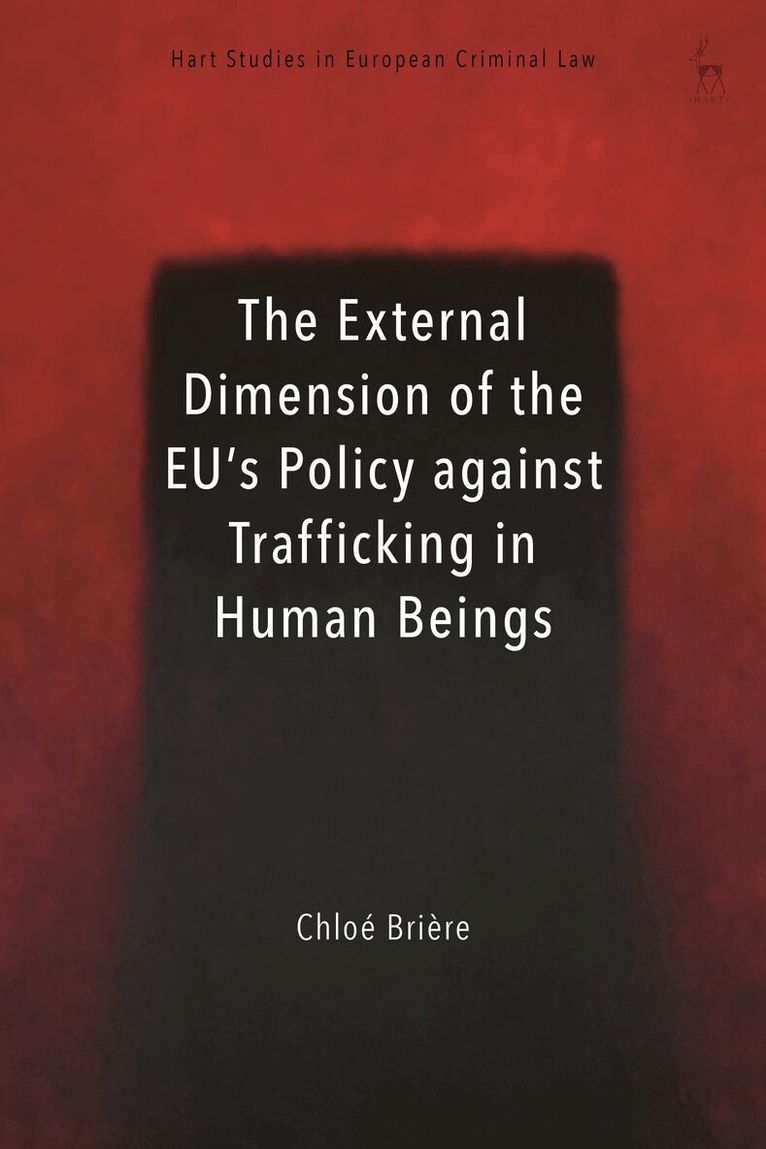
    External Dimension of the EU’s Policy against Trafficking in Human Beings

    AvChloé Brière,Anne Weyembergh

    Inbunden, Engelska, 2021

    Del i serien Hart Studies in European Criminal Law

    438 kr

    Skickas . Fri frakt över 249 kr.

    Fler format och utgåvor

    E-bok

    591 kr

    E-bok

    611 kr

    Häftad

    568 kr

    Beskrivning

    This book explores the external dimension of the ambitious EU policy on human trafficking. Through this policy the EU institutions and Member States promote the eradication of human trafficking and support, to that end, cooperation with their partners, being third States or international organisations. Analysing the unilateral and multilateral mechanisms the EU uses to achieve these aims, the book questions whether the EU’s external response to human trafficking addresses it in all its dimensions, and whether it does so in a coherent way. As a case study, the book explores the cooperation of the EU with countries of the Western Balkans, which constitutes a specific unilateral mechanism. The analysis of the multilateral mechanisms covers the cooperation of the EU with key international and regional organisations combating human trafficking, including but not limited to the Council of Europe or the United Nations Office on Drugs and Crime. The book also examines the impact of the evolution of migration flows and the increasing reliance of military tools on the EU’s response to human trafficking.

    Produktinformation

    • Utgivningsdatum:2021-04-08
    • Mått:156 x 234 x 27 mm
    • Vikt:630 g
    • Format:Inbunden
    • Språk:Engelska
    • Serie:Hart Studies in European Criminal Law
    • Antal sidor:328
    • Förlag:Bloomsbury Publishing PLC
    • ISBN:9781509932825

    Utforska kategorier

    • Folkrätt inom Juridik

    Mer om författaren

    Chloé Brière is a Post-doctoral Research Fellow funded by the Belgian National Research Fund (FNRS) and a professor of EU law at the Centre for European Law of the Université libre de Bruxelles.

    Innehållsförteckning

    • Introduction: Setting the SceneI. Trafficking in Human Beings: A Global Challenge Impacting the EU A. Trafficking in Human Beings as a Global Challenge B. Trafficking in Human Beings as a Challenge for the EU II. Definition of Key Concepts A. Definition of Trafficking in Human Beings B. The EU’s Approach to Combating Trafficking in Human Beings C. The External Dimension of the EU’s Policy against Trafficking III. How to Analyse the External Dimension of the EU’s Policy against Trafficking IV. Structure of the Book 1. Framing the EU’s Policy and its External Competences I. Introduction II. The Identification of the Core Components of the EU’s Policy A. What is the Acquis? Presentation of a Concept B. What is the Acquis in the Field of the Prevention and Fight against Trafficking in Human Beings? C. Conclusions III. External Competences at the Disposal of the EU A. Specificities of the Union’s External Competences Linked to the Area of Freedom, Security and Justice B. The Union’s Relevant Express Competences C. The Union’s Relevant Implied Competences D. Constitutional Principles Guiding the EU’s External Counter-Trafficking Activities E. Conclusions IV. Conclusions on the EU’s Policy against Trafficking in Human Beings and its External Competences2. Unilateral Promotion of the EU’s Policy: Case Study of the Western Balkans I. Selection of the Case Study A. The Desire of the EU to Establish Close Cooperation in the Fight against Crime B. The SAP with the Western Balkans as the Selected Case Study II. Promotion of the Fight against Trafficking Via Soft Law III. Promotion of the Fight against Trafficking Via the Conclusion of Agreements A. Association Agreements B. Agreements with EU JHA Agencies C. Agreements Concluded by the EU Member States D. Conclusion IV. The Support of Regional Cooperation A. Regional Initiatives Promoting Police Cooperation B. Regional Initiatives Promoting Judicial Cooperation C. Regional Cooperation Among National Anti-Trafficking Coordinators D. Regional Cooperation as a Preparation for Accession V. Conclusions 3. Multilateral Promotion of the EU’s Policy I. Introduction II. The EU’s Commitment to Multilateralism III. Institutional Multilateralism: Identification of Relevant Actors A. Traditional Multilateral Actors: International and Regional Intergovernmental Organisations B. Non-Traditional Multilateral Actors: Private Actors C. A Tapestry Incomplete without Mentioning States D. Conclusion IV. Normative Interactions: The EU as a Norm-Taker or a Norm-Setter? A. Interactions Leading to a Common Approach and Objectives B. Consensus About the Objectives to be Pursued C. Interactions Leading to Consistent Standards D. Conclusion V. Multilateralism in Action: Coordination Mechanisms to Avoid Duplication of Efforts A. Internal Coordination Mechanisms in Large Organisations B. Bilateral and Multilateral Mechanisms Among Partners C. Importance of the Coordination and Cooperation Efforts VI. Conclusion 4. Limits of the EU’s Actions and Future Avenues for ResearchI. Addressing Trafficking in the Framework of a Renewed EU Migration Policy II. Militarisation of the Response to Trafficking in Human Beings A. The Mobilisation of CFSP Competences B. Trafficking in Armed Conflicts III. Conclusion A. Is the EU’s Response Coherent? B. Is the EU’s Response Comprehensive? C. The Accountability Gaps