• Fri frakt över 249 kr
  • •
  • Snabba leveranser
  • •
  • Billiga böcker
Kundservice

Du är på sajten för privatpersoner.

Företag, bibliotek eller offentlig verksamhet?

Du handlar på classic.bokus.com, där alla dina funktioner finns intakta.
Till classic.bokus.com
Bokus logotyp. Gå till startsidan.
  • Erbjudanden
  • Nyheter
  • Student
  • Topplistor
  • Barn & ungdom
  • Bokus Play
  • E-böcker
  • Pocketböcker
  • Spel & pussel

10% rabatt på allt med kod: NYSTART10 →

Sidfot

Mina sidor

    Hjälp

    • Kundservice
    • Vanliga frågor och svar
    • Frakt och leverans
    • Retur vid ångerrätt
    • Reklamera vara
    • Betalning
    • Köpvillkor
    • Allmänna villkor
    • Information om webbplatsens tillgänglighet

    Om Bokus

    • Om oss
    • Pressrum
    • För studenter
    • För företag
    • För bibliotek och offentlig verksamhet
    • För leverantörer
    • Hållbarhet

    Populärt

    • Aktuella erbjudanden
    • Presentkort
    • Studentlitteratur
    • Nya böcker
    • Topplistor
    • Signerade böcker
    • Engelska böcker

    Inspiration

    • Boktips
    • BookTok
    • Populära bokserier
    • Barnbokskaraktärer
    • Populära författare
    Logotyp för Bokus
    Följ oss på Facebook (extern länk)Följ oss på Instagram (extern länk)Följ oss på YouTube (extern länk)Följ oss på TikTok (extern länk)
    bokus @ CookiesAnpassa cookiesIntegritetspolicyKöpvillkor
    Till Citymail hemsida (extern länk)Till Budbee hemsida (extern länk)Till Postnord hemsida (extern länk)Till Schenker hemsida (extern länk)Till Early Bird hemsida (extern länk)Till Walleys hemsida (extern länk)
    1. Juridik
    2. Internationell rätt
    3. Folkrätt

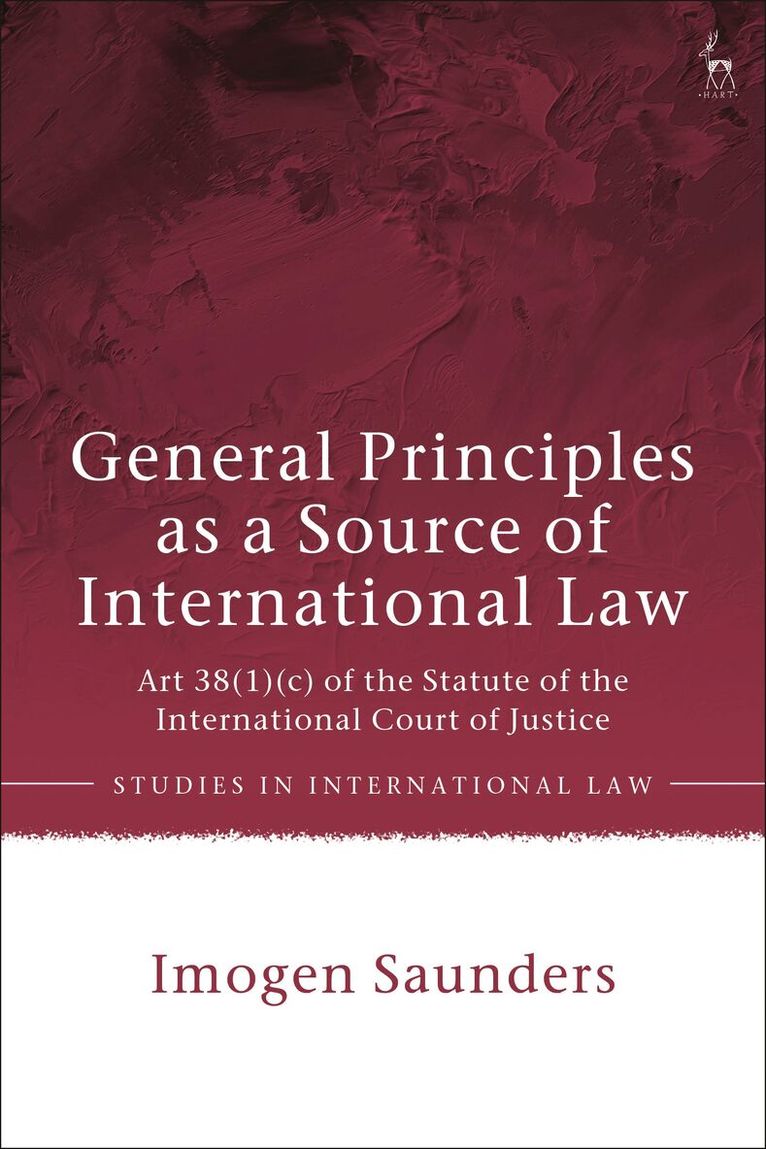
    General Principles as a Source of International Law

    Art 38(1)(c) of the Statute of the International Court of Justice

    AvImogen Saunders

    Inbunden, Engelska, 2021

    Del i serien Studies in International Law

    1 283 kr

    Beställningsvara. Skickas inom 10-15 vardagar. Fri frakt över 249 kr.

    Fler format och utgåvor

    E-bok

    625 kr

    E-bok

    625 kr

    Häftad

    581 kr

    Beskrivning

    This book provides a comprehensive analysis of an often neglected, misunderstood and maligned source of international law. Article 38(1)(c) of the Statute of the International Court of Justice sets out that the Court will apply the ‘general principles of law recognized by civilized nations’. This source is variously lauded and criticised: held up as a panacea to all international law woes or denied even normative validity. The contrasting views and treatments of General Principles stem from a lack of a model of the source itself. This book provides that model, offering a new and rigorous understanding of Article 38(1)(c) that will be of immense value to scholars and practitioners of international law alike. At the heart of the book is a new tetrahedral framework of analysis - looking to function, type, methodology and jurisprudential legitimacy. Adopting an historical approach, the book traces the development of the source from 1875 to 2019, encompassing jurisprudence of the Permanent Court of International Justice and the International Court of Justice as well as cases from international criminal tribunals, the International Criminal Court and the World Trade Organisation. The book argues for precision in identifying cases that actually apply General Principles, and builds upon these ‘proper use’ cases to advance a comprehensive model of General Principles, advocating for a global approach to the methodology of the source.

    Produktinformation

    • Utgivningsdatum:2021-02-25
    • Mått:156 x 234 x 18 mm
    • Vikt:599 g
    • Format:Inbunden
    • Språk:Engelska
    • Serie:Studies in International Law
    • Antal sidor:304
    • Förlag:Bloomsbury Publishing PLC
    • ISBN:9781509936069

    Utforska kategorier

    • Folkrätt inom Juridik

    Mer om författaren

    Imogen Saunders is Lecturer in Law at the Australian National University, Canberra.

    Recensioner i media

    This is a book that is far, far more than an examination of one paragraph of a section of the Statute of the International Court of Justice. It is a book that examines the very nature of international law and, beyond that, of law itself. It is a stunning work in the finest traditions of the greatest international law thinkers.

    Innehållsförteckning

    • Summary of ContentsIntroduction 1. A Framework for Analysing General Principles I. Introduction: A Tetrahedral Framework II. Jurisprudential Legitimacy: A Brief Consideration of Positivism and Natural Law III. Function: A Binding Source of International Law? IV. Type V. Methodology VI. Conclusion 2. History of Article 38(1)(c) I. Introduction II. Development Pre-World War I III. Development Post-World War I IV. Article 38(1)(c) and the PCIJ V. Conclusion: Applying the Tetrahedral Framework 3. Consideration of Article 38(1)(c) by the PCIJ I. Introduction: Separating the Wheat from the Chaff II. Cases in Chronological Order 4. Development of Article 38(1)(c): 1945–91 I. Introduction II. Historical Development: PCIJ to ICJIII. Cases IV. Conclusion 5. Development of Article 38(1)(c) by the ICJ: 1992–2019 I. Introduction II. Cases (Except for the Separate and Dissenting Opinions of Judges Weeramantry and Cançado Trindade) III. Contributions of Judge Weeramantry IV. Contributions of Judge Cançado-TrindadeV. Conclusion 6. General Principles in Other Courts and Tribunals I. Introduction II. International Criminal Tribunals III. International Economic Law IV. International Tribunal for the Law of the Sea V. Regional Bodies VI. Conclusion 7. Commentary in Context I. Article 38(1)(c) as a Norm-Creating Source of International Law II. The Rule/Principle Distinction III. Judicial Discretion IV. Where are General Principles Drawn From? V. Content of General Principles 8. Global General Principles I. Types of Legal Systems II. Perspectives on General Principles III. The Comparativist’s Warning IV. Global General Principles in the Information Age9. A Model of General Principles I. A Tale of Two Sources: Illegitimate Duality II. General Principles and Legitimate Duality III. The Future of General Principles