• Fri frakt över 249 kr
  • •
  • Snabba leveranser
  • •
  • Billiga böcker
Kundservice

Du är på sajten för privatpersoner.

Företag, bibliotek eller offentlig verksamhet?

Du handlar på classic.bokus.com, där alla dina funktioner finns intakta.
Till classic.bokus.com
Bokus logotyp. Gå till startsidan.
  • Erbjudanden
  • Nyheter
  • Student
  • Topplistor
  • Barn & ungdom
  • Bokus Play
  • E-böcker
  • Pocketböcker
  • Spel & pussel

10% rabatt på allt med kod NYSTART10 →

Sidfot

Mina sidor

    Hjälp

    • Kundservice
    • Vanliga frågor och svar
    • Frakt och leverans
    • Retur vid ångerrätt
    • Reklamera vara
    • Betalning
    • Köpvillkor
    • Allmänna villkor
    • Information om webbplatsens tillgänglighet

    Om Bokus

    • Om oss
    • Pressrum
    • För studenter
    • För företag
    • För bibliotek och offentlig verksamhet
    • För leverantörer
    • Hållbarhet

    Populärt

    • Aktuella erbjudanden
    • Presentkort
    • Studentlitteratur
    • Nya böcker
    • Topplistor
    • Signerade böcker
    • Engelska böcker

    Inspiration

    • Boktips
    • BookTok
    • Populära bokserier
    • Barnbokskaraktärer
    • Populära författare
    Logotyp för Bokus
    Följ oss på Facebook (extern länk)Följ oss på Instagram (extern länk)Följ oss på YouTube (extern länk)Följ oss på TikTok (extern länk)
    bokus @ CookiesAnpassa cookiesIntegritetspolicyKöpvillkor
    Till Citymail hemsida (extern länk)Till Budbee hemsida (extern länk)Till Postnord hemsida (extern länk)Till Schenker hemsida (extern länk)Till Early Bird hemsida (extern länk)Till Walleys hemsida (extern länk)
    1. Juridik
    2. Särskilda rättsområden
    3. Författningsrätt och förvaltningsrätt

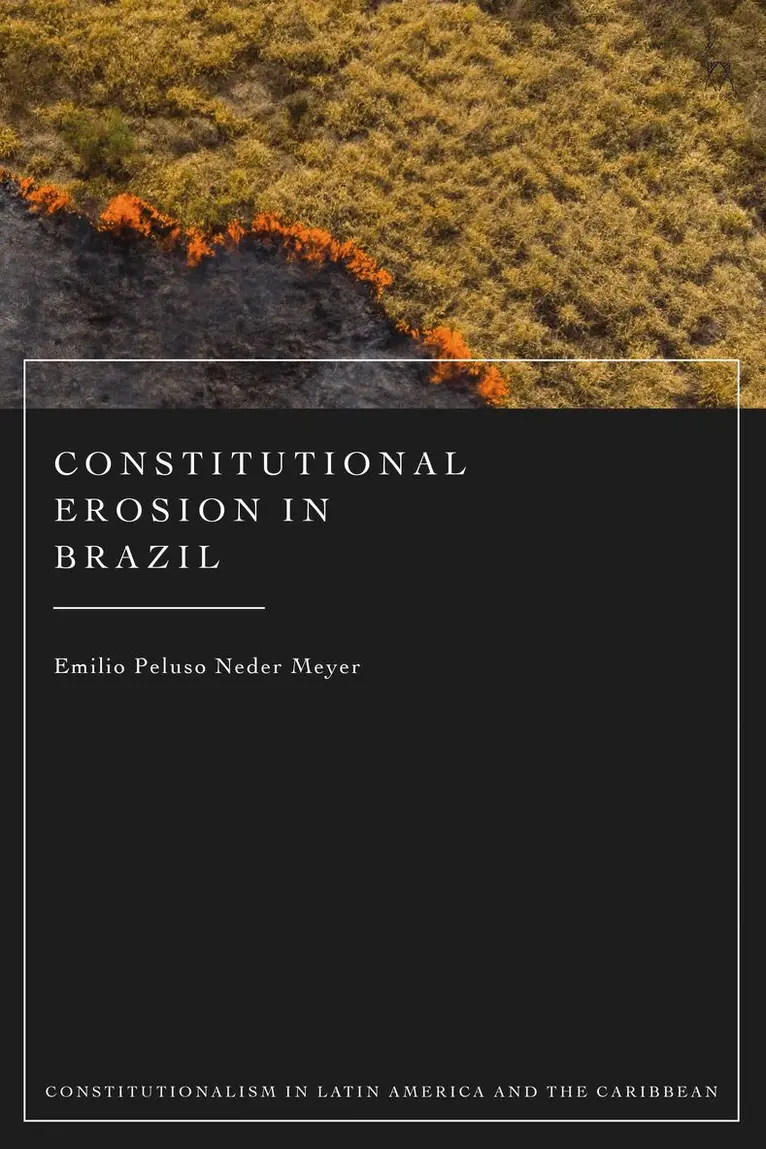
    Constitutional Erosion in Brazil

    AvEmilio Peluso Neder Meyer,Carlos Bernal

    Inbunden, Engelska, 2021

    Del i serien Constitutionalism in Latin America and the Caribbean

    965 kr

    Beställningsvara. Skickas inom 10-15 vardagar. Fri frakt över 249 kr.

    Fler format och utgåvor

    E-bok

    472 kr

    E-bok

    472 kr

    Häftad

    441 kr

    Beskrivning

    This book provides a fascinating analysis of a single jurisdiction, Brazil, and accounts for both the successes and the failures of its most recent constitutional project, inaugurated by the Constitution of 1988.It sets out the following aspects of the constitutional development and erosion:- the different phases of the promised transition from military rule to a ‘social-democratic constitutionalism’; - the obstacles to democratisation derived from the absence of true institutional reforms in the judicial branch and in the civil-military relationship; - the legal and social practices which maintained a structure that obstructed the emergence of an effective social-democracy, such as the neoliberal pattern, the acceptance in the political field of unlawful organisations, such as the milícias, and the way the digital revolution has been harming the formation of democratic sovereignty. Situating Brazil in the global context of the revival of authoritarianism, it details the factors which are common to the third wave of democratisation reflux. Accounting for those aspects, particular to the Brazilian jurisdiction, it shows that there is a tension in the Brazilian constitution.On the one hand, such constitutionalism was renewed by democratic pressure on governments to undertake social politics since 1988. On the other hand, it retained authoritarian practices through the hands of diverse institutions and political actors.By exploring the ideas of constitutional erosion and collapse, as well as democratic, social and digital constitutionalism, the book presents a comparative analysis of Brazil and other jurisdictions, including the United States, South Africa, and Peru.

    Produktinformation

    • Utgivningsdatum:2021-08-26
    • Mått:156 x 234 x 23 mm
    • Vikt:531 g
    • Format:Inbunden
    • Språk:Engelska
    • Serie:Constitutionalism in Latin America and the Caribbean
    • Antal sidor:320
    • Förlag:Bloomsbury Publishing PLC
    • ISBN:9781509941957

    Utforska kategorier

    • Författningsrätt och förvaltningsrätt inom Juridik
    • Komparativ rätt inom Juridik

    Mer om författaren

    Emilio Peluso Neder Meyer is a Constitutional Law Professor at the Federal University of Minas Gerais, Brazil, and the Director of the Study Center on Transitional Justice.

    Recensioner i media

    A comprehensive, in-depth account and analysis of the dramatic erosion of constitutional democracy in Brazil – required reading not just for anyone interested in Brazil, but for anyone interested in the spread of illiberal, authoritarian populism across South America and around the world today. Emilio Peluso Neder Meyer identifies brilliantly the causes and manifestations of constitutional crisis presided over by Bolsonaro’s government, and traces them, among other things, to tensions between the democratic and authoritarian ingredients of the Brazilian Constitution.

    Innehållsförteckning

    • Introduction: Defining Brazil’s Constitutional Erosion I. What is a Constitutional Crisis? II. Constitutional Erosion III. Constitutional Crisis and Constitutional Erosion: A Comparative Assessment IV. Brazil under Bolsonaro: Soldiers as Politicians V. Armed Forces and Politics: Brazil and Beyond VI. The Structure of this Book 1. Transitional Constitutionalism: Judicial and Military Attempts at Controlling a TransitionI. The Brazilian Dictatorship of 1964–1985 Juridical Apparatus II. Transitional Justice Processes Shaping Constitutionalism III. Amnesty and the Federal Supreme Court IV. The 1964–1985 Dictatorship on Trial V. Interactions between Brazilian Institutions and the Inter-American Court of Human Rights VI. The Military in Brazil: From Impunity to Politics 2. Social-Democratic Constitutionalism: Neoliberal Unconstitutional Politics and Socio-Economic Rights I. Authoritarianism and Neoliberalism II. Constitutions and Economic Power III. Transformative Constitutionalism and Transformative Justice IV. Socio-economic Rights, Constitutionalism and Transition in South Africa V. Socio-economic Rights, Constitutionalism and Transition in Brazil VI. Neoliberalism and Transitional Constitutionalism 3. Institutional and Personal Judicial Guarantees: Judges, Inequality and PoliticsI. Against the Transition: The Lack of Efficient Judicial Institutional Reforms II. Corporativist GuaranteesIII. Operation Car Wash: Taming Politics through Judicial Discourse IV. The Personification of Operation Car Wash V. From the Bench to Politics VI. Individualities v Institutional Behaviour 4. Judges and Courts Destabilising Constitutionalism I. Deputies and Senators in the Federal Supreme Court II. The Judicial Oversight of an Impeachment III. Ruling on Presumption of Innocence: Balancing and Unbalancing Constitutional RightsIV. Imprisoning the Ex-President V. Constitutional Courts and Political Instability VI. Unstable Constitutionalism in Brazil 5. Subverting the Rule of Law: The Military vs the Milícias – Eroding Brazilian Constitutionalism I. The Military in Brazilian Post-1988 DemocracyII. Soldiers Returning to Politics III. Militarised Public Security IV. Supporting Elections via Milícias V. Constitutional Erosion or Blatant Coups? A Comparative Assessment VI. Fuelling Attacks on Constitutional Democracy 6. Moderating Powers? Military and Judges in Brazilian Constitutionalism I. An Overview of the Moderating Power II. Authoritarianism: A Substitute for the Moderating Power III. The Ghost of the Moderating Power and the Military Elite IV. 1964–1985 – Suspension and Return of the Moderating Model V. Moderating Power Transfer: From the Military to the Judiciary and Back againVI. A Case of Weak Democracy Syndrome 7. Digital Constitutionalism: WhatsApp Elections and Fake News I. Capitalism, New Technologies and Democracy II. Surveillance Capitalism and Instrumentarian Power III. Politics and Network Propaganda IV. Fake News, Authoritarianism and Political Choices V. WhatsApp, Elections and Misinformation VI. Controlling Fake News in Brazil 8. Constitutional Resilience against Erosion: Responses Provided for by the 1988 Constitution I. Coalitional Presidentialism and its Misuse II. The Constant Threat of Impeachment III. Capturing State Institutions and Fighting the Media IV. Parliamentary Control and the Abuse of Executive Orders V. On Federalism: The Governors’ Reactions VI. ‘I Will Interfere!’ The Federal Supreme Court Fights Back