Häftad, Engelska, 2022
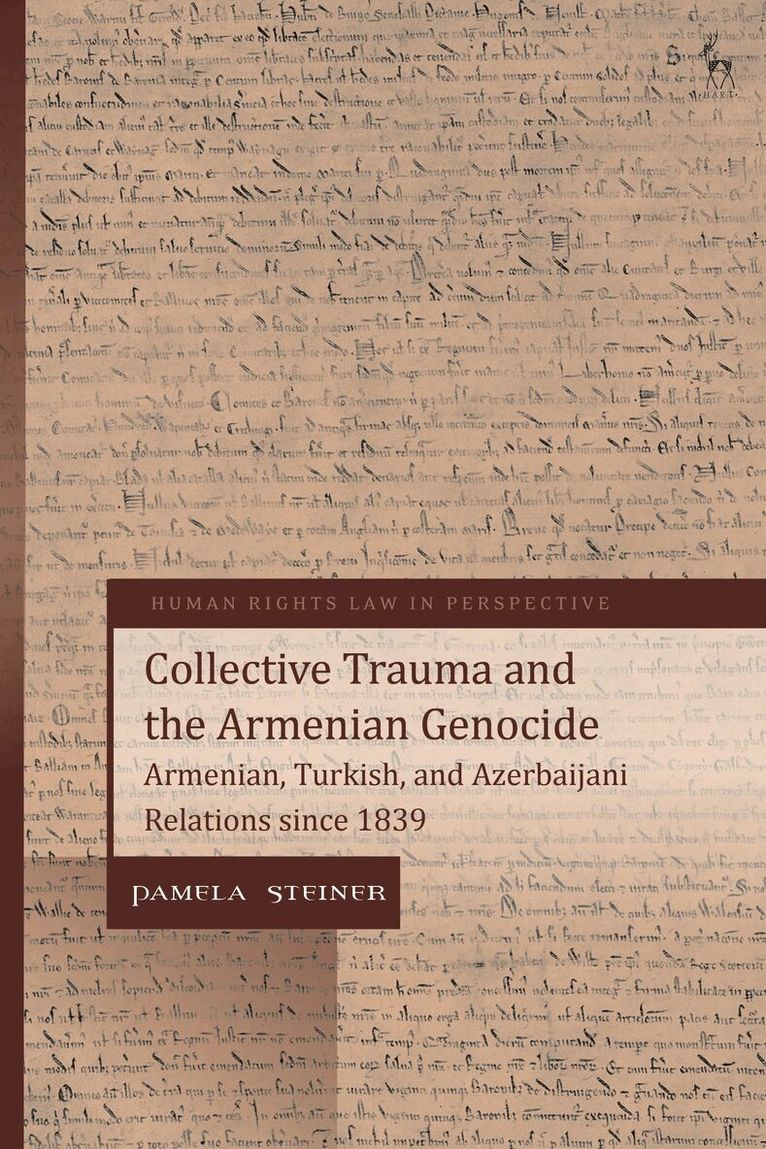
Collective Trauma and the Armenian Genocide
Armenian, Turkish, and Azerbaijani Relations since 1839
Av Pamela Steiner, Colin Harvey
Del i serien Human Rights Law in Perspective
804 kr
Beställningsvara. Skickas inom 10-15 vardagar. Fri frakt över 249 kr.
Beskrivning
Produktinformation
- Utgivningsdatum: 2022-09-22
- Mått: 156 x 234 x 20 mm
- Vikt: 559 g
- Format: Häftad
- Språk: Engelska
- Serie: Human Rights Law in Perspective
- Antal sidor: 368
- Förlag: Bloomsbury Publishing PLC
- ISBN: 9781509943135
Utforska kategorier
Mer om författaren
Pamela Steiner is Senior Fellow, FXB Center for Health and Human Rights, Harvard University.
Recensioner i media
The author’s statement that 'I decided to write this book when I believed I had a fresh and useful perspective to share,' perfectly encapsulates the importance and value of the book you are holding in your hands. Steiner examines, perhaps for the first time, the role collective trauma played among three peoples – Armenians, Azerbaijanis and Turks – and in their mutual relations. She shows how this collective trauma and those that followed are not only the product of their yet unresolved conflicts, but also serve as major stumbling blocks for a better future in the region. For them, the Armenian genocide is like an inescapable psychic maze of trauma, one in which they are trapped and unable to see beyond. If there is indeed a way out of this labyrinth, Steiner's work will serve as a torch, lighting the way.
Betyg & recensioner
0 recensioner
Inga recensioner tillgängliga.