• Fri frakt över 249 kr
  • •
  • Snabba leveranser
  • •
  • Billiga böcker
Kundservice

Du är på sajten för privatpersoner.

Företag, bibliotek eller offentlig verksamhet?

Du handlar på classic.bokus.com, där alla dina funktioner finns intakta.
Till classic.bokus.com
Bokus logotyp. Gå till startsidan.
  • Erbjudanden
  • Nyheter
  • Student
  • Topplistor
  • Barn & ungdom
  • Bokus Play
  • E-böcker
  • Pocketböcker
  • Spel & pussel

10% rabatt på allt med kod: NYSTART10 →

Sidfot

Mina sidor

    Hjälp

    • Kundservice
    • Vanliga frågor och svar
    • Frakt och leverans
    • Retur vid ångerrätt
    • Reklamera vara
    • Betalning
    • Köpvillkor
    • Allmänna villkor
    • Information om webbplatsens tillgänglighet

    Om Bokus

    • Om oss
    • Pressrum
    • För studenter
    • För företag
    • För bibliotek och offentlig verksamhet
    • För leverantörer
    • Hållbarhet

    Populärt

    • Aktuella erbjudanden
    • Presentkort
    • Studentlitteratur
    • Nya böcker
    • Topplistor
    • Signerade böcker
    • Engelska böcker

    Inspiration

    • Boktips
    • BookTok
    • Populära bokserier
    • Barnbokskaraktärer
    • Populära författare
    Logotyp för Bokus
    Följ oss på Facebook (extern länk)Följ oss på Instagram (extern länk)Följ oss på YouTube (extern länk)Följ oss på TikTok (extern länk)
    bokus @ CookiesAnpassa cookiesIntegritetspolicyKöpvillkor
    Till Citymail hemsida (extern länk)Till Budbee hemsida (extern länk)Till Postnord hemsida (extern länk)Till Schenker hemsida (extern länk)Till Early Bird hemsida (extern länk)Till Walleys hemsida (extern länk)
    1. Juridik
    2. Särskilda rättsområden
    3. Författningsrätt och förvaltningsrätt
    4. Mänskliga och medborgerliga rättigheter

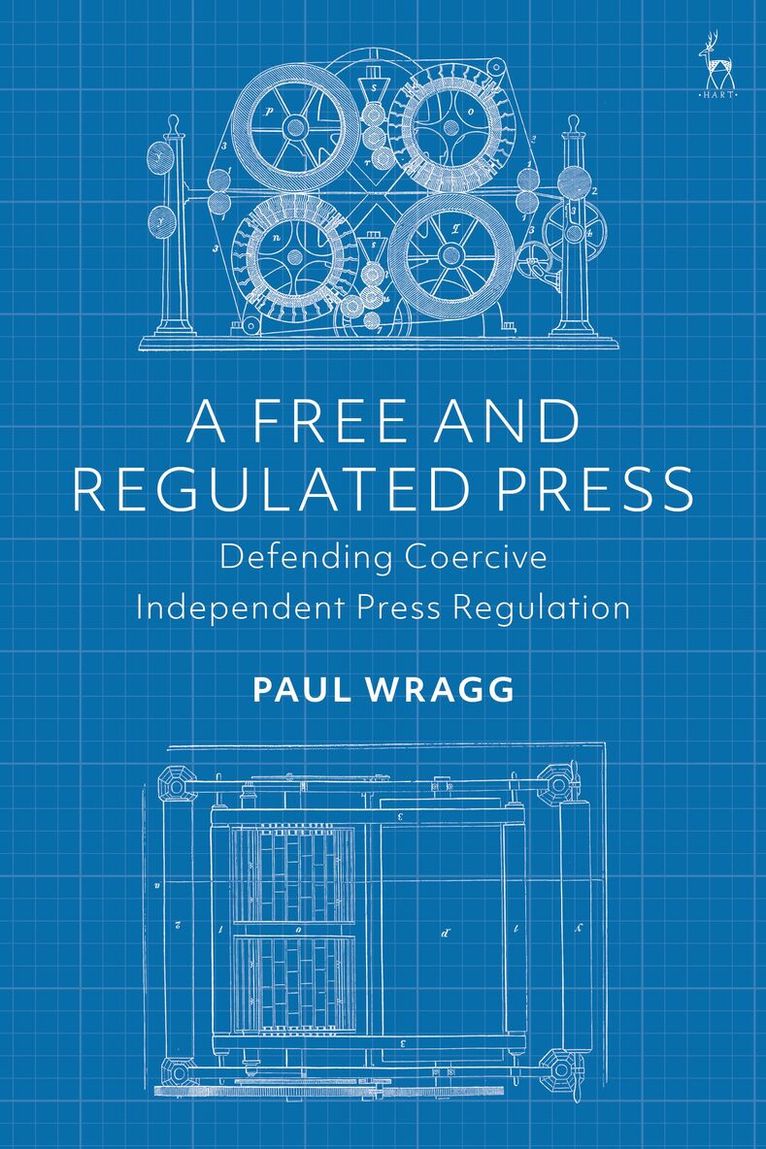
    Free and Regulated Press

    Defending Coercive Independent Press Regulation

    AvPaul Wragg

    Häftad, Engelska, 2021

    491 kr

    Beställningsvara. Skickas inom 10-15 vardagar. Fri frakt över 249 kr.

    Fler format och utgåvor

    Inbunden

    1 219 kr

    E-bok

    528 kr

    E-bok

    528 kr

    Beskrivning

    This thought-provoking book provides a systematic, philosophically-grounded reconceptualisation of press freedom and press regulation. In a major departure from orthodox norms, the book argues that press freedom and coercive independent press regulation are not mutually exclusive; that newspapers could be made to compensate their victims, through regulation, without jeopardising their free speech rights; that their perceived public watchdog status does not exempt them; and, ultimately, that mandatory press regulation is not unconstitutional. In doing so, the book questions our most deeply-held, intuitive beliefs about the press and its role in society.Why do we say the printed press has a duty to act as a public watchdog when there is no legally enforceable apparatus by which to ensure it does? Why does government constantly recommend that the press regulate itself when history shows this model always fails? Why do victims of press malfeasance continue to suffer needlessly? By deconstructing the accepted view of press freedom and mandatory regulation, this book shows that both are deeply misunderstood. The prevailing notion that the press must serve the public is an empty relic of Victorian ideology that is both philosophically incoherent and legally unjustifiable. The press is obliged to make good, not do good.

    Produktinformation

    • Utgivningsdatum:2021-11-25
    • Mått:150 x 232 x 18 mm
    • Vikt:480 g
    • Format:Häftad
    • Språk:Engelska
    • Antal sidor:328
    • Förlag:Bloomsbury Publishing PLC
    • ISBN:9781509943760

    Utforska kategorier

    • Mänskliga och medborgerliga rättigheter inom Juridik
    • Underhållning och media: Juridik inom Juridik

    Mer om författaren

    Paul Wragg is Professor of Law at the University of Leeds.

    Recensioner i media

    The merits of this volume are numerous. The “liberation” of the press from its public interest obligations promotes purity of doctrine, which can focus individual legal systems even more on the freedom of debate in public affairs. At least as important is the parallel statement that the reader has a responsibility to be properly informed and cannot expect it from a press regulatory body, and that the democratic public sphere is thus made up of the efforts of many participants readers, advertisers, journalists, and publishers. The recognition of the multifaceted nature of the “freedom of the press” is also an important insight, as a result of which it may be worth rethinking some of the theoretical foundations of the freedom of the press. In addition, the volume argues convincingly that “coercive”—that is, statutory—regulation in the field of the press is not incompatible with protecting freedom of the press. The author thus successfully shakes up “dead dogmas”. Mill himself would be proud.

    Innehållsförteckning

    • PART 1RATIONALE1. Unity in Press Freedom Theory I. Introduction II. The Modern View III. The Teleological View in its Historical Context IV. Conclusion 2. Division in Press Regulatory Theory I. Introduction II. Press Regulation in Practice III. The Ideological Divide Over Press Regulation IV. The Press Reform Debate and its Discontents V. Conclusion PART 2RIGHT3. Duty I. Introduction II. Duty as a Legal Claim III. Duty as a Moral Justification IV. Conclusion 4. Responsibility I. Introduction II. Burdens for Benefits III. Responsibilities Curbing Misuse of Power IV. Professionalism and the Dualism of Responsibility V. Conclusion 5. Accountability I. Introduction II. Mill’s Argument from Truth III. Liberty, Rationality, and the Press IV. The Accountability Model Outlined V. Liberty and the Press VI. Conclusion PART 3REGULATION6. Society I. Introduction II. The Meaning of Accuracy III. The Harm of Inaccuracy IV. The Limits of Accuracy Regulation V. Conclusion 7. Victims I. Introduction II. Content III. Conduct IV. Public Interest Expression V. Conclusion 8. Readers I. Introduction II. Consumer Protection III. Autonomy and Automatons IV. Conclusion PART 4REALISATION9. How? I. Introduction II. Terminal Failings in the Contractual Model III. Statutory Regulation, Press Freedom, and Pareidolia IV. Sanctions V. Conclusion 10. Why? I. Introduction II. Why Regulate the Press? III. Why Regulate the Press? IV. Why Not?