• Fri frakt över 249 kr
  • •
  • Snabba leveranser
  • •
  • Billiga böcker
Kundservice

Du är på sajten för privatpersoner.

Företag, bibliotek eller offentlig verksamhet?

Du handlar på classic.bokus.com, där alla dina funktioner finns intakta.
Till classic.bokus.com
Bokus logotyp. Gå till startsidan.
  • Erbjudanden
  • Nyheter
  • Student
  • Topplistor
  • Barn & ungdom
  • Bokus Play
  • E-böcker
  • Pocketböcker
  • Spel & pussel

10% rabatt på allt med kod NYSTART10 →

Sidfot

Mina sidor

    Hjälp

    • Kundservice
    • Vanliga frågor och svar
    • Frakt och leverans
    • Retur vid ångerrätt
    • Reklamera vara
    • Betalning
    • Köpvillkor
    • Allmänna villkor
    • Information om webbplatsens tillgänglighet

    Om Bokus

    • Om oss
    • Pressrum
    • För studenter
    • För företag
    • För bibliotek och offentlig verksamhet
    • För leverantörer
    • Hållbarhet

    Populärt

    • Aktuella erbjudanden
    • Presentkort
    • Studentlitteratur
    • Nya böcker
    • Topplistor
    • Signerade böcker
    • Engelska böcker

    Inspiration

    • Boktips
    • BookTok
    • Populära bokserier
    • Barnbokskaraktärer
    • Populära författare
    Logotyp för Bokus
    Följ oss på Facebook (extern länk)Följ oss på Instagram (extern länk)Följ oss på YouTube (extern länk)Följ oss på TikTok (extern länk)
    bokus @ CookiesAnpassa cookiesIntegritetspolicyKöpvillkor
    Till Citymail hemsida (extern länk)Till Budbee hemsida (extern länk)Till Postnord hemsida (extern länk)Till Schenker hemsida (extern länk)Till Early Bird hemsida (extern länk)Till Walleys hemsida (extern länk)
    1. Juridik
    2. Särskilda rättsområden
    3. Författningsrätt och förvaltningsrätt

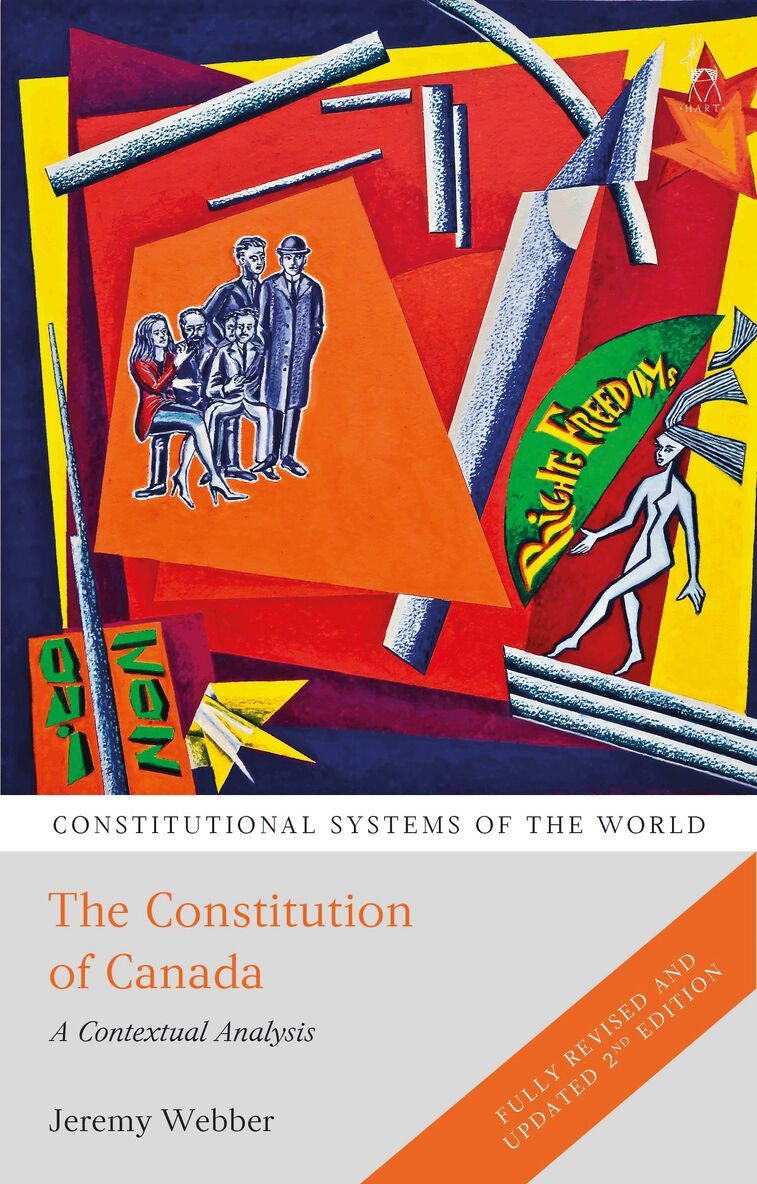
    Constitution of Canada

    A Contextual Analysis

    AvJeremy Webber,Peter Leyland

    Häftad, Engelska, 2021

    Del i serien Constitutional Systems of the World

    377 kr

    Beställningsvara. Skickas inom 10-15 vardagar. Fri frakt över 249 kr.

    Fler format och utgåvor

    E-bok

    403 kr

    E-bok

    403 kr

    Beskrivning

    The first edition of this text quickly established itself as the classic introduction to the Canadian constitution. Setting it in its historical context, noting especially the complex interaction of national and regional societies, it shows how the constitution continues to morph and shape itself. These changes are explored through key constitutional themes: democracy; parliamentarism; the rule of law; federalism; human rights; and Indigenous rights, and describes the country that has resulted from the interplay of these themes.Clarity of expression and explanation, which never veers into simplicity, combined with the author’s expertise, makes this the ideal starting point for the student or comparative lawyer keen to gain a strong understanding of how Canadian democracy and government works.

    Produktinformation

    • Utgivningsdatum:2021-07-29
    • Mått:138 x 214 x 18 mm
    • Vikt:380 g
    • Format:Häftad
    • Språk:Engelska
    • Serie:Constitutional Systems of the World
    • Antal sidor:296
    • Upplaga:2
    • Förlag:Bloomsbury Publishing PLC
    • ISBN:9781509947171

    Utforska kategorier

    • Författningsrätt och förvaltningsrätt inom Juridik

    Mer om författaren

    Jeremy Webber is Professor of Law, University of Victoria, British Columbia, Canada.

    Recensioner i media

    This book is an umbrella of fundamental principles, covering flexibility, accommodation and negotiation necessary to enable members of a constitutional community who may disagree on issues but who want to remain bound together within a country and society. Impressive!

    Innehållsförteckning

    • 1. Introduction 2. The Making of the Canadian Constitution I. Pre-confederation Canada A. Founding of British North America B. Conflict, Rebellion, and Responsible Government II. Post-confederation Canada A. Territorial Extension B. From Colony to Nation C. Canada’s Economic Evolution D. Provincialism, Regionalism, and Canadian Nationhood E. Federalism and the French Canadians F. Multicultural Canada G. Indigenous Rights III. The Contemporary Canadian Constitution: Patriation and its Aftermath A. Constitution Act 1982 B. Negotiations after Patriation C. 1995 Referendum on Quebec Sovereignty and the Secession Reference D. ‘Administrative Measures’ IV. Conclusion Selected Reading 3. The Legislative Power I. Parliamentary Sovereignty A. Principle B. Internal Limitations on Parliamentary SovereigntyC. Limitation (or Abandonment?) of Parliamentary Sovereignty II. Canadian Parliaments A. Parliament of Canada B. Provincial Legislatures C. Other Legislative Bodies III. The Legislative Process IV. Parliamentary Office-holders V. Parliamentary Privileges and Immunities VI. Public Participation in the Legislative Process VII. Elections VIII. Reform of the Legislative Process IX. Conclusion Selected Reading 4. The Executive Power I. Responsible Government A. Principle B. Formation of Governments C. Responsible Government as a Constitutional Convention II. Structure of the Executive A. Governor General and Lieutenant Governors B. Prime Minister and Cabinet C. Ministers and their Departments D. Government Agencies, Crown Corporations, and Administrative Tribunals III. The Rule of Law A. Legal Foundations of Executive Authority B. Executive Privileges and Immunities C. Institutionalization of the Rule of Law IV. Conclusion 0Selected Reading 5. The Judiciary I. Court StructureA. Superior Courts B. Federal Court C. Provincial Courts D. Administrative Tribunals E. Supreme Court of CanadaII. Judicial Independence A. Constitution Act 1867, Sections 99 and 100 B. Constitution Act 1982, Section 11(d) C. Implied Principle of Judicial Independence III. Supreme Court of Canada as a Constitutional Court A. References and Justiciability B. Parties, Intervenors, Representation, and Evidence C. Constitutional Remedies and Stare Decisis IV. Conclusion Selected Reading 6. Federalism I. Visions of the Canadian Federation A. Canada as a Quasi-FederationB. Compact versus Statute? C. Quebec’s Distinct Society versus the Equality of the Provinces D. Comparisons to the European Union E. Conclusion II. Principles of Interpretation of the Division of Powers III. Federal and Provincial Powers A. Peace, Order, and Good Government B. ‘Property and Civil Rights’ and ‘Matters of a Merely Local or Private Nature’ C. Federal Economic Powers D. Criminal Law Power E. Social LegislationF. Citizenship, International Affairs, and Defence G. Provincial Authority Over Public Lands H. Fiscal Relations, Taxation, Equalization, and the Spending Power IV. Interprovincial Conflicts V. Cooperative FederalismVI. Conclusion Selected Reading 7. Rights and Freedoms I. The Universe of Rights Protections in Canada A. Legislative Support of Rights B. Courts and Rights before the Charter C. Executive Enforcement of RightsII. Canadian Charter of Rights and Freedoms A. Application and Structure B. Substance of Rights and Freedoms under the Charter III. Conclusion Selected Reading 8. Indigenous Peoples I. Constitution Act 1982, Section 35 A. Adoption of Section 35 B. Indigenous Rights to Land and Resources C. Effect of Section 35 D. Haida and the Turn Towards Interim Measures II. Federal/Provincial Authority, Fiduciary Obligations, and the Honour of the Crown A. Constitutional Authority with Respect to Indigenous Peoples B. Fiduciary Duties and the Honour of the Crown III. Treaties IV. Self-government V. Resurgence of Indigenous Jurisdictions VI. Conclusion Selected Reading 9. Conclusion Selected Reading