• Fri frakt över 249 kr
  • •
  • Snabba leveranser
  • •
  • Billiga böcker
Kundservice

Du är på sajten för privatpersoner.

Företag, bibliotek eller offentlig verksamhet?

Du handlar på classic.bokus.com, där alla dina funktioner finns intakta.
Till classic.bokus.com
Bokus logotyp. Gå till startsidan.
  • Erbjudanden
  • Nyheter
  • Student
  • Topplistor
  • Barn & ungdom
  • Bokus Play
  • E-böcker
  • Pocketböcker
  • Spel & pussel

10% rabatt på allt med kod NYSTART10 →

Sidfot

Mina sidor

    Hjälp

    • Kundservice
    • Vanliga frågor och svar
    • Frakt och leverans
    • Retur vid ångerrätt
    • Reklamera vara
    • Betalning
    • Köpvillkor
    • Allmänna villkor
    • Information om webbplatsens tillgänglighet

    Om Bokus

    • Om oss
    • Pressrum
    • För studenter
    • För företag
    • För bibliotek och offentlig verksamhet
    • För leverantörer
    • Hållbarhet

    Populärt

    • Aktuella erbjudanden
    • Presentkort
    • Studentlitteratur
    • Nya böcker
    • Topplistor
    • Signerade böcker
    • Engelska böcker

    Inspiration

    • Boktips
    • BookTok
    • Populära bokserier
    • Barnbokskaraktärer
    • Populära författare
    Logotyp för Bokus
    Följ oss på Facebook (extern länk)Följ oss på Instagram (extern länk)Följ oss på YouTube (extern länk)Följ oss på TikTok (extern länk)
    bokus @ CookiesAnpassa cookiesIntegritetspolicyKöpvillkor
    Till Citymail hemsida (extern länk)Till Budbee hemsida (extern länk)Till Postnord hemsida (extern länk)Till Schenker hemsida (extern länk)Till Early Bird hemsida (extern länk)Till Walleys hemsida (extern länk)
    1. Juridik
    2. Särskilda rättsområden
    3. Arbetsrätt

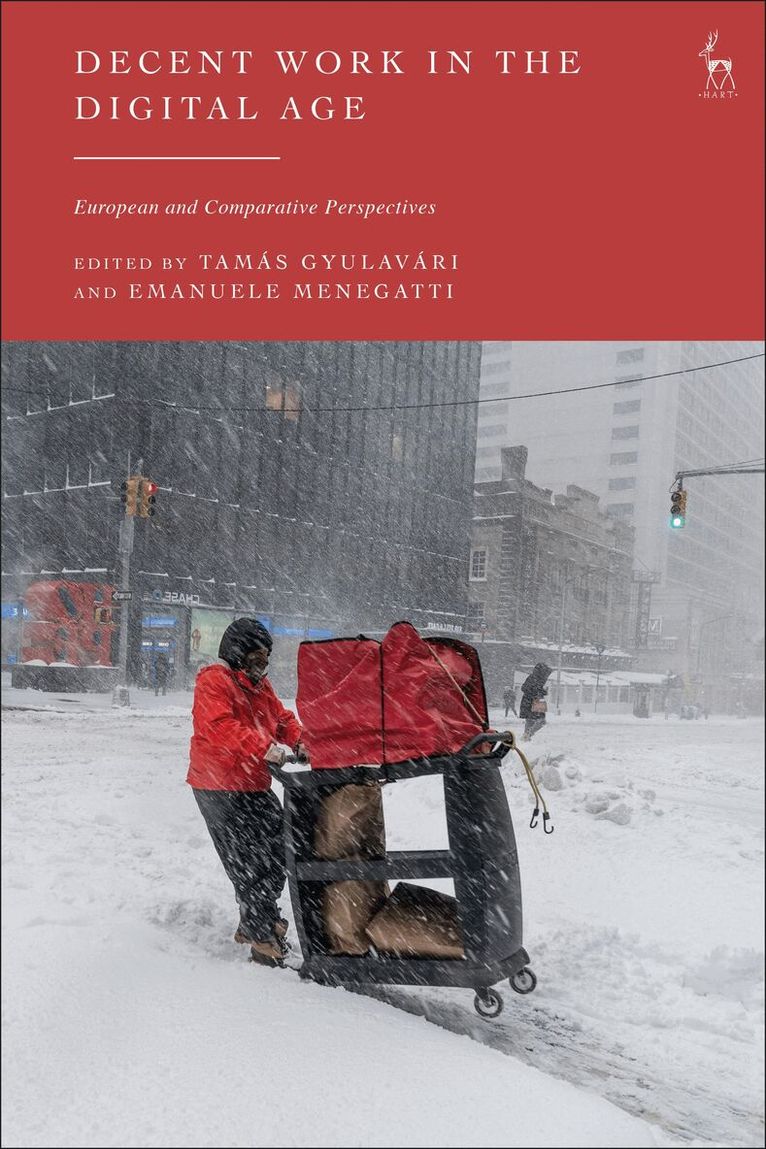
    Decent Work in the Digital Age

    European and Comparative Perspectives

    AvTamás Gyulavári,Emanuele Menegatti

    Häftad, Engelska, 2024

    645 kr

    Beställningsvara. Skickas inom 10-15 vardagar. Fri frakt över 249 kr.

    Beskrivning

    This book explores the legal and practical implications of the digital age for employment and industrial relations. To that end, the book analyses the problems arising from the digitalisation of work and the negative effects on working conditions in fields such as platform work, robotisation, discrimination, data protection, and freedom of speech. It also looks at how to ensure decent working conditions for workers affected by digitalisation, by investigating the minimum standards that should be ensured to mitigate negative effects – and how these could be best guaranteed by legislation and collective bargaining.The book presents a theoretical framework on the impact of automatisation, robotics, and digitalisation on the very basic principles of individual and collective labour law. The chapters provide an in-depth analysis of new patterns of work prompted by digitalisation, including: classification of platform workers; recognition of employment and social security rights; competition law aspects of platform work; remote (tele)work arrangements; algorithmic decision-making and remote surveillance; data protection and privacy; and social media in working environments. The book is an important reference for academics and researchers, social partners, and policy makers with an interest in labour law and industrial relations.

    Produktinformation

    • Utgivningsdatum:2024-04-18
    • Mått:154 x 232 x 24 mm
    • Vikt:580 g
    • Format:Häftad
    • Språk:Engelska
    • Antal sidor:384
    • Förlag:Bloomsbury Publishing PLC
    • ISBN:9781509958276

    Utforska kategorier

    • Arbetsrätt inom Juridik
    • IT-rätt och kommunikationsrätt inom Juridik

    Mer om författaren

    Tamás Gyulavári is Professor of Labour Law and Chair of the Labour Law Department at Pázmány Péter Catholic University in Budapest, Hungary. Emanuele Menegatti is Professor of Labour Law and Dean of the School of Economics and Management at the University of Bologna, Italy.

    Innehållsförteckning

    • ForewordTonia Novitz (University of Bristol, UK)1. Labour, Law, and DigitalisationTamás Gyulavári (Pázmány Péter Catholic University, Hungary) and Emanuele Menegatti (University of Bologna, Italy)PART ITHE IMPACT OF AUTOMATISATION AND DIGITALISATION ON WORK RELATIONS2. Digitalisation and Basic Principles of Labour LawManfred Weiss (Goethe University, Germany)3. The Impact of Automatisation and Robotics on Collective Labour Relations: Meeting an Unprecedented ChallengeEdoardo Ales (University of Naples ‘Parthenope’, Italy)4. EU Law and Digitalisation of Employment RelationsIacopo Senatori (University of Modena and Reggio Emilia, Italy)PART IIPLATFORM WORK AND AGILE WORK ARRANGEMENTS5. Classification of Platform Workers: A Scholarly PerspectiveMartin Gruber-Risak (University of Vienna, Austria)6. The Classification of Platform Workers Through the Lens of Judiciaries: A Comparative AnalysisEmanuele Menegatti (University of Bologna, Italy)7. Floor of Rights for Platform WorkersTamás Gyulavári (Pázmány Péter Catholic University, Hungary)8. Working Time Flexibility: Merits to Preserve and Potentials to Adjust to ChangeGábor Kártyás (Pázmány Péter Catholic University, Hungary) 9.Which Welfare Rights for Platform Workers?Marius Olivier (Nelson Mandela University and Northwest University, South Africa; University of Western Australia)10. Competition Law Implications of Platform WorkTihamér Tóth (Pázmány Péter Catholic University, Hungary)11. Decent Teleworking: Lessons from the PandemicCarla Spinelli (University of Bari Aldo Moro, Italy) PART IIIREGULATING THE ALGORITHM12. The Challenges of Management by Algorithm: Exploring Individual and Collective AspectsJeremias Adams-Prassl (University of Oxford, UK)13. Automation, Autonomy, Augmentation: Labour Regulation and the Technological Transformation of Managerial PrerogativesAntonio Aloisi (IE University, Spain)14. Discrimination by Algorithms at WorkSylvaine Laulom (Cour De Cassation, France)PART IVDATA PROTECTION AND PRIVACY AT WORK15. Regulating Worker Privacy and Data Protection: Exploring the Global Source SystemFrank Hendrickx (University of Leuven, Belgium)16. From Monitoring of the Workplace to Surveillance of the WorkforceDavid Mangan (Maynooth University, Ireland)17. Social Media and Freedom of Speech in Employment: Limitations on Employees’ Right to Self-ExpressionAndrás Koltay (Pázmány Péter Catholic University, Hungary)