• Fri frakt över 249 kr
  • •
  • Snabba leveranser
  • •
  • Billiga böcker
Kundservice

Du är på sajten för privatpersoner.

Företag, bibliotek eller offentlig verksamhet?

Du handlar på classic.bokus.com, där alla dina funktioner finns intakta.
Till classic.bokus.com
Bokus logotyp. Gå till startsidan.
  • Erbjudanden
  • Nyheter
  • Student
  • Topplistor
  • Barn & ungdom
  • Bokus Play
  • E-böcker
  • Pocketböcker
  • Spel & pussel

10% rabatt på allt med kod: NYSTART10 →

Sidfot

Mina sidor

    Hjälp

    • Kundservice
    • Vanliga frågor och svar
    • Frakt och leverans
    • Retur vid ångerrätt
    • Reklamera vara
    • Betalning
    • Köpvillkor
    • Allmänna villkor
    • Information om webbplatsens tillgänglighet

    Om Bokus

    • Om oss
    • Pressrum
    • För studenter
    • För företag
    • För bibliotek och offentlig verksamhet
    • För leverantörer
    • Hållbarhet

    Populärt

    • Aktuella erbjudanden
    • Presentkort
    • Studentlitteratur
    • Nya böcker
    • Topplistor
    • Signerade böcker
    • Engelska böcker

    Inspiration

    • Boktips
    • BookTok
    • Populära bokserier
    • Barnbokskaraktärer
    • Populära författare
    Logotyp för Bokus
    Följ oss på Facebook (extern länk)Följ oss på Instagram (extern länk)Följ oss på YouTube (extern länk)Följ oss på TikTok (extern länk)
    bokus @ CookiesAnpassa cookiesIntegritetspolicyKöpvillkor
    Till Citymail hemsida (extern länk)Till Budbee hemsida (extern länk)Till Postnord hemsida (extern länk)Till Schenker hemsida (extern länk)Till Early Bird hemsida (extern länk)Till Walleys hemsida (extern länk)
    1. Samhälle och politik
    2. Politik och statsskick
    3. Statsvetenskap och politisk teori

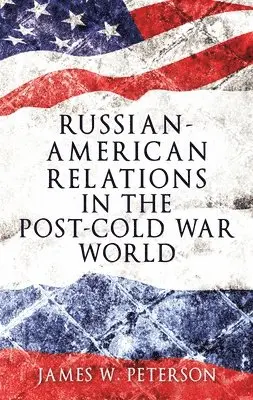
    Russian-American Relations in the Post-Cold War World

    AvJames W. Peterson

    Inbunden, Engelska, 2017

    1 188 kr

    Beställningsvara. Skickas inom 5-8 vardagar. Fri frakt över 249 kr.

    Fler format och utgåvor

    Häftad

    330 kr

    E-bok

    276 kr

    Beskrivning

    Why did the Russian take-over of Crimea come as a surprise to so many observers in the academic, practitioner and global-citizen arenas? The answer presented in this textbook is a complex one, rooted in late-Cold War dualities but also in the variegated policy patterns of the two powers after 1991. The 2014 crisis was provoked by conflicting perspectives over the Balkan Wars of the 1990s, the expansion of NATO to include former communist allies of Russia as well as three of its former republics, the American decision to invade Iraq in 2003, and the Russian move to invade Georgia in 2008. This book uses a number of key theories in political science to create a framework for analysis and to outline policy options for the future. It is vital that the attentive public confront the questions raised in these pages in order to control the reflexive and knee-jerk reactions to all points of conflict that emerge on a regular basis between America and Russia.

    Produktinformation

    • Utgivningsdatum:2017-08-11
    • Mått:156 x 234 x 13 mm
    • Vikt:454 g
    • Format:Inbunden
    • Språk:Engelska
    • Antal sidor:200
    • Förlag:Manchester University Press
    • ISBN:9781526105783

    Utforska kategorier

    • Statsvetenskap och politisk teori inom Samhälle och politik
    • Internationella relationer inom Samhälle och politik

    Mer om författaren

    James W. Peterson is Professor Emeritus in Political Science and former Head of the Department of Political Science at Valdosta State University, USA

    Innehållsförteckning

    • Introduction: from Cold War to Crimea: a bumpy road1 Theoretical approaches: models of power, systems theory, critical junctures, legacies, realism, and realism revised 2 Cold War root of post-Cold War tension: duality of détente in the 1970s and neo-Cold War in the 1980s 3 Imbalance of power in 1991: collapse of the Soviet Union and allied victory in the Persian Gulf War4 Making different choices in the Balkan Wars of the 1990s: Bosnia in 1992–5 and Kosovo in 19995 Admission of twelve former-communist states and republics into NATO and the bitter Russian reaction, 1999–20096 Russia and America confront terrorism, 1994–2004: a foundation of understanding7 Wars in Afghanistan (2001), Iraq (2003), and Georgia (2008): a mixed set of perceptions8 Missile shield proposal by the US in 2007–9 and the Arab Spring of 2011: contrasting priorities9 America and Russia pivot towards Asia: political differences yield to economic rivalry10 Ukrainian Crisis to the center of the stage in 2014 and after: a game-changing earthquake in the relationshipConclusion: theoretical approaches and a path from Crimea to stabilityPostscript: two eaglesIndex