• Fri frakt över 249 kr
  • •
  • Snabba leveranser
  • •
  • Billiga böcker
Kundservice

Du är på sajten för privatpersoner.

Företag, bibliotek eller offentlig verksamhet?

Du handlar på classic.bokus.com, där alla dina funktioner finns intakta.
Till classic.bokus.com
Bokus logotyp. Gå till startsidan.
  • Erbjudanden
  • Nyheter
  • Student
  • Topplistor
  • Barn & ungdom
  • Bokus Play
  • E-böcker
  • Pocketböcker
  • Spel & pussel

10% rabatt på allt med kod NYSTART10 →

Sidfot

Mina sidor

    Hjälp

    • Kundservice
    • Vanliga frågor och svar
    • Frakt och leverans
    • Retur vid ångerrätt
    • Reklamera vara
    • Betalning
    • Köpvillkor
    • Allmänna villkor
    • Information om webbplatsens tillgänglighet

    Om Bokus

    • Om oss
    • Pressrum
    • För studenter
    • För företag
    • För bibliotek och offentlig verksamhet
    • För leverantörer
    • Hållbarhet

    Populärt

    • Aktuella erbjudanden
    • Presentkort
    • Studentlitteratur
    • Nya böcker
    • Topplistor
    • Signerade böcker
    • Engelska böcker

    Inspiration

    • Boktips
    • BookTok
    • Populära bokserier
    • Barnbokskaraktärer
    • Populära författare
    Logotyp för Bokus
    Följ oss på Facebook (extern länk)Följ oss på Instagram (extern länk)Följ oss på YouTube (extern länk)Följ oss på TikTok (extern länk)
    bokus @ CookiesAnpassa cookiesIntegritetspolicyKöpvillkor
    Till Citymail hemsida (extern länk)Till Budbee hemsida (extern länk)Till Postnord hemsida (extern länk)Till Schenker hemsida (extern länk)Till Early Bird hemsida (extern länk)Till Walleys hemsida (extern länk)
    1. Samhälle och politik
    2. Krig och försvar
    3. Krigsvetenskap

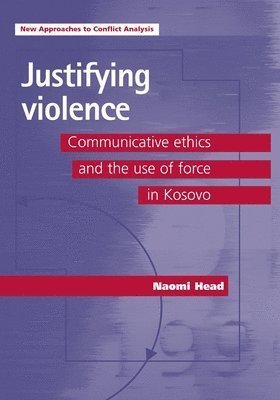
    Justifying Violence

    Communicative Ethics and the Use of Force in Kosovo

    AvNaomi Head

    Häftad, Engelska, 2017

    Del i serien New Approaches to Conflict Analysis

    429 kr

    Beställningsvara. Skickas inom 5-8 vardagar. Fri frakt över 249 kr.

    Fler format och utgåvor

    Inbunden

    Tillf. slut

    Beskrivning

    When is the use of force for humanitarian purposes legitimate? The book examines this question through one of the most controversial examples of humanitarian intervention in the post Cold War period: the 1999 NATO intervention in Kosovo. Justifying Violence applies a critical theoretical approach to an interrogation of the communicative practices which underpin claims to legitimacy for the use of force by actors in international politics. Drawing on the theory of communicative ethics, the book develops an innovative conceptual framework which contributes a critical communicative dimension to the question of legitimacy that extends beyond the moral and legal approaches so often applied to the intervention in Kosovo. The empirical application of communicative ethics offers a provocative and nuanced account which contests conventional interpretations of the legitimacy of NATO’s intervention.

    Produktinformation

    • Utgivningsdatum:2017-07-20
    • Mått:156 x 234 x 14 mm
    • Vikt:363 g
    • Format:Häftad
    • Språk:Engelska
    • Serie:New Approaches to Conflict Analysis
    • Antal sidor:256
    • Förlag:Manchester University Press
    • ISBN:9781526116987

    Utforska kategorier

    • Krigsvetenskap inom Samhälle och politik
    • Etiska frågor och debatter inom Samhälle och politik

    Mer om författaren

    Naomi Head is Lecturer in Politics at the University of Glasgow

    Recensioner i media

    ‘Naomi Head has producedan original and compelling argument that brings practice back to the CriticalTheory of Habermas, rebutting claims that it has little to say aboutcontemporary moral and ethical debates. She pushes constructivism beyond theanalysis of norms to an examination of how to better engage in communicativeethics and nudges debates about good international citizenship or theResponsibility to Protect toward the importance of procedural legitimacy indecisionsmaking about the use of force. Through an examination of NATO's'legitimate' but 'illegal' intervention in Kosovo, she reveals the processes ofexclusion from dialogue, the lack of policy coherence and the missedopportunities for a peaceful settlement. In response to the continuing sceptismabout the role of language at the international level, she shows why legitimacyand justification matter. This excellent book should be required reading notonly for scholars but policymakers confronted with life and death decisionsabout the use of force.’ Professor K.M. Fierke, School of International Relations, St.Andrews

    Innehållsförteckning

    • Contents Preface Acknowledgements Abbreviations Introduction Part I 1 Locating Kosovo and legitimacy 2 Putting out the fire while the coals still burn: Kosovo prior to 1999 3 Communicative action in International Relations Part II 4 The Habermasian project: dialogue as normative grounds and object of critique 5 The communicative imperatives 6 Applying the communicative imperatives: debating Kosovo 7 Conclusion Bibliography