• Fri frakt över 249 kr
  • •
  • Snabba leveranser
  • •
  • Billiga böcker
Kundservice

Du är på sajten för privatpersoner.

Företag, bibliotek eller offentlig verksamhet?

Du handlar på classic.bokus.com, där alla dina funktioner finns intakta.
Till classic.bokus.com
Bokus logotyp. Gå till startsidan.
  • Erbjudanden
  • Nyheter
  • Student
  • Topplistor
  • Barn & ungdom
  • Bokus Play
  • E-böcker
  • Pocketböcker
  • Spel & pussel

10% rabatt på allt med kod: NYSTART10 →

Sidfot

Mina sidor

    Hjälp

    • Kundservice
    • Vanliga frågor och svar
    • Frakt och leverans
    • Retur vid ångerrätt
    • Reklamera vara
    • Betalning
    • Köpvillkor
    • Allmänna villkor
    • Information om webbplatsens tillgänglighet

    Om Bokus

    • Om oss
    • Pressrum
    • För studenter
    • För företag
    • För bibliotek och offentlig verksamhet
    • För leverantörer
    • Hållbarhet

    Populärt

    • Aktuella erbjudanden
    • Presentkort
    • Studentlitteratur
    • Nya böcker
    • Topplistor
    • Signerade böcker
    • Engelska böcker

    Inspiration

    • Boktips
    • BookTok
    • Populära bokserier
    • Barnbokskaraktärer
    • Populära författare
    Logotyp för Bokus
    Följ oss på Facebook (extern länk)Följ oss på Instagram (extern länk)Följ oss på YouTube (extern länk)Följ oss på TikTok (extern länk)
    bokus @ CookiesAnpassa cookiesIntegritetspolicyKöpvillkor
    Till Citymail hemsida (extern länk)Till Budbee hemsida (extern länk)Till Postnord hemsida (extern länk)Till Schenker hemsida (extern länk)Till Early Bird hemsida (extern länk)Till Walleys hemsida (extern länk)
    1. Medicin
    2. Medicin: allmänt
    3. Medicinhistoria

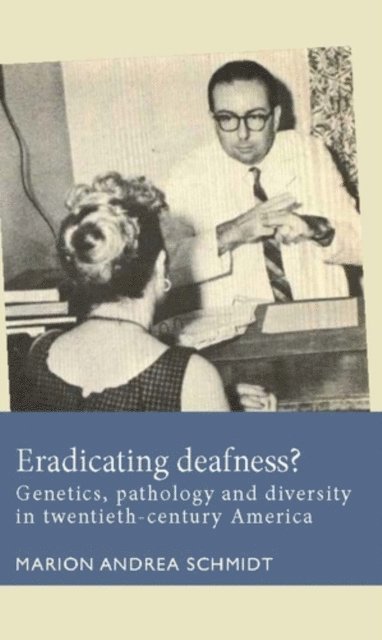
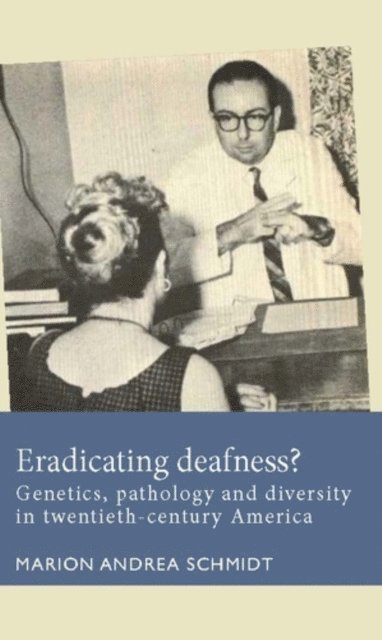
    Eradicating Deafness?

    Genetics, Pathology, and Diversity in Twentieth-Century America

    AvMarion Andrea Schmidt

    Inbunden, Engelska, 2020

    Del i serien Disability History

    1 227 kr

    Beställningsvara. Skickas inom 5-8 vardagar. Fri frakt över 249 kr.

    Fler format och utgåvor

    E-bok

    286 kr

    E-bok

    285 kr

    Häftad

    292 kr

    Beskrivning

    Is deafness a disability to be prevented or the uniting trait of a cultural community to be preserved? Combining the history of eugenics and genetics with deaf and disability history, this book traces how American heredity researchers moved from trying to eradicate deafness to embracing it as a valuable cultural diversity. It looks at how deafness came to be seen as a hereditary phenomenon at all, how eugenics became part of progressive reform at schools for the deaf, and how, from the 1950s on, more sociocultural approaches to disability and minority led to new cooperative projects between professionals and local signing deaf communities. Analysing the transformative effects of exchange between researchers and objects of research, this book offers new insight to changing ideas about medical ethics, reproductive rights, the meaning of scientific progress and cultural diversity.

    Produktinformation

    • Utgivningsdatum:2020-04-22
    • Mått:138 x 216 x 14 mm
    • Vikt:399 g
    • Format:Inbunden
    • Språk:Engelska
    • Serie:Disability History
    • Antal sidor:216
    • Förlag:Manchester University Press
    • ISBN:9781526138170

    Utforska kategorier

    • Medicinhistoria inom Medicin
    • Amerikas historia inom Historia och arkeologi

    Mer om författaren

    Marion Andrea Schmidt is a Research Associate at the Department of Medical Ethics and History of Medicine at the University Medical Center Göttingen

    Recensioner i media

    'Schmidt (Univ. of Göttingen Medical Center) documents the historical attempts to eradicate deafness genes through coercive and restrictive measures including marriage counseling and family planning practices in order to achieve "normalization," as well as the 20th-century embrace of biodiversity and of being Deaf as a situation entailing cultural/linguistic differences. In 1977 this reviewer sat in McCay Vernon’s psychology class alongside Deaf classmates, whom he asked to reflect on their etiologies and family histories. Vernon’s respect for Deaf culture and sign language informed his research in genetics and his genetic counseling practice, which aimed to provide self-knowledge as well as psychological and emotional support. Vernon's work, among others cited in this book, led the historic shift in perceptions, paradigms, and terminology about being Deaf, redirecting genetics research and genetic counseling. Prior to this shift, perceptions about genetics and deafness followed a pathological/curative paradigm. But the new sociocultural perspective surfaced and embraced both signing as a cultural practice and population diversity as a norm. Previously used terms, e.g., "risks" have now shifted to "chances," reducing the blame and stigma of this "disability." Genetic counseling now supports the client in deciding which services to use, which decision to take, and what is considered a pathological condition, along with providing access to appropriate information.'--J. F. Andrews, emerita, Lamar UniversitySumming Up: Recommended. Graduate students, faculty, and professionals.Reprinted with permission from Choice Reviews. All rights reserved. Copyright by the American Library Association.'[...] this valuable work stands out in its nuanced exploration of the in-between places.'Social History of Medicine'A masterful study of the history of genetic deafness research, Eradicating Deafness? exemplifies how new historical perspectives can be developed by merging disability history with the history of science.'European Journal for the History of Medicine and Health'In this valuable addition to Manchester University Press’s fast-growing Disability History series, Marion Andrea Schmidt chronicles a history of the intersection of eugenics, genetics, Deafness, and disability throughout the United States in the twentieth century. [...] Eradicating Deafness? offers important contributions beyond its immediate scope in the history of medicine. While Schmidt is right to continuously emphasize the narrative’s often surprising conclusions, the book’s other achievements—its clear style, minute attention to archival detail, and adept synthesis of seemingly disparate fields of inquiry—will also contribute to broader studies of history, politics, and culture.'Bulletin of the History of Medicine 'Overall, this is a fascinating work that creatively connects case studies that, through another lens, may seem disjointed. It serves as both an important work in its own right and a springboard for potential new and exciting endeavors.'H-Disability'Overall, this is a fascinating work that creatively connects case studies that, through another lens, may seem disjointed. It serves as both an important work in its own right and a springboard for potential new and exciting endeavors.'Bulletin of the History of Medicine

    Innehållsförteckning

    • Introduction: of races and genocides1 The sciences of deafness: deaf people as objects of research, reform, and eugenics, 1900–19402 Concerned and puzzled: heredity research and counselling at the Clarke School, 1930–19603 Minorities and pathologies: psychogenetic counselling at the New York State Psychiatric Institute, 1955–19694 Preventing tragedy, negotiating normalcy: the changing meaning of Usher syndrome 1960–19805 Signing risk and chance: collaborating for culturally sensitive counselling, 1970–1990Conclusion: from Bell to biodiversityBibliographyIndex