• Fri frakt över 249 kr
  • •
  • Snabba leveranser
  • •
  • Billiga böcker
Kundservice

Du är på sajten för privatpersoner.

Företag, bibliotek eller offentlig verksamhet?

Du handlar på classic.bokus.com, där alla dina funktioner finns intakta.
Till classic.bokus.com
Bokus logotyp. Gå till startsidan.
  • Erbjudanden
  • Nyheter
  • Student
  • Topplistor
  • Barn & ungdom
  • Bokus Play
  • E-böcker
  • Pocketböcker
  • Spel & pussel

10% rabatt på allt med kod NYSTART10 →

Sidfot

Mina sidor

    Hjälp

    • Kundservice
    • Vanliga frågor och svar
    • Frakt och leverans
    • Retur vid ångerrätt
    • Reklamera vara
    • Betalning
    • Köpvillkor
    • Allmänna villkor
    • Information om webbplatsens tillgänglighet

    Om Bokus

    • Om oss
    • Pressrum
    • För studenter
    • För företag
    • För bibliotek och offentlig verksamhet
    • För leverantörer
    • Hållbarhet

    Populärt

    • Aktuella erbjudanden
    • Presentkort
    • Studentlitteratur
    • Nya böcker
    • Topplistor
    • Signerade böcker
    • Engelska böcker

    Inspiration

    • Boktips
    • BookTok
    • Populära bokserier
    • Barnbokskaraktärer
    • Populära författare
    Logotyp för Bokus
    Följ oss på Facebook (extern länk)Följ oss på Instagram (extern länk)Följ oss på YouTube (extern länk)Följ oss på TikTok (extern länk)
    bokus @ CookiesAnpassa cookiesIntegritetspolicyKöpvillkor
    Till Citymail hemsida (extern länk)Till Budbee hemsida (extern länk)Till Postnord hemsida (extern länk)Till Schenker hemsida (extern länk)Till Early Bird hemsida (extern länk)Till Walleys hemsida (extern länk)
    1. Ekonomi och Ledarskap
    2. Industrier och branscher
    3. Arbetsmarknaden

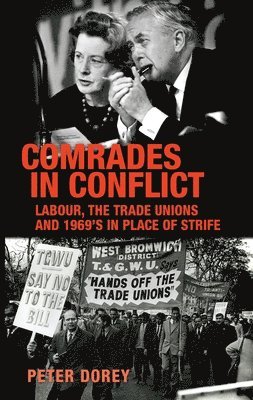
    Comrades in Conflict

    Labour, the Trade Unions and 1969's in Place of Strife

    AvPeter Dorey

    Häftad, Engelska, 2020

    371 kr

    Beställningsvara. Skickas inom 5-8 vardagar. Fri frakt över 249 kr.

    Fler format och utgåvor

    Inbunden

    1 224 kr

    E-bok

    299 kr

    E-bok

    299 kr

    Beskrivning

    On the 50th anniversary of In Place of Strife, this scholarly study makes extensive use of previously unpublished archival and other primary sources to explain why Harold Wilson and Barbara Castle embarked on legislation to regulate the trade unions and curb strikes, and why this aroused such strong opposition, not just from the unions, but within the Cabinet and among backbench Labour MPs. This opposition transcended the orthodox ideological divisions, making temporary allies of traditional adversaries in the Party. Even Wilson’s threats either to resign, or call a general election, if his MPs and Ministers failed to support him and Castle, were treated with derision. His colleagues called Wilson’s bluff, and forced him to abandon the legislation, in return for a ‘solemn and binding’ pledge by the trade unions to ‘put their own house in order’ in tackling strikes.

    Produktinformation

    • Utgivningsdatum:2020-02-19
    • Mått:156 x 234 x 13 mm
    • Vikt:345 g
    • Format:Häftad
    • Språk:Engelska
    • Antal sidor:240
    • Förlag:Manchester University Press
    • ISBN:9781526148032

    Utforska kategorier

    • Arbetsmarknaden inom Ekonomi och Ledarskap
    • Europas historia inom Historia och arkeologi
    • Politik och statsskick inom Samhälle och politik

    Mer om författaren

    Peter Dorey is Professor of British Politics in the School of Law and Politics at Cardiff University

    Recensioner i media

    'Dorey’s detailed yet highly engaged text will become a reference point and benchmark for rethinking the decline of the post-war social-democratic consensus and the nuances of industrial-relations politics. It is well written and a significant insight into the Labour Party and trade union movement of the time. It also reveals the importance of locating the specifics of political discussions and choices in the realm of political relations and historical contexts.'Labour History Review

    Innehållsförteckning

    • List of tablesAcknowledgementsList of abbreviationsIntroduction1 Emergence and Identification of the Problem2 The Donovan Commission and its Report3 The Initial Political response4 Cabinet Demurrals and Diminishing Ministerial Support5 Increasing Antipathy in the Parliamentary Labour Party 6 The Trade Unions' Implacable Hostility7 A ‘Solemn and Binding’ AgreementConclusionBibliographyIndex