• Fri frakt över 249 kr
  • •
  • Snabba leveranser
  • •
  • Billiga böcker
Kundservice

Du är på sajten för privatpersoner.

Företag, bibliotek eller offentlig verksamhet?

Du handlar på classic.bokus.com, där alla dina funktioner finns intakta.
Till classic.bokus.com
Bokus logotyp. Gå till startsidan.
  • Erbjudanden
  • Nyheter
  • Student
  • Topplistor
  • Barn & ungdom
  • Bokus Play
  • E-böcker
  • Pocketböcker
  • Spel & pussel

10% rabatt på allt med kod: NYSTART10 →

Sidfot

Mina sidor

    Hjälp

    • Kundservice
    • Vanliga frågor och svar
    • Frakt och leverans
    • Retur vid ångerrätt
    • Reklamera vara
    • Betalning
    • Köpvillkor
    • Allmänna villkor
    • Information om webbplatsens tillgänglighet

    Om Bokus

    • Om oss
    • Pressrum
    • För studenter
    • För företag
    • För bibliotek och offentlig verksamhet
    • För leverantörer
    • Hållbarhet

    Populärt

    • Aktuella erbjudanden
    • Presentkort
    • Studentlitteratur
    • Nya böcker
    • Topplistor
    • Signerade böcker
    • Engelska böcker

    Inspiration

    • Boktips
    • BookTok
    • Populära bokserier
    • Barnbokskaraktärer
    • Populära författare
    Logotyp för Bokus
    Följ oss på Facebook (extern länk)Följ oss på Instagram (extern länk)Följ oss på YouTube (extern länk)Följ oss på TikTok (extern länk)
    bokus @ CookiesAnpassa cookiesIntegritetspolicyKöpvillkor
    Till Citymail hemsida (extern länk)Till Budbee hemsida (extern länk)Till Postnord hemsida (extern länk)Till Schenker hemsida (extern länk)Till Early Bird hemsida (extern länk)Till Walleys hemsida (extern länk)
    1. Samhälle och politik
    2. Politik och statsskick
    3. Internationella relationer

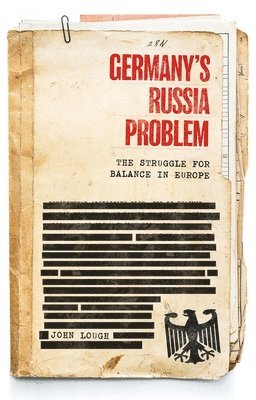
    Germany's Russia Problem

    The Struggle for Balance in Europe

    AvJohn Lough

    Inbunden, Engelska, 2021

    Del i serien Russian Strategy and Power

    352 kr

    Skickas . Fri frakt över 249 kr.

    Fler format och utgåvor

    Häftad

    187 kr

    Beskrivning

    The relationship between Germany and Russia is Europe’s most important link with the largest country on the continent. But despite Germany’s unparalleled knowledge and historical experience, its policymakers struggle to accept that Moscow’s efforts to rebalance Europe at the cost of the cohesion of the EU and NATO are an attack on Germany’s core interests. This book explains the scale of the challenge facing Germany in managing relations with a changing Russia. It analyses how successive German governments from 1991 to 2014 misread Russian intentions, until Angela Merkel sharply recalibrated German and EU policy towards Moscow. The book also examines what lies behind efforts to revise Merkel’s bold policy shift, including attitudes inherited from the GDR and the role of Russian influence channels in Germany.

    Produktinformation

    • Utgivningsdatum:2021-07-13
    • Mått:138 x 216 x 21 mm
    • Vikt:540 g
    • Format:Inbunden
    • Språk:Engelska
    • Serie:Russian Strategy and Power
    • Antal sidor:304
    • Förlag:Manchester University Press
    • ISBN:9781526151506

    Utforska kategorier

    • Internationella relationer inom Samhälle och politik

    Mer om författaren

    John Lough is an Associate Fellow of the Russia & Eurasia Programme at Chatham House (since 2009) and a regular commentator on Russian and Ukrainian affairs. He spent six years with NATO managing information programmes aimed at Central and Eastern Europe, including a posting to Moscow, where he set up NATO’s Information Office in Russia and was the first Alliance official to be permanently based in the country. He runs his own consultancy business, advising clients on political and investment risk in Russia, Ukraine and other countries of the former Soviet Union. He studied German and Russian literature at Cambridge University.

    Recensioner i media

    'I have found John Lough's Germany's Russia Problem an ideal book as we contemplate the source of energy we will draw on for heat and light in the decades ahead.'TLS'The title of John Lough’s book itself makes clear that this is not another academic sand box exercise. He wants to make things better.'Die Welt 'John Lough has written a stimulating book rich in knowledge.’ Frankfurter Allgemeine'Suffused with nostalgia for the glory days of Ostpolitik, Germany’s approach to Russia bogs down in what might more aptly be called Lost-politik. Cliches, wishful thinking and neuroses are its hallmarks. John Lough nails them all. With admirable clarity, fairness and insight, he lays bare the roots and results of Germany’s failure to think strategically about Russia, and the price that everyone else pays as a result.'Edward Lucas, author of The New Cold War‘Provocative and brilliantly written, this book examines the deep relationship between two mutually indispensable nations and explains how Russia triggers reflexes in Germany that distort its policy thinking and produce contradictory results. With courage, honesty and insight, John Lough navigates one of the most sensitive areas of global politics today and sees a crucial role for Germany in creating a transformative environment around Russia that can facilitate its return to Europe.’Lilia Shevtsova, author of Putin's Russia'John Lough‘s book is nuanced, astute and fair. That makes his account of how hope keeps triumphing over experience in Germany‘s Russia policy all the more devastating.'Constanze Stelzenmüller, Fritz Stern Chair, Brookings Institution'Germany’s Russia Problem astutely explores Germany’s many centuries-old traumatic phobias, romantic fixations, rough disillusionments and incapacitating paralyses in its relations with Russia. It is a crisply and fairly written book vital to our understanding of the nature and progression of Germany’s – and, with it, Europe’s – Russia problem.' Andriy Tyushka, LSE Review of Books

    Innehållsförteckning

    • Introduction1 The weight of history2 The development of German attitudes towards Russia3 The miracle of reunification4 A failure to read Russia correctly5 2014: abandonment of illusions6 An unfulfilled economic relationship7 Russian influence in Germany8 The outlookConclusionIndex