• Fri frakt över 249 kr
  • •
  • Snabba leveranser
  • •
  • Billiga böcker
Kundservice

Du är på sajten för privatpersoner.

Företag, bibliotek eller offentlig verksamhet?

Du handlar på classic.bokus.com, där alla dina funktioner finns intakta.
Till classic.bokus.com
Bokus logotyp. Gå till startsidan.
  • Erbjudanden
  • Nyheter
  • Student
  • Topplistor
  • Barn & ungdom
  • Bokus Play
  • E-böcker
  • Pocketböcker
  • Spel & pussel

10% rabatt på allt med kod: NYSTART10 →

Sidfot

Mina sidor

    Hjälp

    • Kundservice
    • Vanliga frågor och svar
    • Frakt och leverans
    • Retur vid ångerrätt
    • Reklamera vara
    • Betalning
    • Köpvillkor
    • Allmänna villkor
    • Information om webbplatsens tillgänglighet

    Om Bokus

    • Om oss
    • Pressrum
    • För studenter
    • För företag
    • För bibliotek och offentlig verksamhet
    • För leverantörer
    • Hållbarhet

    Populärt

    • Aktuella erbjudanden
    • Presentkort
    • Studentlitteratur
    • Nya böcker
    • Topplistor
    • Signerade böcker
    • Engelska böcker

    Inspiration

    • Boktips
    • BookTok
    • Populära bokserier
    • Barnbokskaraktärer
    • Populära författare
    Logotyp för Bokus
    Följ oss på Facebook (extern länk)Följ oss på Instagram (extern länk)Följ oss på YouTube (extern länk)Följ oss på TikTok (extern länk)
    bokus @ CookiesAnpassa cookiesIntegritetspolicyKöpvillkor
    Till Citymail hemsida (extern länk)Till Budbee hemsida (extern länk)Till Postnord hemsida (extern länk)Till Schenker hemsida (extern länk)Till Early Bird hemsida (extern länk)Till Walleys hemsida (extern länk)
    1. Filosofi och religion
    2. Religion och tro
    3. Religion: allmänt

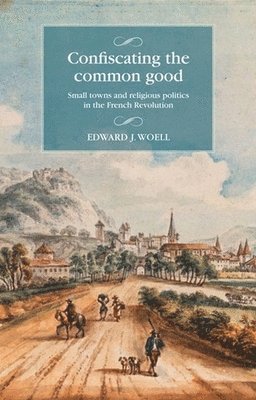
    Confiscating the common good

    Small towns and religious politics in the French Revolution

    AvEdward Woell

    Inbunden, Engelska, 2022

    Del i serien Studies in Modern French and Francophone History

    1 188 kr

    Beställningsvara. Skickas inom 5-8 vardagar. Fri frakt över 249 kr.

    Beskrivning

    Comprising five microhistories, this book proposes that the French Revolution’s religious politics in small towns weakened democratic society to such an extent that it precluded political democracy. It details two revolutionary dynamics that damaged the civic life of small towns: social polarisation and the loss of local institutions that had been a source of social capital as well as a common good. Detailed narratives about Pont-à-Mousson, Gournay-en-Bray, Vienne, Haguenau and Is-sur-Tille also reveal that contrary to the view upheld by many scholars, small-town religious politics extended far beyond the pivotal Ecclesiastical Oath of 1791. Other developments — the nationalisation of Church property, the dissolution of religious orders, and the elimination of bishoprics, chapters, parishes and collegial churches — also adversely affected the wellbeing of these small urban communities not only in the Revolution but also in the two centuries that followed.

    Produktinformation

    • Utgivningsdatum:2022-08-02
    • Mått:138 x 216 x 21 mm
    • Vikt:535 g
    • Format:Inbunden
    • Språk:Engelska
    • Serie:Studies in Modern French and Francophone History
    • Antal sidor:304
    • Förlag:Manchester University Press
    • ISBN:9781526159137

    Utforska kategorier

    • Religion: allmänt inom Filosofi och religion
    • Revolutioner och uppror inom Historia och arkeologi

    Mer om författaren

    Edward J. Woell is Professor of History at Western Illinois University

    Recensioner i media

    'Two things stand out about this book and justify its inclusion in a series devoted to innovative monographs and edited collections on the history of France and its colonies. The author turns the spotlight on the supposedly ‘quiet year’ of the revolution, starting in November 1789, and takes as his angle of vision the collective life of small towns...The institutions underpinning small-town Catholic piety also captured and expressed a sense of local democracy. This “democratic ethos” would succumb irretrievably when legislators in the Constituent Assembly set about stripping away monasteries, bishoprics, chapters and, in some cases, even parishes (p. 13). It is in this sense that we should understand the book’s title. As Woell notes in an ominous conclusion, dismantling the common good has both a contemporary and a historical resonance.'Peter M Jones, H-France Review

    Innehållsförteckning

    • Introduction1 Hidden in plain sight2 A new story3 Two tribes4 Out of many, one5 Myth and realpolitik6 A forgotten fightConclusionIndex